




















Shorter settlement cycles, tighter operational deadlines and increasingly connected market infrastructure are changing how asset servicing functions across European capital markets. The move toward T+1 settlement is particularly significant because it compresses the time available for allocations, confirmations, corporate-action processing and reconciliation. For institutions, the transition is creating pressure to improve workflows before the shorter settlement cycle becomes operational.
Asset Servicing Adapting to T+1 Pressure
T+1 is not simply a change to the settlement date. It compresses the wider chain of information and processing that supports a transaction, increasing the need for accurate data and faster communication between investment managers, custodians, brokers, market infrastructures and clients. Corporate actions are a particular area of pressure, as shorter timelines can reduce the time available for processing elections, validating entitlements and resolving exceptions. This is making digital workflows and greater standardisation increasingly important to the future of asset servicing.
- Corporate actions requiring faster processing: Shorter settlement windows leave less time to communicate event information, process investor instructions and resolve discrepancies before deadlines.
- Reference data becoming more important: Accurate account, security and event data can reduce the risk of delays when there is less time available for correction.
- Straight-through processing gaining importance: More automated movement of instructions and confirmations can reduce manual intervention across post-trade workflows.
- Exception management becoming more time-sensitive: Operations teams have less time to identify and resolve failed or incomplete processes before settlement.
The transition is therefore pushing asset servicing toward a more connected operating model in which standardised information, automated workflows and timely exception handling work together. The objective is not simply to process transactions faster, but to make the underlying information flow more reliable across the securities lifecycle. 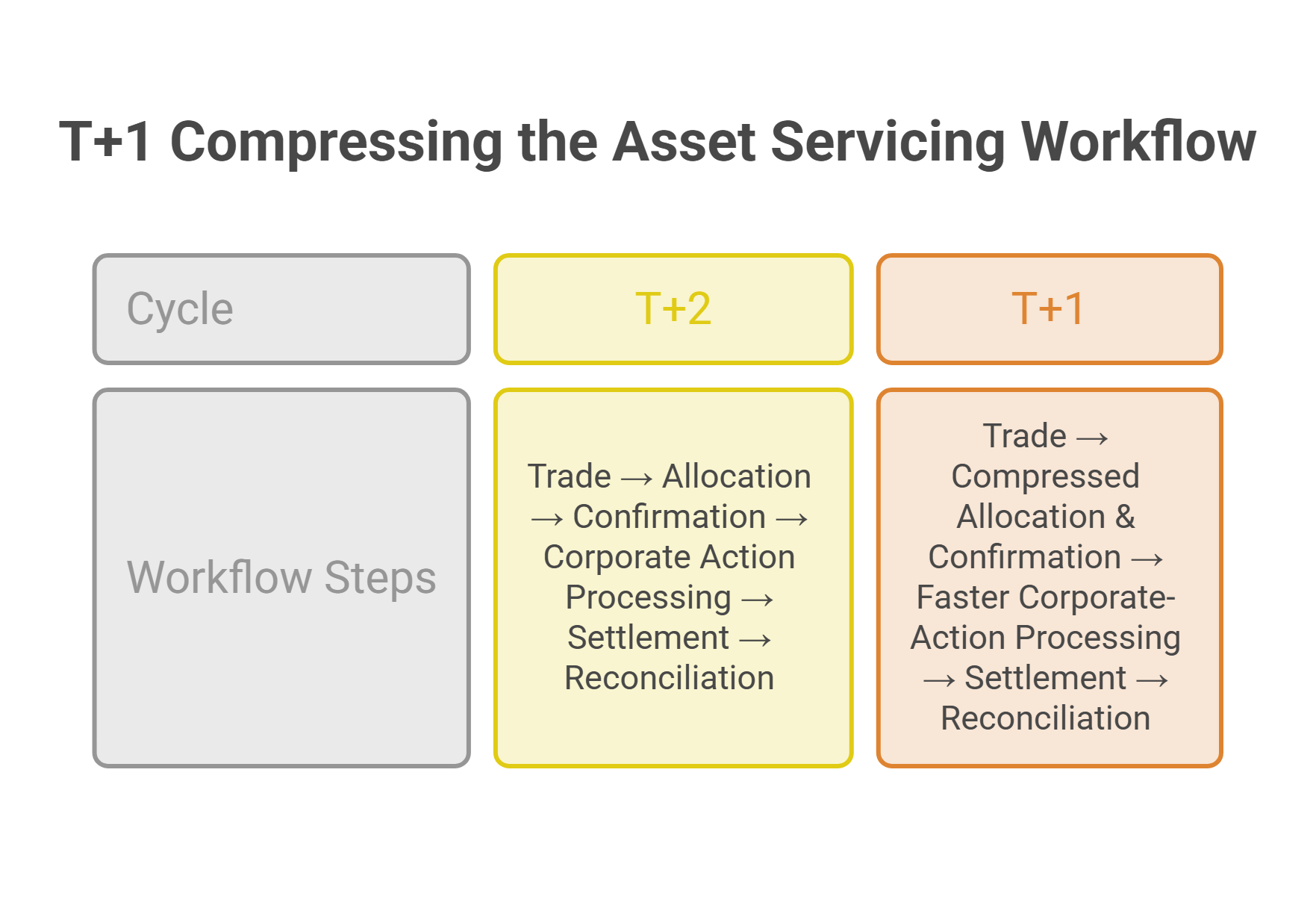 The visual shows how the move to T+1 compresses the wider post-trade workflow rather than only shortening the settlement window. The transition is also increasing attention on how European markets can reduce friction across jurisdictions and infrastructure. This connects the modernisation of post-trade processes with cross-border market access.
Digital Workflows Reducing Fragmentation Across Post-Trade Processes
The shift toward shorter settlement timelines is increasing the importance of connected digital workflows across the post-trade chain. Instructions, allocations, confirmations and reconciliation processes often pass through multiple institutions and systems, creating opportunities for delays or manual intervention. Greater use of machine-readable information and automated processing can help firms move transactions through these stages with less duplication while giving operations teams more time to address exceptions.
- Machine-readable instructions: Structured information can allow allocations and settlement instructions to move between systems with less manual re-entry.
- Automated reconciliation: Digital matching can identify differences in transaction and position data earlier in the process.
- Exception management: Automated workflows can route breaks and unusual cases to teams for faster investigation.
- Integrated processing: Connected systems can improve information flow between custodians, investment managers, brokers and market infrastructures.
For asset servicing, these changes are particularly relevant because faster processing depends on information reaching each participant accurately and within increasingly compressed deadlines. The European transition to T+1 is therefore encouraging firms to examine workflows across the entire transaction lifecycle rather than improving settlement activity in isolation.
Standardised Data Strengthening Corporate-Action Processing
Corporate actions remain one of the more complex areas of asset servicing because information must be interpreted and distributed across multiple participants, markets and processing systems. Differences in market practices, event formats and deadlines can create additional operational work. Standardised messaging and more consistent data structures can reduce these differences, making it easier for firms to process events within shorter timeframes.
- Corporate-action harmonisation: Common event structures can reduce differences in how information is interpreted across markets.
- ISO 20022 messaging: Structured financial messages can support greater machine processing and reduce manual data handling.
- Shorter election windows: Voluntary corporate actions may require faster communication and processing of investor instructions.
- Better reference data: Reliable security, account and event information can reduce errors before they affect settlement or client reporting.
These developments point toward a more integrated model of asset servicing in which standardised data provides the foundation for automation. The transition is gradual, however, because differences in market practices and infrastructure continue to limit how far processes can be harmonised across European markets.
Asset Servicing Moving Toward Integrated Digital Infrastructure
The shift to T+1 is accelerating efforts to modernise asset servicing across the post-trade lifecycle. Faster settlement leaves less room for manual processing, inconsistent data and delayed exception resolution, increasing the value of standardised workflows and machine-readable information. The transition is therefore encouraging firms to connect processes that have traditionally operated across separate systems and market participants.
- Standardisation supporting automation: Common data formats and market practices can make digital processing more consistent across institutions.
- Integrated workflows improving efficiency: Connected systems can help firms process instructions, corporate actions and reconciliations within tighter deadlines.
The digital future will depend on more than automation alone. Better data quality, harmonised practices and stronger connections across the post-trade chain will determine whether firms can respond effectively to shorter settlement cycles. As European markets pursue greater integration, modernising asset servicing can become an important foundation for a more efficient capital-market infrastructure.
References
- European Securities and Markets Authority (ESMA) – T+1 Preparations: Key Deadlines and Action Points – 2026
- European Commission – A Shorter Settlement Cycle – 2025
- AFME – T+1: European Impact on Corporate Actions – 2026
- European Central Bank (ECB) – T+1 Settlement Industry Material – 2026