





















Collateral is becoming an increasingly important part of how financial institutions manage liquidity across repo, derivatives, securities financing and central clearing activities. As these markets become more interconnected, the ability to access and deploy eligible assets efficiently is taking on greater strategic importance. Collateral mobility is therefore moving beyond a back-office consideration and becoming part of broader liquidity management.
Collateral Moving Closer to the Centre of Liquidity Management
Financial institutions may hold substantial pools of securities and other eligible assets, but ownership alone does not guarantee that those assets can be used where they are needed. An asset can be constrained by eligibility requirements, its location within a particular account or market infrastructure, settlement processes, or restrictions on how it can be transferred or reused. This makes the practical ability to mobilise collateral an important consideration alongside the amount of collateral held. The growing scale of collateral-backed financing is reinforcing that importance. Government bond-backed repo markets alone represent a major source of short-term financing and liquidity, while margin requirements linked to derivatives and clearing can create additional demands for high-quality collateral. Against this backdrop, collateral mobility increasingly depends on how quickly institutions can identify, transfer and allocate suitable assets across different market activities. This is particularly relevant as financial markets operate across multiple interconnected channels:
- Repo financing depends on the timely movement and allocation of eligible securities between cash providers and borrowers.
- Derivatives margining can require institutions to source and deliver collateral as market exposures and margin requirements change.
- Central clearing creates recurring collateral demands that can span clearing members, clients, custodians and settlement infrastructures.
- Cross-border markets add another layer of complexity, as differences in collateral frameworks, settlement arrangements and infrastructure can make assets harder to mobilise across jurisdictions.
The result is a shift in how institutions view their collateral pools. Rather than treating collateral simply as assets available to satisfy a transaction requirement, firms are increasingly assessing how flexible, accessible and deployable those assets are across the wider financial system. In this environment, collateral mobility can influence how effectively institutions respond to changing funding needs, margin calls and liquidity conditions.
Fragmented Infrastructure Can Limit Collateral Availability
The challenge is not simply how much collateral an institution holds, but how efficiently that collateral can be accessed and deployed when market requirements change. Collateral can be held across different accounts, custodians, settlement systems and jurisdictions, while eligibility rules and operational processes can determine whether an asset is immediately usable. This can create friction precisely when liquidity needs are increasing. The BIS has highlighted how sharp increases in margin and collateral requirements can amplify liquidity demands and expose weaknesses in collateral practices and operational processes. Several factors can affect the practical availability of collateral:
- Eligibility – Assets may need to meet specific quality, currency, maturity or haircut requirements before they can be accepted.
- Settlement – Delays in moving securities between accounts or infrastructures can reduce the speed at which collateral can be deployed.
- Interoperability – Different market infrastructures and collateral-management arrangements can make cross-platform transfers more complex.
- Collateral location – Assets positioned in the wrong account, market or jurisdiction may not be immediately available for another obligation.
These constraints become more significant across large-scale financing markets. Government bond-backed repo represents roughly $16 trillion of activity and around 80% of total repo outstanding, underlining the scale of transactions that depend on efficient flows of cash and securities. 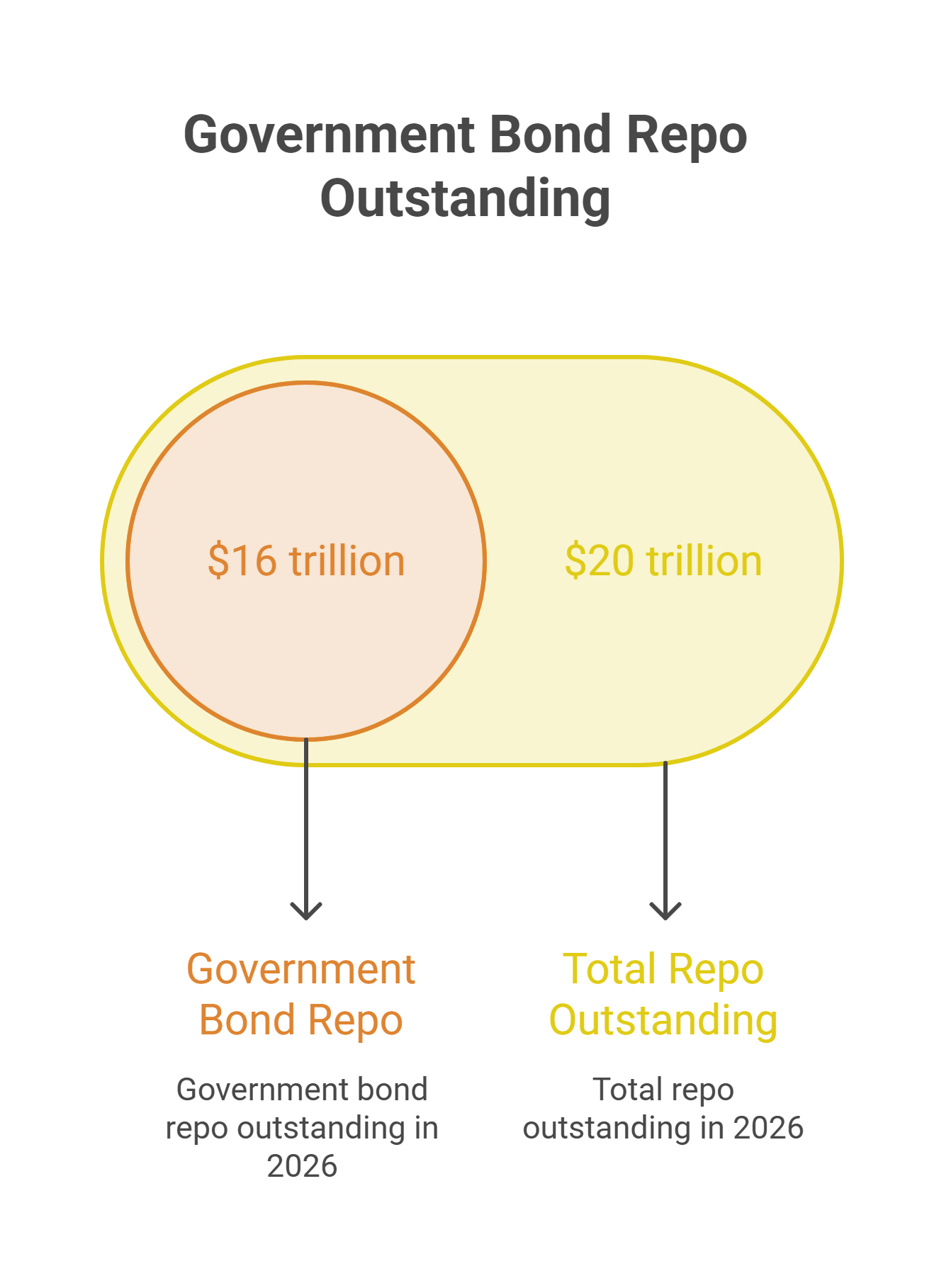
Technology Improving Collateral Visibility and Allocation
Technology is increasingly being used to make collateral pools easier to see, assess and allocate across different obligations. The emphasis is moving toward more integrated processes that can identify eligible assets, evaluate their value, match them against requirements and support transfers or substitutions with less manual intervention. Collateral mobility therefore increasingly depends on the quality of data, connectivity and workflow automation surrounding the assets themselves. Automation can support several parts of this process:
- Automation – Reducing manual intervention in eligibility checks, allocation and collateral movements.
- Optimisation – Selecting suitable assets for different obligations while considering liquidity, cost and eligibility.
- Substitution – Allowing institutions to replace collateral as requirements or asset availability change.
- Settlement – Improving the coordination of securities movements and collateral instructions across interconnected infrastructures.
Harmonised collateral-management infrastructure can help reduce some of these frictions by standardising processes and improving the ability to move securities across market environments. The broader direction is toward more integrated collateral workflows, where institutions can manage their available assets as a connected pool rather than as isolated positions. The ECB’s collateral-management framework demonstrates how standardised processes can support cross-border movement and more harmonised handling of collateral. As institutions look to improve visibility, allocation, substitution and settlement, collateral mobility increasingly depends on the quality of the collateral management infrastructure. This makes collateral processes increasingly connected with the broader transformation of bank operations, where automation and integrated workflows are reshaping how financial institutions manage assets, liquidity and transaction flows. The result is that collateral mobility is becoming less about the physical movement of securities alone and more about the ability of financial institutions to make eligible assets available across interconnected markets at the right time.
Liquidity Resilience Increasing the Value of Mobile Collateral
The importance of collateral extends beyond individual funding or margin transactions because liquidity pressures can emerge across several markets at the same time. When margin requirements rise rapidly or funding conditions tighten, institutions need to identify usable assets and deploy them without unnecessary operational or settlement delays. The BIS has highlighted how rapid increases in margin and collateral requirements can amplify liquidity needs, making effective collateral practices part of broader financial resilience. This makes the strategic value of collateral increasingly dependent on four areas:
- Liquidity readiness – Institutions need sufficient eligible assets that can be accessed quickly when funding or margin requirements change.
- Asset flexibility – A diversified pool of securities can provide more options for meeting different collateral requirements across markets.
- Market resilience – Efficient collateral flows can support the functioning of repo and securities-financing markets during periods of heightened demand for liquidity.
- Risk management – Strong collateral processes can help institutions manage concentration, operational and counterparty risks associated with collateral movements and reuse.
The wider significance is therefore about how financial institutions manage their balance sheets across interconnected markets. Global repo activity, derivatives exposures and clearing requirements create recurring demands for collateral, while differences between infrastructures can restrict how easily assets can be redirected. Industry frameworks focused on global repo and collateral markets increasingly emphasise standardisation, interoperability and the ability to access and optimise collateral across market environments. For financial institutions, this means collateral strategy is becoming increasingly connected to liquidity strategy. The ability to see where assets are held, determine where they are eligible, and move or substitute them efficiently can influence how effectively firms respond to changing market conditions. Collateral mobility is consequently becoming a strategic capability rather than simply an operational function. As this capability develops, firms will need to look beyond the quantity of collateral on their balance sheets and assess how effectively that collateral can move through the financial system. Standardised processes, connected infrastructures, automation and stronger risk controls can help turn existing asset pools into more flexible liquidity resources. This places collateral mobility alongside broader efforts to strengthen market resilience and modernise financial-market infrastructure.
References
- Bank for International Settlements – Liquidity preparedness for margin and collateral calls – 2026
- Financial Stability Board – Vulnerabilities in Government Bond-backed Repo Markets – 2026
- Financial Stability Board – Re-hypothecation and collateral re-use: Potential financial stability issues, market evolution and regulatory approaches – 2017
- European Central Bank – What is the ECMS?
- European Central Bank – Single Collateral Management Rulebook for Europe (SCoRE)
- International Capital Market Association – ICMA Global Repo and Collateral Forum (GRCF)