
















The World’s Leading Claims Event

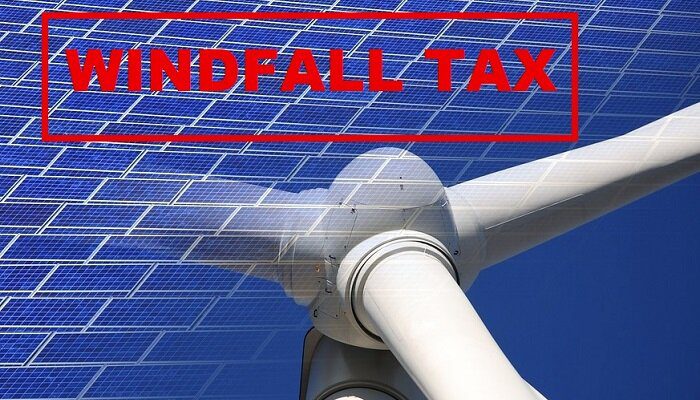
Windfall Tax- Russia Looks To Cover Plunging Oil Revenue

Note* - All images used are for editorial and illustrative purposes only and may not originate from the original news provider or associated company.

Subscribe

- Never miss a story with notifications

- Gain full access to our premium content

- Browse free from any location or device.

Media Packs

Expand Your Reach With Our Customized Solutions Empowering Your Campaigns To Maximize Your Reach & Drive Real Results!

– Access the Media Pack Now

– Book a Conference Call

– Leave Message for Us to Get Back

Related stories

EIB Expands Green Checker Platform Beyond the European Union

The European Investment Bank (EIB) Group has expanded its...

U.S. Bank Split Card Launched to Enable Automatic Payments

U.S. Bank has unveiled the U.S. Bank Splitâ„¢ World...

Lloyds Banking Group Unveils AI-Powered Financial Assistant

Lloyds Banking Group is introducing the UK’s first large-scale,...

US Fed Revises Supervisory Rating Framework for Big Banks

The Federal Reserve Board has approved final amendments to...

Moscow is planning to go ahead with a one-time windfall tax on large companies as a stopgap step to keep a check on the dangerously falling oil and gas revenues that have left the oil-rich country with a deficit of $25bn.

As per RIA Novosti, a Russian state news agency, Russia is looking to get a voluntary one-off contribution from big companies.

The unnamed sources familiar with this development suggest that there has been a proposal as well as a counterproposal that has already been tabled. The first proposal comes from Mikhail Mishustin, the prime minister of Russia, asking members of the Russian Union of Industrialists and Entrepreneurs to give a one-off fee of $2.8 billion to the government. Apparently there has been a counter proposal from the RSPP which suggests for a .5% surge in the existing income tax which is levied on the companies.

The ministry of finance in Russia although is not considering to increase the income taxes. According to the Deputy Prime Minister, this is no where a tax increase. It just happens to be a windfall tax, which is a concept in tax practise called as one time tax collection.

However, this contribution as a windfall tax is going to be voluntary. It is well to be noted that Russia’s revenues from oil and gas have plummeted in January by almost 46% as compared to the same month last year because of the sanctions that are now taking shape on Russian oil exports, which have already led to a slump in the price of flagship crude.

In January this year, the Russian flagship Ural grade averaged 42% lower in terms of price than in January 2022, following an EU embargo as well as a G7 price cap that came into effect last December. If we talk of figures, the average price of Urals in January was $49.48 per barrel, which was 1.7 times less than what was witnessed in January 2022, when it averaged $85.64 a barrel.

Latest stories

Related stories

EIB Expands Green Checker Platform Beyond the European Union

The European Investment Bank (EIB) Group has expanded its...

U.S. Bank Split Card Launched to Enable Automatic Payments

U.S. Bank has unveiled the U.S. Bank Splitâ„¢ World...

Lloyds Banking Group Unveils AI-Powered Financial Assistant

Lloyds Banking Group is introducing the UK’s first large-scale,...

US Fed Revises Supervisory Rating Framework for Big Banks

The Federal Reserve Board has approved final amendments to...

Subscribe

- Never miss a story with notifications

- Gain full access to our premium content

- Browse free from any location or device.

Media Packs

Expand Your Reach With Our Customized Solutions Empowering Your Campaigns To Maximize Your Reach & Drive Real Results!

– Access the Media Pack Now

– Book a Conference Call

– Leave Message for Us to Get Back

Translate »