















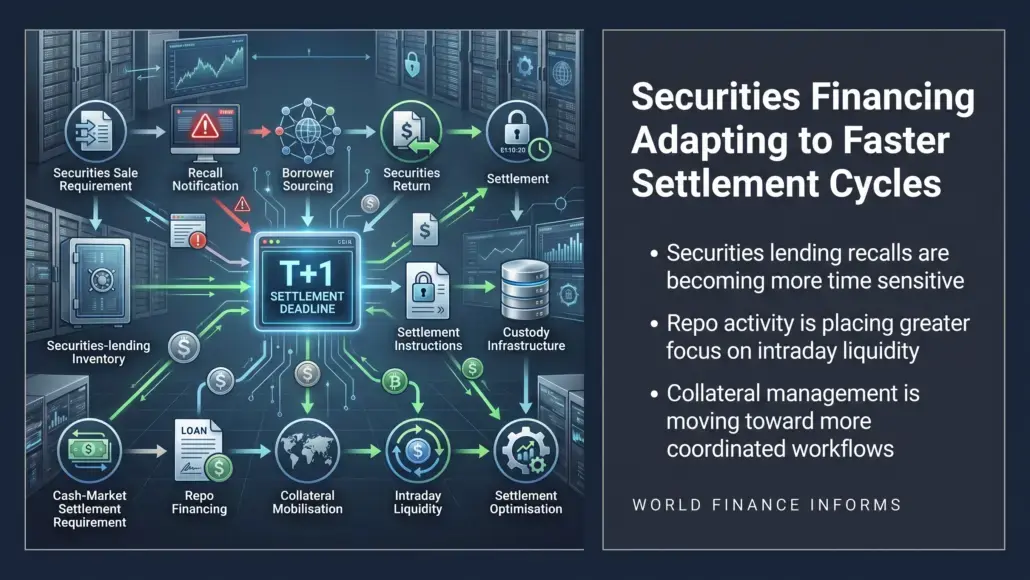


Securities financing is becoming more time-sensitive as shorter settlement cycles change the pace at which securities and collateral need to move through the market. For World Finance Informs, the shift is important because securities lending and repo support the liquidity and settlement of cash-market transactions. As markets move toward T+1, firms have less time to identify securities requirements, issue recalls, arrange returns and position collateral before settlement deadlines.
Securities Lending Facing Tighter Recall Windows
The impact is particularly visible in securities lending. When a lender sells securities that are already on loan, the borrower needs to return those securities in time for the sale to settle. A shorter settlement cycle therefore reduces the time available between identifying the sale, issuing a recall, sourcing the securities and completing the return. European T+1 preparations are responding with earlier recall notifications, greater use of automation and recommendations for same-day returns. The objective is to move securities back into the lender’s inventory early enough to support settlement rather than relying on late manual intervention.
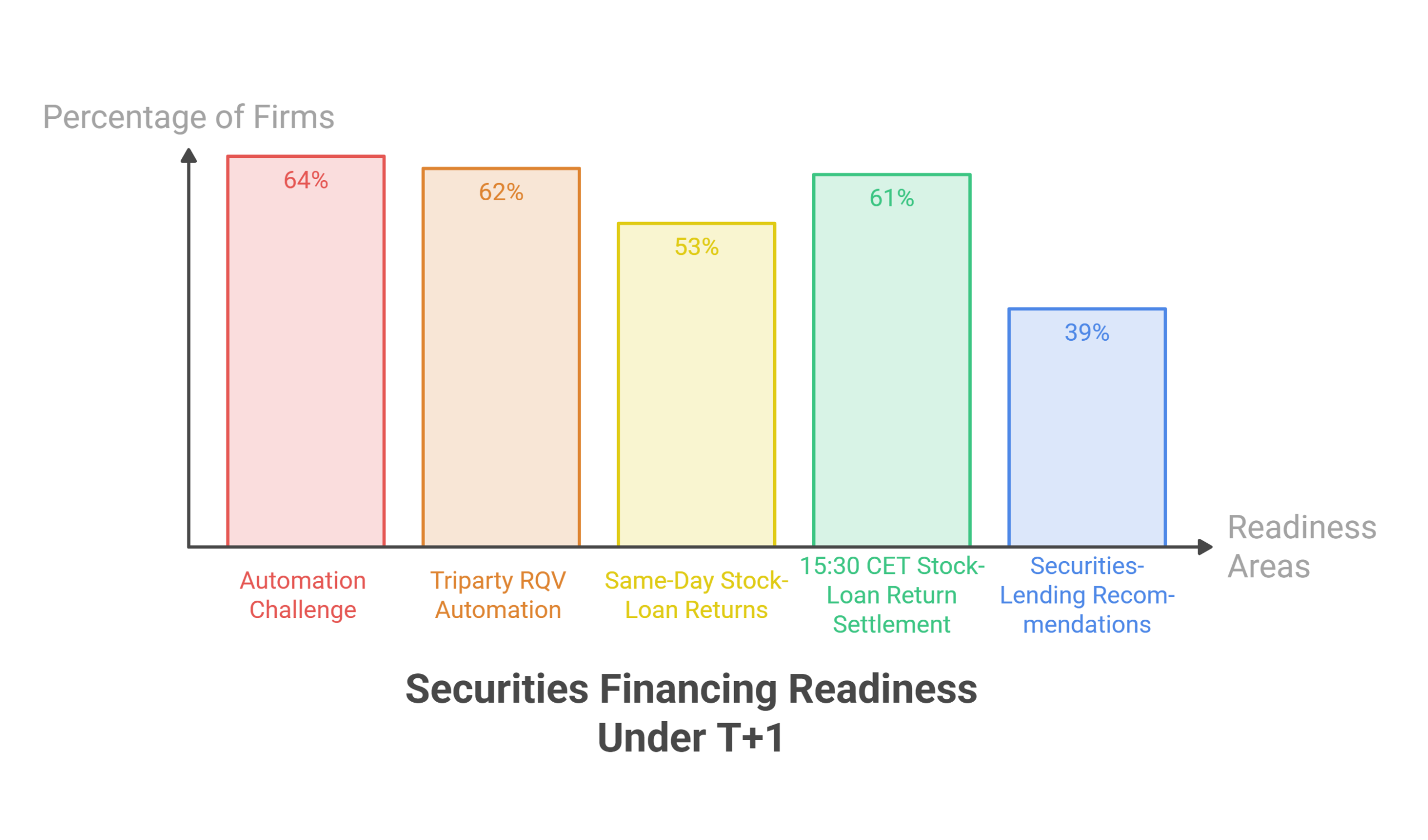
This operational pressure is already visible in industry readiness work. The European T+1 Industry Committee’s latest securities-financing findings show that firms are progressing across several implementation measures, but readiness remains uneven.
Repo Settlement Facing Greater Intraday Pressure
The impact of shorter settlement cycles extends beyond securities lending into repo, where market participants use secured financing to support trading and liquidity. As cash-market transactions settle earlier, some financing activity connected to those trades may also need to settle on the same day. That creates greater pressure around intraday liquidity because firms may need to mobilise cash and collateral within narrower windows while maintaining capacity for other settlement obligations.
The European T+1 Industry Committee has therefore focused on settlement optimisation alongside the migration. Its recommendations include mechanisms that coordinate the release of selected settlement instructions so firms can preserve netting opportunities and avoid unnecessary intraday liquidity consumption. The proposed Gating Event allows eligible instructions to be held until a defined point before being released together for settlement. For securities financing, this matters because fragmented same-day repo settlements could increase liquidity demands.
Collateral Management Becoming More Time Sensitive
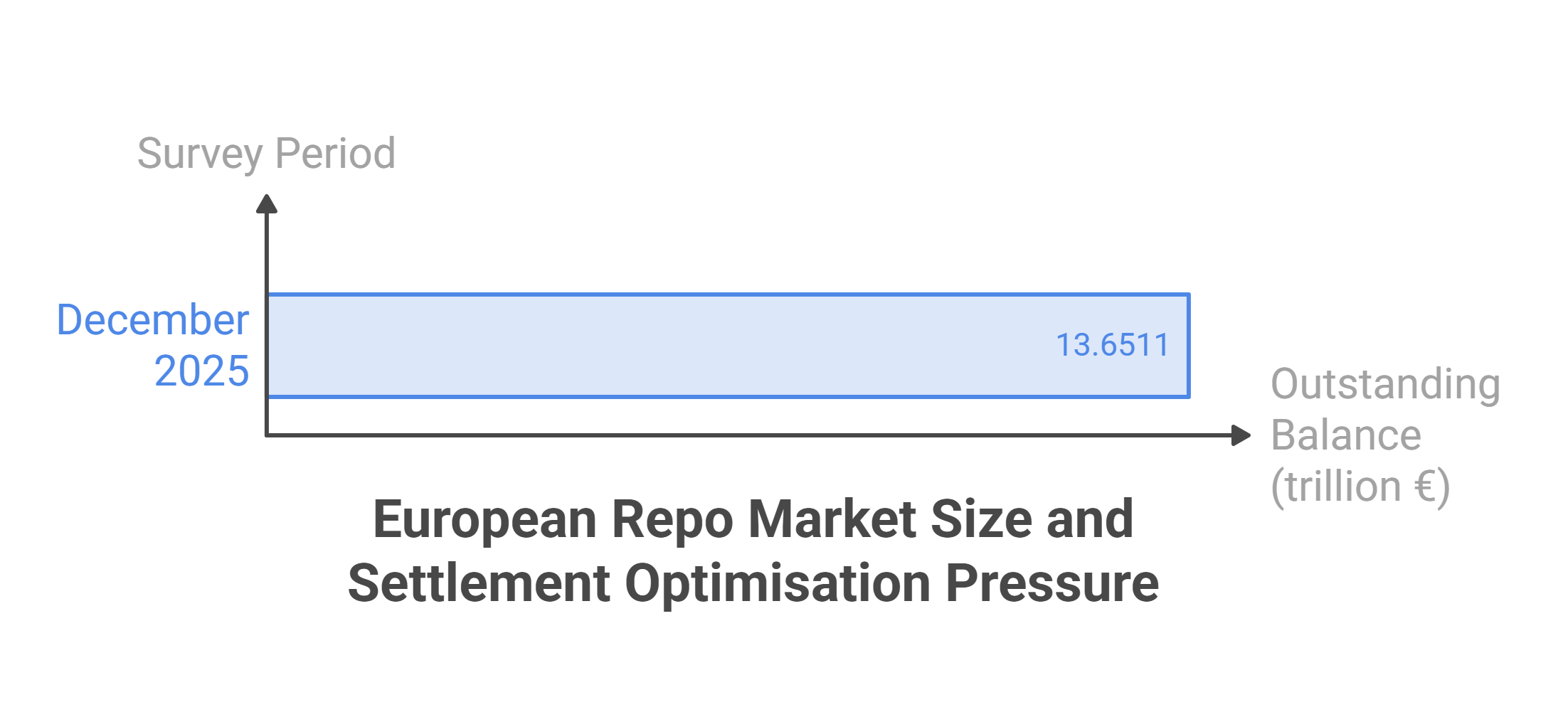
The scale of the repo market makes the issue more significant. ICMA’s December 2025 survey recorded €13.6511 trillion of outstanding European repo and reverse-repo activity across 59 participating institutions. The figure is a survey measure rather than total market turnover, but it illustrates the importance of repo as a source of secured funding and liquidity across European markets.