


















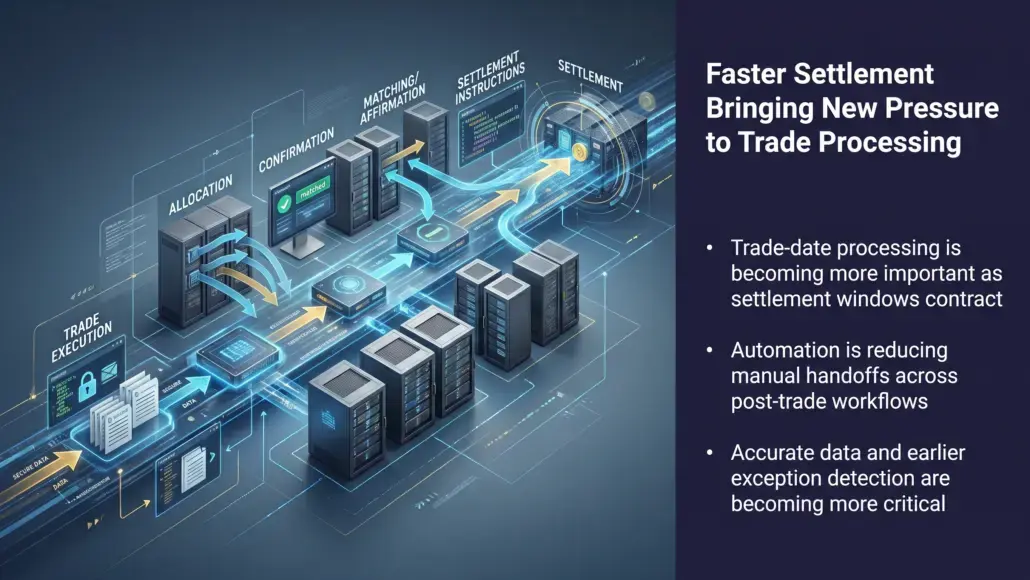


The move toward faster settlement is changing how market participants manage the period between trade execution and final settlement. For World Finance Informs, the development points to a broader operational shift across securities markets: activities that once had more time to complete are increasingly being pulled toward trade date. Allocations, confirmations, matching and settlement instructions now face tighter deadlines, leaving firms with less room to correct incomplete or inaccurate information before settlement.
Trade-Date Processing Becoming More Critical
The move to faster settlement is therefore putting pressure on the processes that prepare a trade for settlement rather than on settlement itself. In Europe, the planned transition to T+1 on 11 October 2027 is already driving changes to allocation and confirmation practices, with ESMA proposing electronic, standardised communication and earlier completion of these processes. AFME’s roadmap similarly calls for standardised electronic exchange of allocations and confirmations and intraday transmission, reflecting the need to move more post-trade activity into the trade date.
The effect extends across the transaction chain because each stage depends on information generated earlier. An incorrect allocation can delay confirmation, an unmatched trade can complicate settlement instructions, and incomplete data can leave less time for operational teams to intervene. As the move toward faster settlement progresses, firms therefore have greater incentive to reduce manual handoffs, improve data quality and identify discrepancies while there is still time to act.
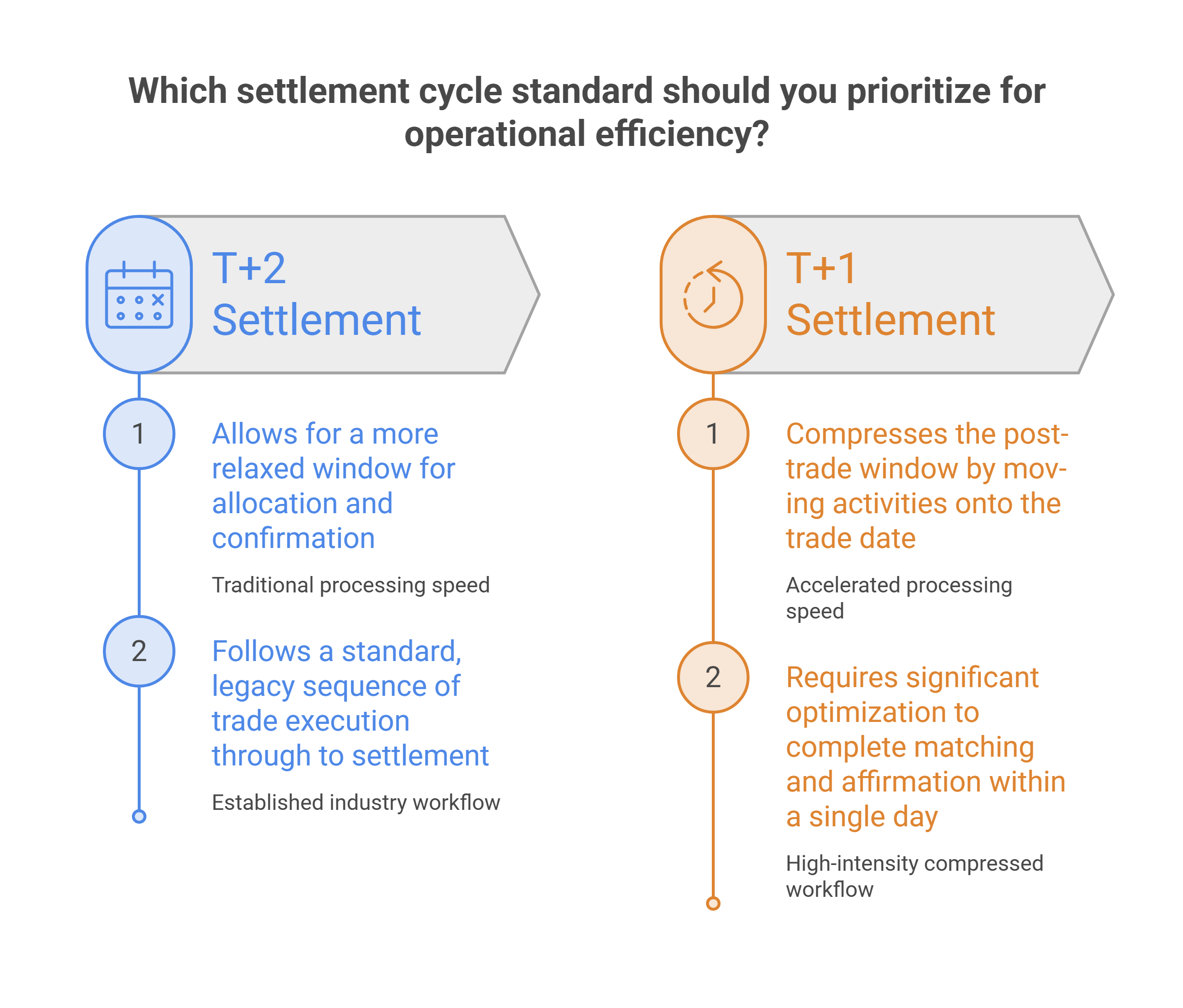
Key Takeaway: T+1 compresses the upstream post-trade window, making timely processing and accurate settlement data more important.
The U.S. transition provides practical evidence of how firms can adapt to a shorter cycle. Industry data showed nearly 95% of transactions met the affirmation criteria by the 9:00 p.m. ET trade-date cutoff after the 2024 transition, compared with 73% at the end of January 2024. The experience does not remove the operational challenges of shorter settlement, but it demonstrates why trade-date processing and automation have become central to readiness. That creates a natural bridge to corporate-event processing within compressed settlement timelines.
Automation Moving More Work into the Trade Date