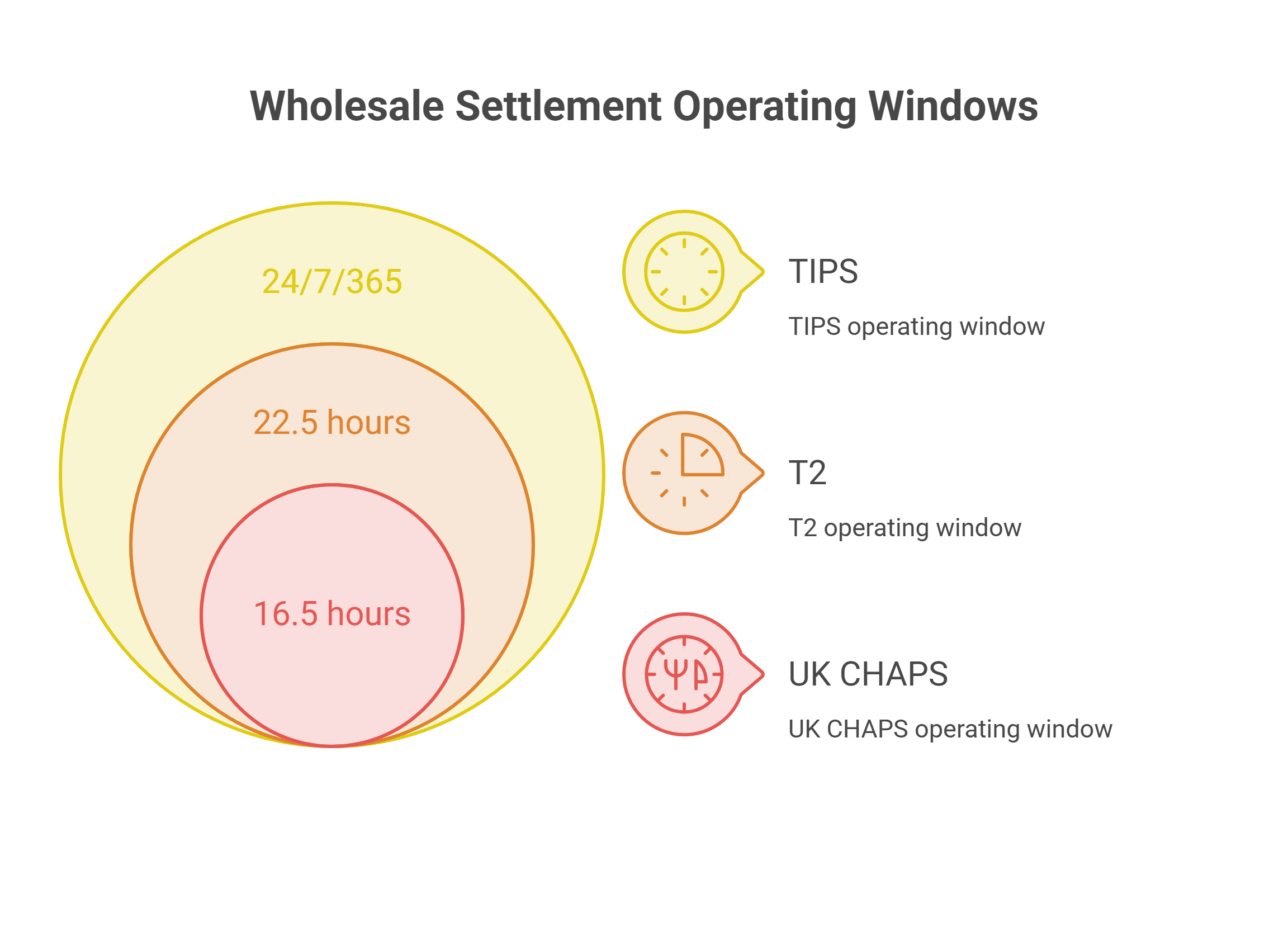
















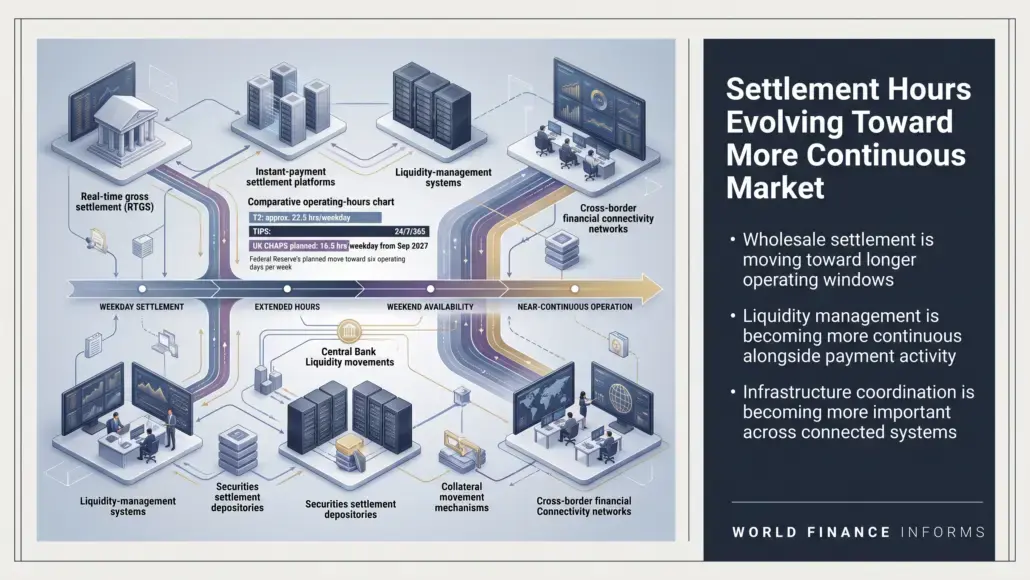


Longer operating windows are changing how settlement infrastructure manages liquidity, maintenance and coordination across connected systems. The ECB’s phased approach recognises that extending wholesale availability requires supporting mechanisms rather than simply keeping existing services open for more hours. Automated liquidity transfers, weekend settlement capacity and later cut-offs can help participants manage funding positions when payment activity continues beyond conventional wholesale windows. The Bank of England is pursuing a similar direction, with an early-morning CHAPS extension planned from September 2027 and consultation on longer-term models that could include weekend availability.
Liquidity Management Becoming More Continuous
The main operational issue is liquidity. When instant-payment systems remain available around the clock, banks need ways to reposition central-bank liquidity outside traditional wholesale windows. The ECB has introduced automated liquidity-management measures for TIPS and a short weekend T2 settlement window, while its longer-term roadmap considers near-continuous central liquidity management. These changes indicate that settlement hours are increasingly part of the liquidity architecture rather than simply a calendar setting.
A longer operating day also creates new demands on value dating, reconciliation and maintenance. Firms need clear boundaries for accounting and interest calculations even when transactions extend later into the day or across weekends. Maintenance and recovery periods can become harder to schedule where payment, securities and collateral systems depend on one another.
Infrastructure Coordination Becoming More Important
Europe, the UK and the United States are taking different approaches to extending settlement hours. T2 is moving through a phased roadmap, CHAPS is extending its opening time before considering broader models, and the Federal Reserve plans to add Sundays and weekday holidays to Fedwire and the National Settlement Service. The approaches differ, but all point toward closer alignment between wholesale settlement and more continuous financial activity.
This makes settlement hours an infrastructure-coordination issue as much as an operating-hours issue. Extending one service has limited value when another connected system remains unavailable. Synchronising payment, securities, collateral and liquidity systems will therefore become more important, particularly for cross-border activity. This creates a natural link to settlement infrastructure supporting continuously available markets.