


















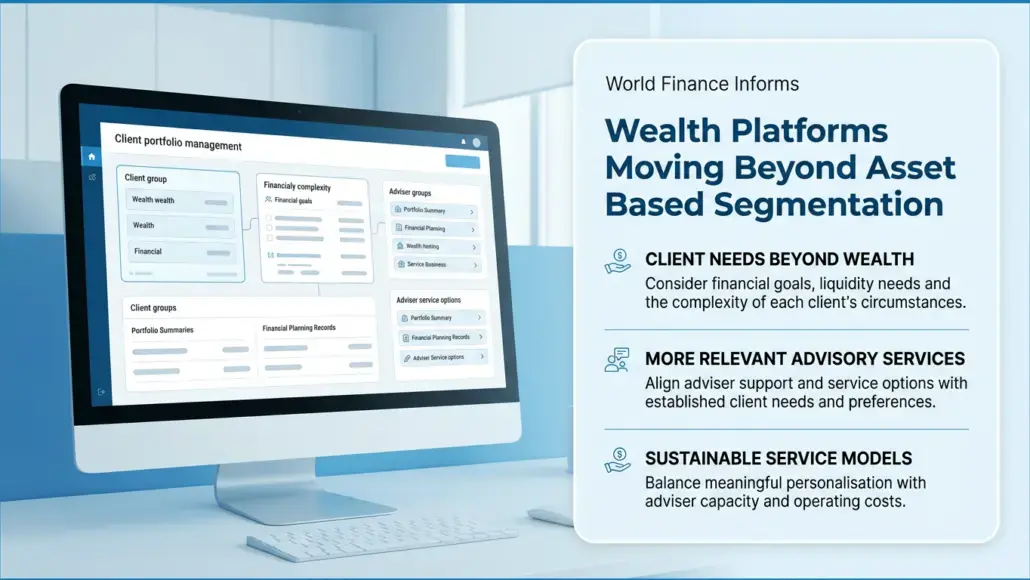


Wealth management firms have traditionally grouped clients according to investable assets, using wealth thresholds to determine service eligibility, adviser access and commercial priorities. Although these categories remain useful for managing resources, they do not fully explain what clients need from their financial relationships. Two investors with similar portfolios may have different liquidity requirements, financial responsibilities, investment experience and long term objectives.
Asset based segmentation is therefore becoming an important consideration as wealth managers reassess how they organise client services. The challenge is to understand these differences without creating an unnecessarily complex or expensive operating model. Firms need to combine commercially useful client categories with a more detailed understanding of financial circumstances, service expectations and the level of advice required.
Wealth Bands Do Not Fully Explain Client Needs
Traditional segmentation helps firms establish service tiers and allocate adviser resources, but its limitations become apparent when clients within the same wealth category require substantially different support. A business owner preparing for succession may need complex financial planning, while another client with comparable assets may primarily require portfolio monitoring and periodic reviews.
Treating both relationships identically can lead to unsuitable service allocation, while excessive customisation can increase costs and operational demands. Asset based segmentation should therefore be considered alongside relevant indicators such as financial goals, liquidity needs, life stages and preferences for adviser interaction. These factors can help firms distinguish clients who need specialist support from those who prefer more standardised or digitally delivered services, without assuming that wealth or age alone determines behaviour.
A more differentiated approach can consider several practical factors:
- Financial complexity: Assess liquidity requirements, liabilities, ownership structures and the need for specialised planning alongside the value of investable assets.
- Life stage and objectives: Consider retirement, business succession, family responsibilities and other financial goals that may change the services a client requires.
- Advice preferences: Establish whether clients need frequent adviser contact, periodic portfolio reviews, digital self service or a combination of channels.
- Service requirements: Identify demand for specialist investment support, coordinated financial planning, detailed reporting or family wealth services.
- Commercial viability: Evaluate whether differentiated service levels deliver meaningful client value while remaining sustainable in terms of adviser capacity, technology and operating costs.
The purpose of asset based segmentation is not to discard wealth thresholds, but to place them within a more complete framework for understanding client needs. This can help firms make service allocation more relevant while preserving clear, consistent and commercially viable operating models.
Segmentation Must Translate into Tailored Services
Classifying clients is only the first step towards delivering a differentiated service experience. Capgemini’s World Wealth Report 2026 found that 97% of surveyed wealth management firms primarily segmented clients by wealth bands, while only 17% of surveyed high net worth individuals considered their advisory experience both seamless and personalised.
Separately, Datos Insights reported in 2025 that more than 90% of surveyed firms had implemented segmentation, but only 28% delivered fully tailored solutions to distinct client segments. These studies used different samples and methodologies, but both highlight the distinction between categorising clients and translating those categories into meaningful service differences.
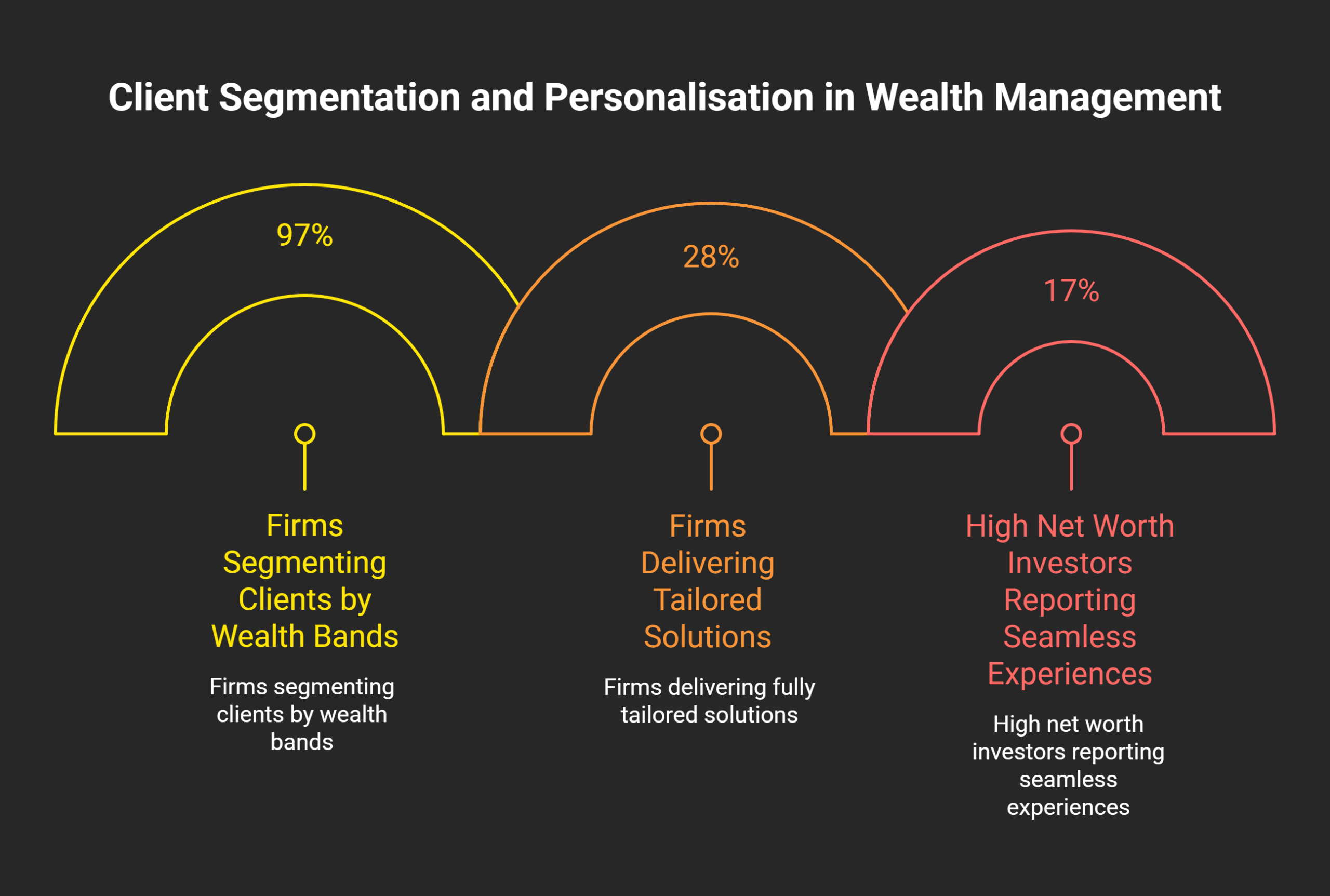
These findings illustrate why asset based segmentation may need to be supplemented by clearer service design and more relevant client information.
Client Data Must Inform Service Allocation
A more differentiated model requires firms to connect segmentation rules with the services they actually deliver. Client relationship management records, portfolio information and financial planning data can help advisers understand whether a client needs specialist advice, regular portfolio reviews or more flexible digital access. However, these distinctions must reflect verified needs rather than assumptions based on age, wealth or inferred behaviour. Firms should also consider whether additional service tiers justify their costs through meaningful improvements in engagement, retention or operational efficiency. This is where asset based segmentation connects with hybrid advice, which examines how digital services and human advisers can be combined according to client requirements.
- Define service levels: Specify adviser access, review frequency and specialist support for each meaningful client group.
- Use relevant information: Combine wealth thresholds with financial objectives, complexity and established service preferences.
- Protect data quality: Keep client records accurate and ensure sensitive information is used appropriately.
- Assess commercial value: Compare service costs, adviser capacity and client outcomes before expanding customisation.
Ultimately, asset based segmentation remains useful as a commercial framework, but its effectiveness depends on how well firms translate client categories into appropriate services.
Building More Relevant and Sustainable Service Models
Effective asset based segmentation requires wealth managers to balance client needs with the practical limits of service delivery. Combining wealth thresholds with financial complexity, planning objectives and established service preferences can help firms allocate adviser resources more effectively. However, additional segmentation is valuable only when it produces meaningful differences in the services clients receive. Firms must also maintain accurate information and assess whether more tailored service models justify their operational costs.
Priorities for Implementation
- Review segment definitions: Ensure client groups reflect relevant financial needs rather than wealth thresholds alone.
- Connect segmentation to delivery: Define how adviser access, review frequency and specialist support differ across service groups.
- Measure effectiveness: Track client engagement, retention, service costs and adviser capacity to assess whether the model delivers business value.
Ultimately, wealth management firms need segmentation frameworks that remain commercially viable while supporting relevant, consistent client experiences. Technology can help operationalise these frameworks, but sound service design and ongoing evaluation determine their effectiveness.
References
- Capgemini Research Institute. World Wealth Report 2026.
- Datos Insights. The State of Client Segmentation in Wealth Management: Strategies, Challenges, and Opportunities. May 2025.