















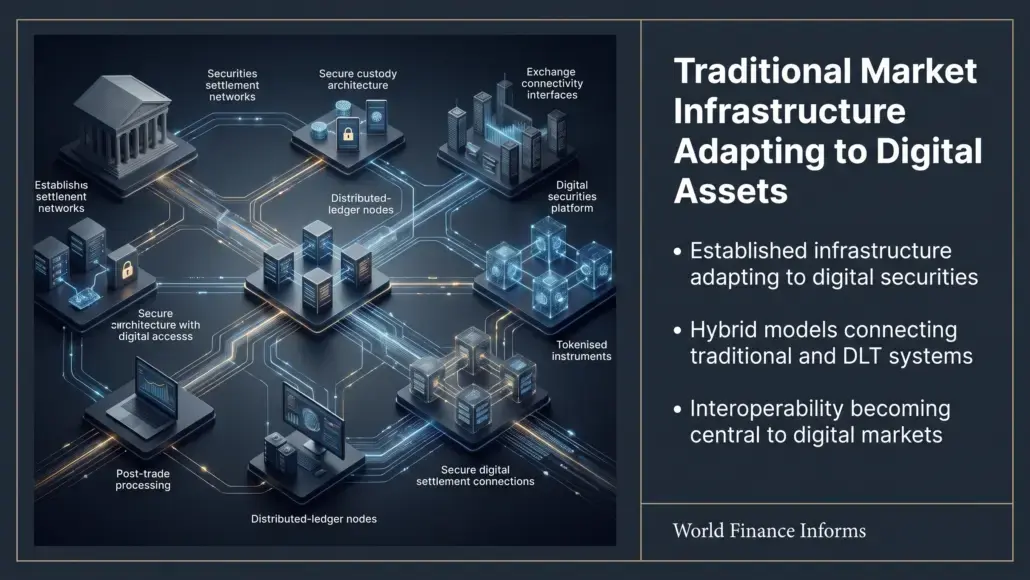


Traditional market infrastructure is increasingly being adapted to accommodate digital securities as financial institutions move DLT-based issuance and settlement beyond isolated experiments. The development is significant because digital assets still depend on established market functions, including issuance, custody, settlement, asset servicing and access to liquidity. The emerging direction is therefore less about replacing conventional infrastructure and more about enabling established operators to support digital securities within regulated financial markets.
Digital Securities Moving into Established Market Structures
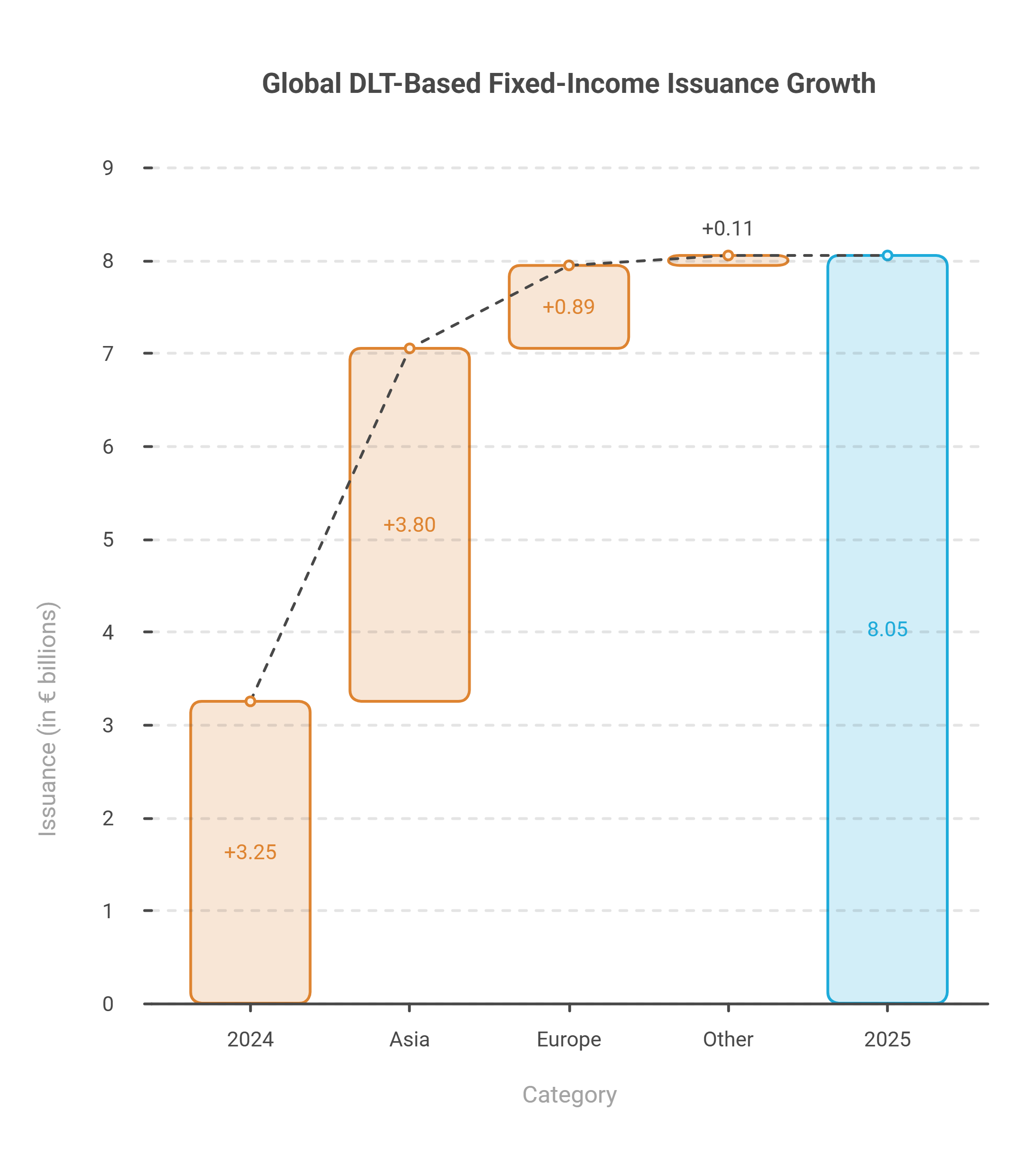
The shift is becoming visible across several major markets. AFME recorded €4.8 billion of global DLT-based fixed-income issuance in 2025, up 48% from the previous year, indicating that activity is expanding from a relatively small base. Asia accounted for the largest share, while European and other markets also recorded issuance. At the infrastructure level, firms are responding by developing hybrid models that connect digital securities with established post-trade capabilities, rather than requiring investors to move entirely into separate digital ecosystems.