

















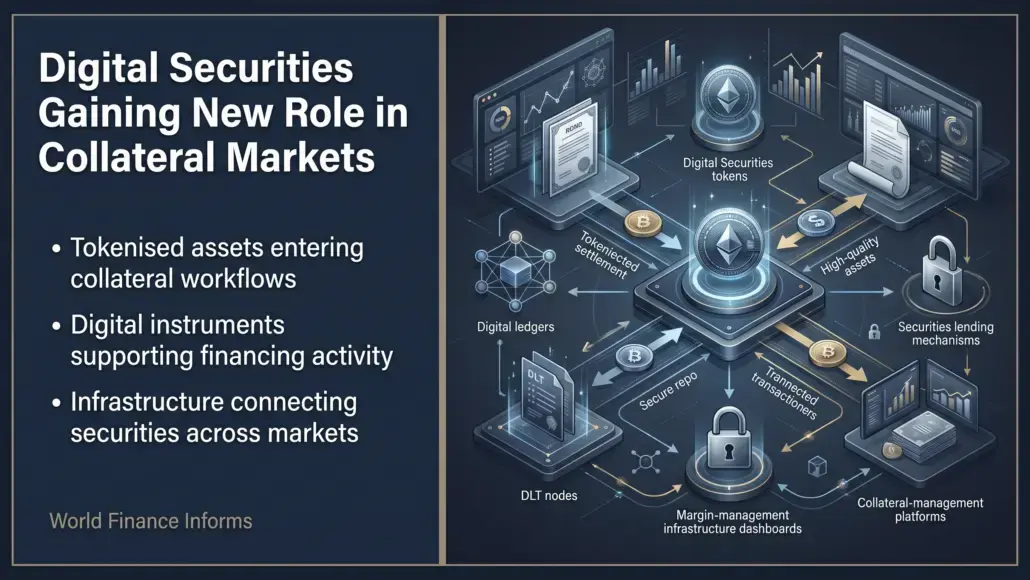


Digital securities are moving beyond issuance and settlement experiments as financial institutions explore their use in collateral and financing workflows. The development is significant because collateral markets depend on the rapid movement, valuation and reuse of assets across multiple participants. As tokenised instruments become more integrated with financial infrastructure, their role can extend into repo, securities lending and margin processes, bringing digital assets closer to established liquidity management activity.
Tokenised Assets Entering Financing Workflows
Recent market activity shows this shift from concept to operational use. DTCC reported in July 2026 that DTC-tokenized securities had been used in production trades covering collateral pledges, securities lending, U.S. Treasury repo delivery-versus-payment transactions and central counterparty margin workflows. The transactions demonstrated that tokenised representations of securities can participate in several collateral-related processes while remaining connected to established post-trade infrastructure.
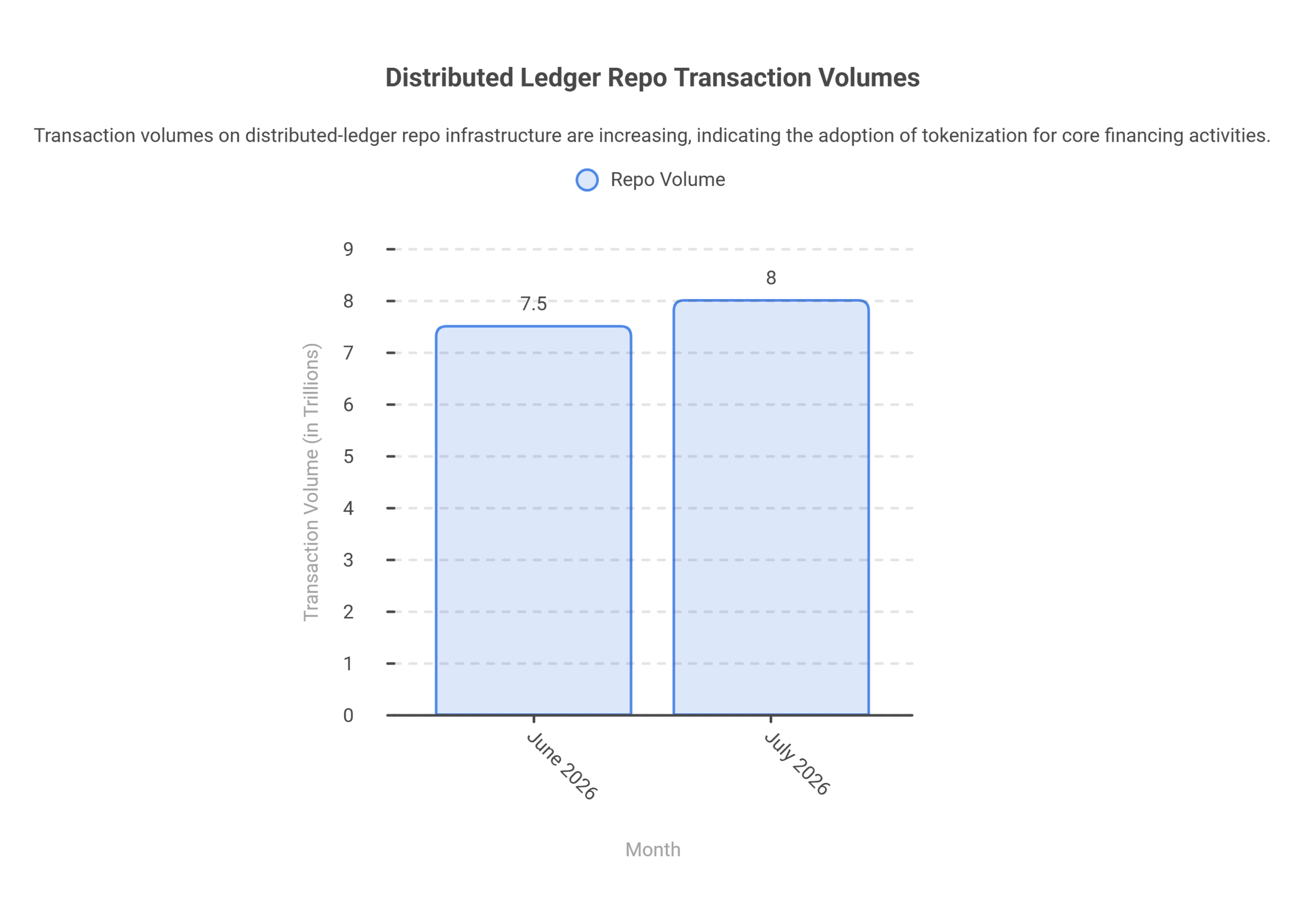
Key Takeaway: Large institutional volumes on distributed-ledger repo infrastructure show that tokenisation is already being applied to core financing and collateral activity.
The emergence of these workflows also changes how market participants can think about digital securities. Instead of functioning only as digital representations of assets held for investment, tokenised instruments can become operational assets that move through financing arrangements and support liquidity needs. Broadridge’s distributed-ledger repo activity illustrates the scale that dedicated digital infrastructure can already process, although platform volumes should not be treated as a measure of the entire tokenised collateral market.
Collateral Eligibility Expanding with Market Infrastructure
The policy framework is developing alongside these market applications. From 30 March 2026, the Eurosystem began accepting eligible marketable assets issued through DLT-based services at central securities depositories as collateral for Eurosystem credit operations. The assets must still meet existing collateral requirements and be available for settlement in eligible systems, including TARGET2-Securities. The ECB is also examining how assets issued and settled entirely on DLT networks could become eligible in the future.
As digital securities become more embedded in collateral workflows, attention is also shifting toward how collateral can move between digital and conventional environments without creating new settlement or liquidity silos.