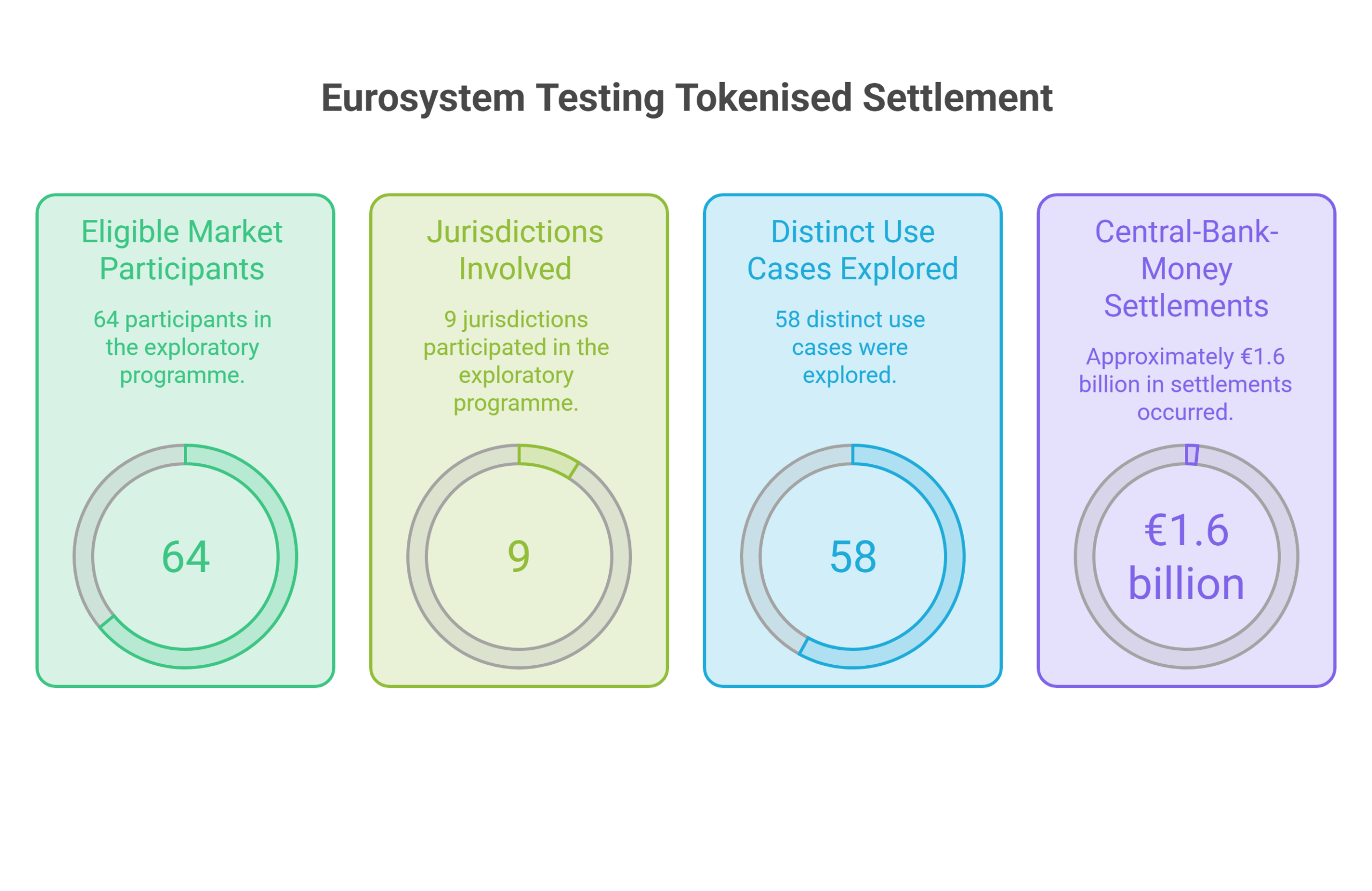

















Tokenised markets are moving from isolated experimentation toward closer integration with established financial infrastructure as institutions test how distributed-ledger-based assets can settle within regulated market systems. The development is becoming more concrete as central banks, market infrastructures and financial institutions explore ways to connect tokenised securities with established settlement mechanisms rather than creating entirely separate financial ecosystems. The broader significance for financial markets is that the long-term viability of tokenised assets depends not only on issuance technology, but also on settlement finality, trusted settlement assets, liquidity and interoperability.
Tokenisation Moving Beyond Isolated Market Experiments
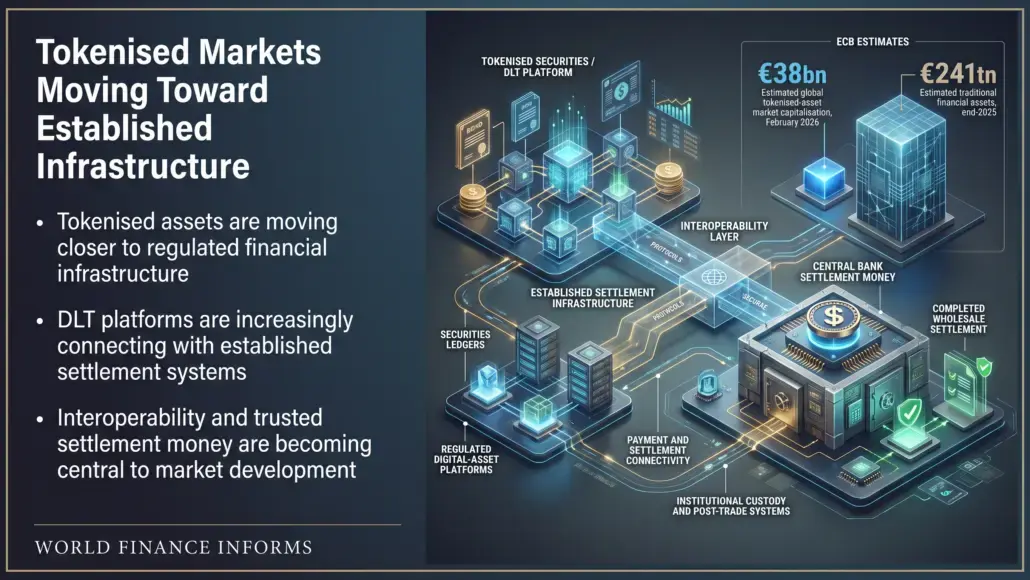
The scale of tokenised markets remains modest compared with traditional financial markets, but activity is becoming more established. ECB research estimated global tokenised assets on public blockchains at about €38 billion in February 2026, compared with roughly €241 trillion in traditional financial assets at the end of 2025. The comparison highlights both the growth of tokenised finance and the large gap that remains before it can become a mainstream market structure.
Much of the development has focused on debt instruments, money-market fund units and collateral-related activity, while adoption remains more limited across equities and more complex instruments. This concentration suggests that the immediate infrastructure challenge is not supporting every financial asset on DLT, but establishing reliable connections for the types of tokenised instruments already being tested.
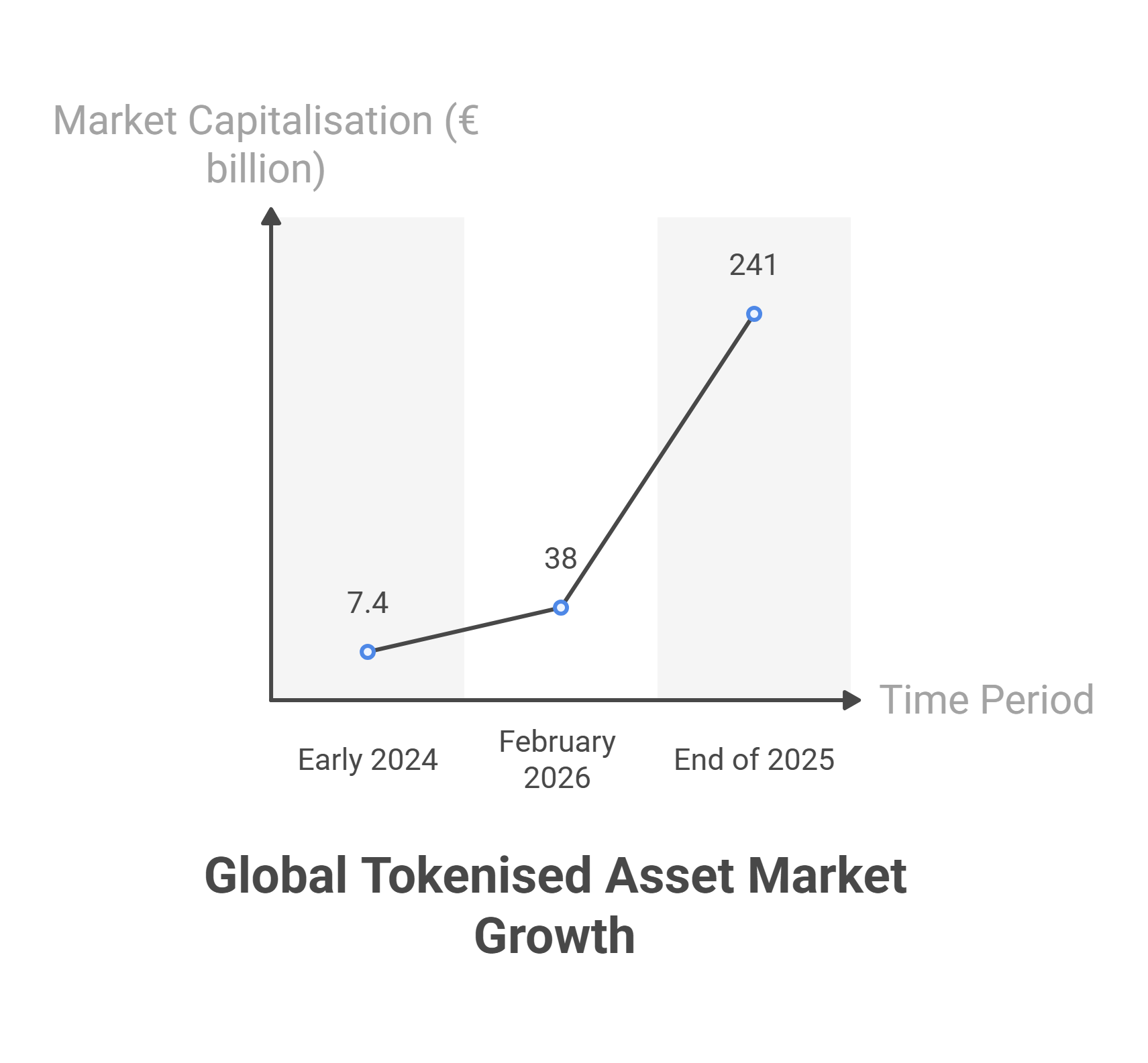
Key Takeaway: Tokenised finance is expanding from a small base, increasing the importance of building infrastructure that can connect emerging digital assets with established financial markets.
The infrastructure question is becoming more immediate as central banks begin creating those connections. The ECB launched Pontes in September 2026 to enable wholesale transactions in tokenised assets to settle in central bank money through a connection between market DLT platforms and TARGET Services. The initiative represents a move from experimentation toward operational infrastructure, while still leaving room for further participants and enhancements as the ecosystem develops.
As tokenised markets become more closely connected with established settlement arrangements, the emphasis is shifting from proving that assets can be represented on DLT toward making them function reliably within the broader financial system. That makes interoperability, settlement architecture and access to trusted forms of settlement money central to the next phase of development.