

















Across the global banking industry, the expansion of real-time services is increasing pressure on the core systems that manage accounts, transactions and financial records. For World Finance Informs, the issue is not simply whether a bank can connect to faster payment infrastructure, but whether its internal architecture can process transactions and update connected services with comparable speed. fast payment systems are exposing the limits of legacy environments as banks seek to provide continuously available banking services across digital channels.
Modern Core Architectures Supporting Continuous Banking Operations
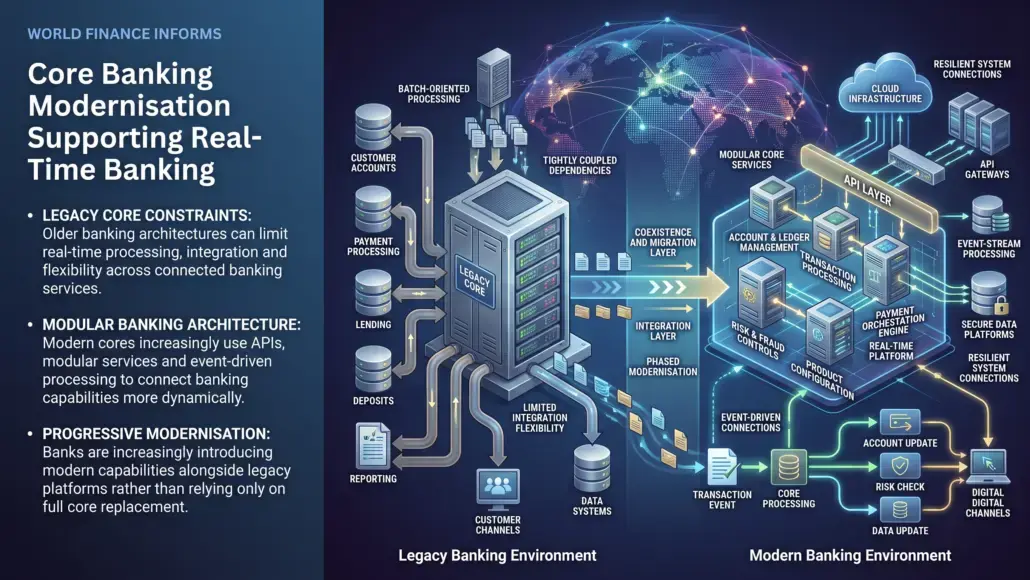
Traditional core environments often depend on tightly coupled applications, batch-oriented processing and rigid interfaces. Real-time banking requires a different operating model, in which account balances, transaction records and connected services can respond rapidly as events occur. This makes fast payment systems an important catalyst for core modernisation because payment speed can expose delays elsewhere in the banking architecture. A payment may settle quickly while customer-facing channels, account updates or supporting processes still depend on slower workflows.
Modernisation is therefore moving toward modular architectures, API-based connectivity and event-driven processing. These approaches allow banks to introduce or update individual capabilities without necessarily replacing every component of the existing environment. Fast payment systems can then connect more effectively with account management, transaction processing, data platforms and risk controls, creating a banking architecture designed for continuous operation.
The transition also requires banks to consider how new technology can coexist with critical legacy infrastructure. Rather than treating modernisation solely as a full core replacement, financial institutions are increasingly examining phased approaches that introduce new capabilities alongside existing systems. This creates a more flexible foundation for real-time services and connects naturally with payment verification and safer transaction initiation.
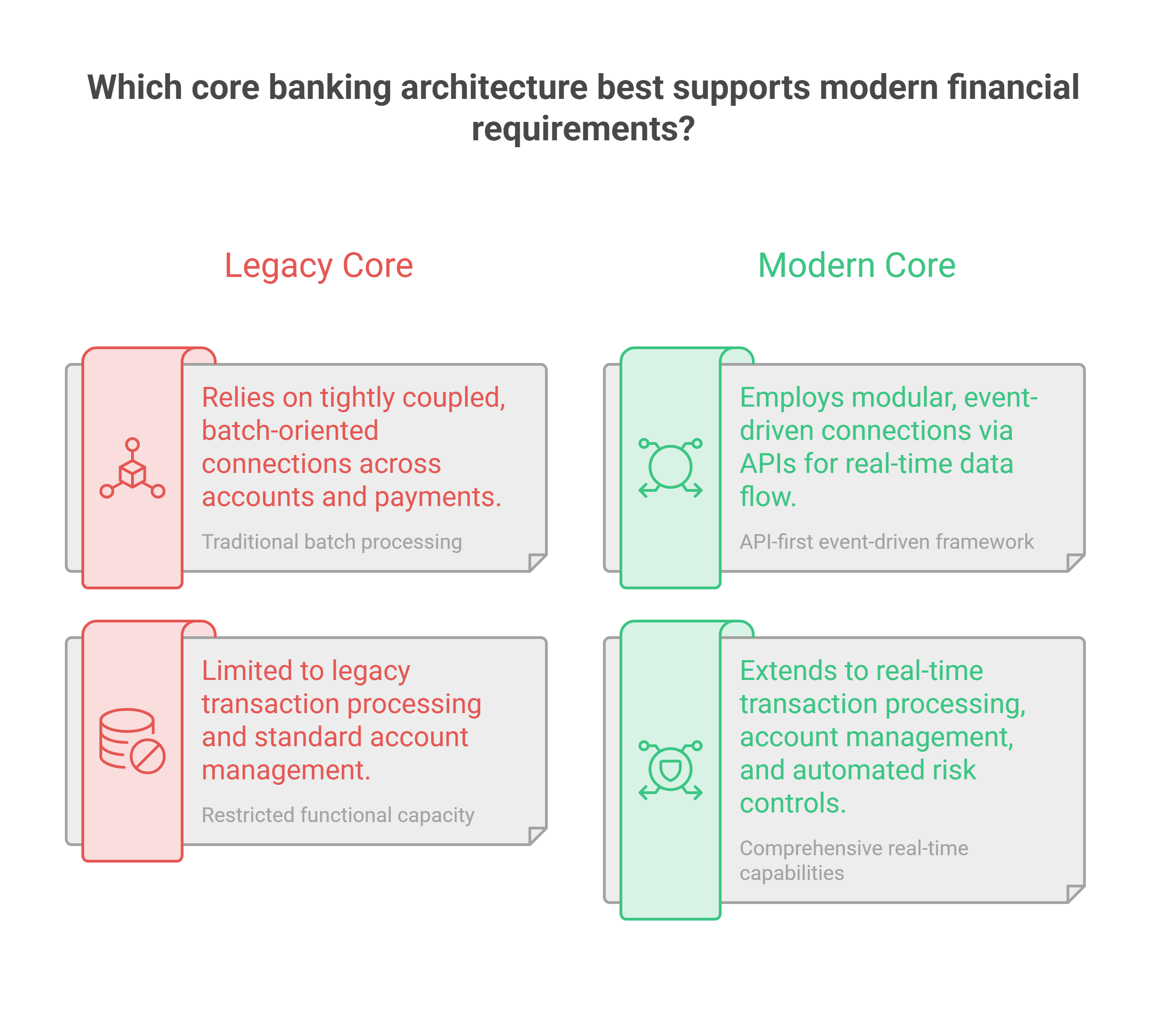
Key Takeaway: Real-time banking requires core architectures that can process transactions, data and connected services with greater speed, flexibility and continuity.

