




















The evolution of financial technology is entering a transformative new chapter with the rise of autonomous systems designed to perform complex, multi-step tasks without constant human intervention. AI agents in banking represent a significant departure from the static “chatbots” of the previous decade. While traditional AI focused on recognizing patterns or answering simple queries, agentic AI is capable of planning, reasoning, and executing actions across multiple software platforms. This transition from “passive assistant” to “active participant” is set to redefine the next wave of automation in the financial services industry, promising a level of operational efficiency and customer service that was previously the stuff of science fiction.
At its core, an AI agent is a software entity that can perceive its environment, reason about the best course of action to achieve a specific goal, and then interact with other systems to fulfill that objective. In a banking context, this could range from an agent that autonomously handles a complex mortgage application by gathering documents from various sources, to a trading agent that executes a sophisticated investment strategy across multiple global markets. The potential for AI agents in banking to streamline back-office operations and enhance the customer experience is immense, but it also necessitates a new approach to risk management, oversight, and technical architecture.
The Shift From Robotic Process Automation to Agentic AI
For several years, banks have relied on Robotic Process Automation (RPA) to handle repetitive, rule-based tasks such as data entry or simple transaction processing. While effective, RPA is brittle if a single step in the process changes, the robot fails. Agentic AI represents a more resilient and flexible alternative. Because these agents are powered by large language models and sophisticated reasoning engines, they can adapt to changing conditions and handle unstructured data. This allows for the automation of “knowledge work” tasks that require judgment, context, and the ability to navigate ambiguity.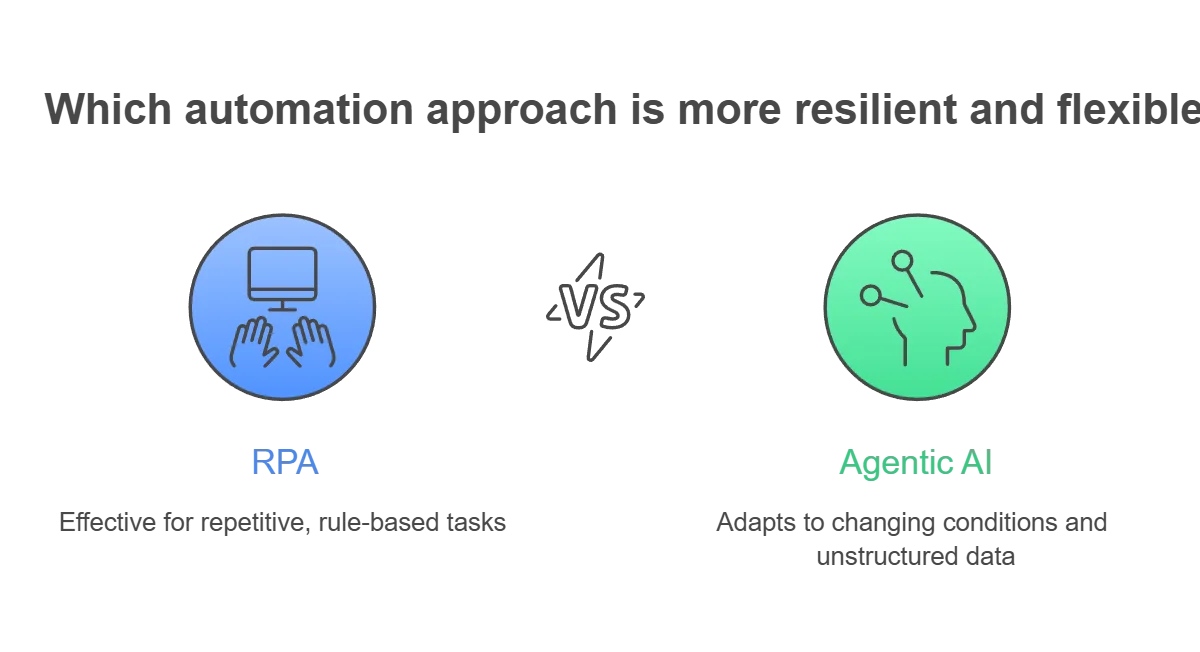
Orchestrating Complex Workflows Across Siloed Systems
One of the most powerful applications of AI agents in banking is their ability to act as a “connective tissue” between fragmented institutional systems. Most large banks operate a hodgepodge of legacy databases, modern cloud services, and third-party platforms. Traditionally, moving a complex process like commercial loan underwriting through these various systems required significant human effort to manually transfer data and ensure consistency. An AI agent, however, can be programmed to navigate these various interfaces autonomously, logging into different systems, extracting the necessary information, and ensuring that the entire workflow is completed without manual hand-offs.
Enhancing Decision-Making Speed and Accuracy
By delegating the information-gathering and preliminary analysis phases to AI agents, banks can dramatically increase the speed of their decision-making processes. In areas like trade finance or corporate lending, where the volume of documentation can be overwhelming, agents can synthesize thousands of pages of text, identify red flags, and present a concise summary to a human decision-maker. This “augmented intelligence” approach ensures that the final decision is based on a comprehensive analysis of all available data, reducing the risk of human oversight and shortening the “time to yes” for the customer.
Transforming the Customer Experience with Autonomous Assistants
The impact of AI agents in banking extends far beyond the back office they are also set to revolutionize how customers interact with their financial institutions. The current generation of banking apps is primarily transactional users log in to check balances or transfer money. The next generation will be “relational,” powered by personal AI agents that understand the customer’s financial life in its entirety. These agents will move beyond simply answering questions to proactively managing the customer’s finances, identifying opportunities for savings, and executing complex transactions on their behalf.
Proactive Financial Management and Personal Advisory
Imagine a personal banking agent that monitors a user’s spending habits, upcoming bills, and investment goals in real-time. If the agent notices that the user has a surplus of cash in a low-interest savings account, it could proactively suggest moving those funds to a more productive investment vehicle. If it detects a recurring subscription that the user hasn’t utilized, it could offer to cancel it. This level of proactive, personalized service has traditionally been reserved for high-net-worth individuals, but AI agents have the potential to democratize elite-level financial advice, making it accessible to every retail banking customer.
Simplifying Complex Customer Journeys and Problem Resolution
When things go wrong such as a disputed transaction or a lost credit card the customer experience is often fraught with friction, involving long wait times and multiple transfers between departments. AI agents can act as a single point of contact that follows the issue through to completion. Because the agent has the authority to interact with the bank’s internal systems, it can often resolve the issue autonomously or, at the very least, ensure that the human representative who takes over has a complete and accurate history of the problem. This “ownership” of the customer journey significantly reduces frustration and builds long-term loyalty.
Managing the Risks of Autonomous Financial Systems
The move toward autonomous AI agents in banking introduces a new set of risks that must be carefully managed. When a software entity is given the authority to execute transactions or make decisions, the potential for error or malicious exploitation increases. Institutions must implement robust “human-in-the-loop” systems where autonomous actions are bounded by strict guardrails. This includes setting transaction limits for agents, requiring human approval for high-risk decisions, and maintaining a complete audit trail of every action the agent takes.
Ensuring Transparency and Explainability in Agentic Actions
For AI agents to be trusted in a production environment, their reasoning process must be transparent. If an agent denies a loan application or executes a large trade, regulators and customers alike have a right to know why that decision was made. This requires the development of “Explainable AI” frameworks that can provide a clear, human-readable rationale for the agent’s actions. Without this transparency, the risk of “black box” systems making biased or irrational decisions is too high for the highly regulated banking industry to accept.
Protecting Against the Manipulation of AI Agents
As AI agents become more prevalent, they will inevitably become targets for cybercriminals. “Prompt injection” attacks where malicious actors try to trick an AI into performing unauthorized actions by giving it carefully crafted instructions are a growing concern. Banks must invest in specialized security tools that can monitor agent behavior in real-time, detecting anomalies that might indicate the agent has been compromised. Furthermore, the underlying models must be regularly “red-teamed” to identify and patch vulnerabilities before they can be exploited in the real world.
The Future Workforce: Collaborating with Agentic Systems
The rise of AI agents in banking does not signal the end of human employees rather, it marks a shift in their role. As the next wave of automation takes over routine cognitive tasks, the human workforce will focus on areas where empathy, ethical judgment, and complex relationship management are paramount. The successful bank of the future will be one that fosters a seamless collaboration between its human staff and its agentic systems, leveraging the strengths of each to deliver superior value to the customer. Managing these autonomous systems requires a new level of leadership and strategic AI change management to ensure the workforce is adequately reskilled.
Shifting Human Roles Toward Strategy and Empathy
In a world where AI agents handle the “heavy lifting” of data processing and transaction execution, human bankers will spend more time on high-value activities. For example, a mortgage advisor will move away from document collection and spend more time helping the customer navigate the emotional and strategic complexities of buying a home. Relationship managers in commercial banking will use AI-generated insights to provide more nuanced advice to their clients. This shift toward a more “human-centric” model of banking is only possible because of the efficiency gains provided by autonomous agents.
Cultivating the Skills to Oversee and Manage AI Agents
To thrive in this new environment, employees must develop the skills necessary to oversee and manage agentic systems. This includes “prompt engineering,” data literacy, and an understanding of the ethical implications of AI. The banking industry must invest heavily in upskilling its workforce, ensuring that employees feel comfortable working alongside AI agents and understand how to intervene when necessary. By treating AI as a collaborative tool rather than a replacement, institutions can create a more resilient, innovative, and productive organization.
The Multi-Agent Ecosystem and Collaborative Intelligence
The true power of AI agents in banking will be realized not through isolated tools, but through a collaborative ecosystem of specialized agents. In this “multi-agent” future, different agents will be responsible for specific domains such as credit risk, fraud detection, or customer service and will communicate with each other to solve complex problems. For example, a “loan officer agent” might consult with a “market analysis agent” and a “property valuation agent” to provide a real-time decision on a commercial mortgage. This swarm intelligence allows for a level of granular analysis that would be impossible for a single, monolithic AI system to achieve.
Managing this multi-agent ecosystem requires a new type of architectural oversight known as “agent orchestration.” This involves setting the rules for how agents interact, how they resolve conflicts, and how they share information. Orchestration ensures that the various agents are working toward a common institutional goal rather than operating at cross-purposes. As these systems become more sophisticated, we may even see the emergence of “meta-agents” whose sole responsibility is to monitor and optimize the performance of the other agents. This hierarchical approach to automation provides the scalability necessary to manage the vast complexities of a global financial institution in the digital age.