Close
Optic 2026
AFME’s European AML Conference 2026

Tariffs are Rewriting the Cost of Settling Claims Worldwide

Note* - All images used are for editorial and illustrative purposes only and may not originate from the original news provider or associated company.

Related stories

The Retirement Cliff Facing the Global Claims Workforce

Insurance claims work has always depended on experience. Complex...

Litigation Funding is Reshaping the Economics of Insurance Claims

Litigation is no longer funded only by the people...

AI Regulation is Reshaping the Future of Insurance Claims

Artificial intelligence is becoming a more common part of...

Tariffs are usually discussed as a trade and business issue, but their effects can travel much further into the insurance market. When tariffs raise the cost of vehicle parts, construction materials, machinery or other imported goods, insurers can end up paying more to repair or replace damaged property. That makes tariffs and insurance claims increasingly connected, particularly across property, motor and commercial insurance.

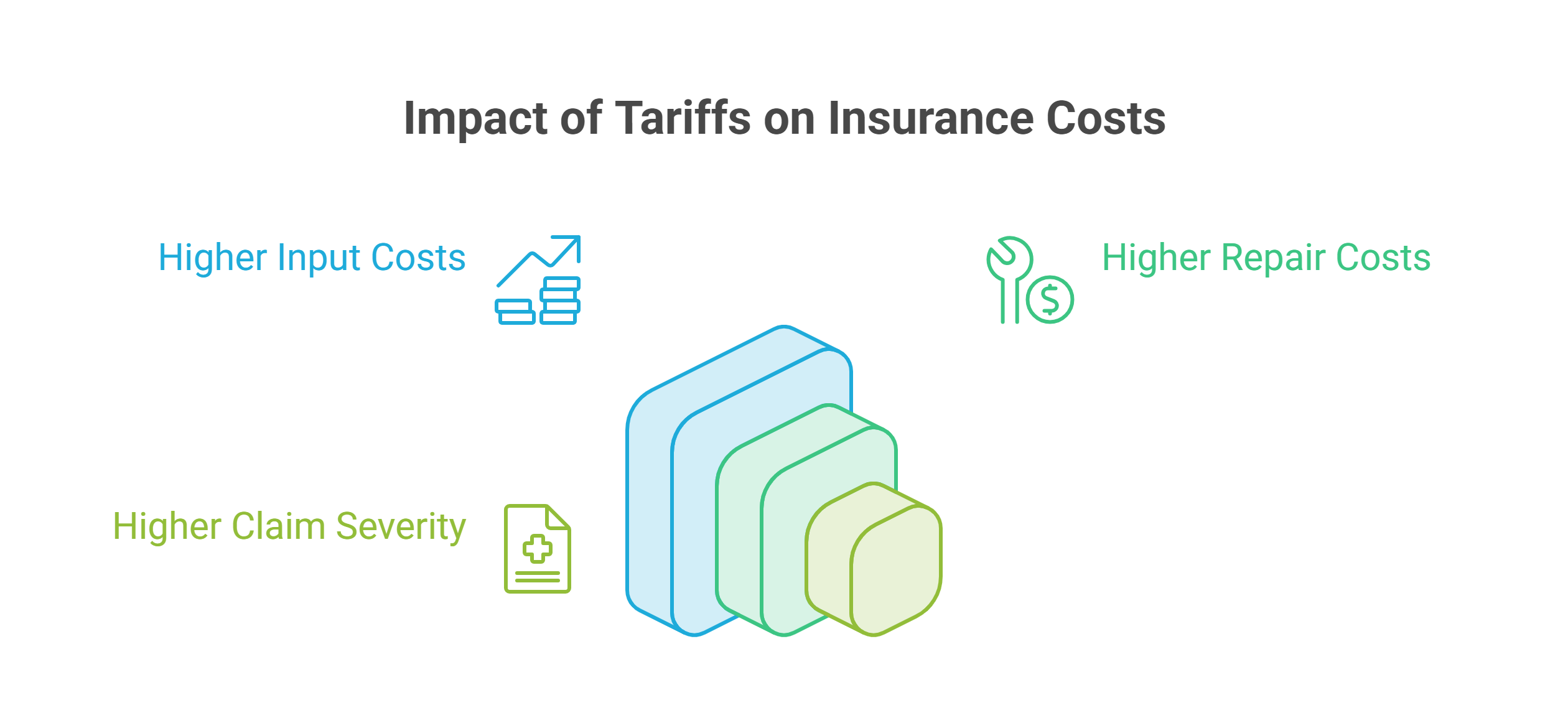
The pressure is not limited to the price of a single component. Higher material costs can change the total cost of a claim, while shortages and longer delivery times can extend the time needed to settle it. For insurers, that can mean higher claims severity, larger reserves and more uncertainty around future loss costs. Recent industry analysis identifies tariffs, supply-chain disruption and labour shortages as factors that can push up goods prices and weaken underwriting margins.

The connection is already visible in several major claims categories. Auto insurers can face higher repair bills when imported replacement parts become more expensive. Property insurers can face higher rebuilding costs when tariffs affect materials such as steel, lumber and electrical components. Commercial insurers can also be exposed when higher replacement costs affect machinery, equipment and other insured assets.

Recent claims-cost research shows that these pressures are developing against an already elevated cost base. A global claims-cost index notes that insurers’ settlement costs are directly linked to repair parts, building materials, construction labour, medical services and legal expenses. It also found that the cost of boiler and machinery claims was elevated in 2024 and 2025, with higher material costs from tariffs identified as a major factor.

The effect is not purely a US issue. Insurance markets in different regions are exposed through their own trade relationships and supply chains. OECD data shows that higher repair, spare-part and claims-handling costs have already contributed to rising claims payments across multiple jurisdictions, including markets in Europe and Latin America. Tariffs can add another layer to those existing cost pressures.

For insurers, this creates a difficult timing problem. Policies are often priced using assumptions about future repair and replacement costs, while tariffs can change those costs after coverage has already been written. The result is greater pressure on insurers to monitor supply-chain costs, reassess loss-cost assumptions and understand how quickly changes in trade policy can move into claims.

Tariffs Are Moving Through Supply Chains and Into Claims Costs

The connection becomes clearer when the claims process is viewed as part of a wider supply chain. A damaged vehicle needs replacement parts. A damaged building needs construction materials. A commercial asset may require imported equipment or specialist components. When any of those inputs become more expensive or harder to obtain, the final settlement can rise even when the underlying loss has not changed.

This is why tariffs and insurance claims are becoming an important consideration in claims management. Insurers are not simply dealing with higher prices. They are also dealing with changing repair timelines, alternative suppliers, expedited shipping and potentially higher business interruption costs.

That creates a broader challenge for the insurance industry: understanding how trade-related cost changes move from the global supply chain into the final cost of settling an individual claim.

Tariffs Are Moving Through Supply Chains and Into Claims Costs

The impact of tariffs does not stop when an imported product becomes more expensive. For insurers, the bigger issue is what happens after a loss occurs. A damaged car still needs parts, a damaged building still needs materials and a failed piece of industrial equipment may need components that have to be sourced from another country. When those inputs become more expensive or harder to obtain, the cost of settling the claim can rise even when the underlying loss has not changed. WTW’s latest claims-cost analysis shows that insurance claims inflation continued to run above general inflation in 2024 and 2025, while the firm specifically linked higher material costs from tariffs to elevated boiler and machinery claim costs.

That makes tariffs and insurance claims a problem that sits across both claims management and underwriting. Property insurers can face higher replacement costs for buildings, machinery and equipment. Motor insurers can face higher costs for imported repair parts. Commercial insurers can also be exposed when supply-chain disruption affects the availability and price of specialist equipment.

The timing makes the problem harder. Policies are priced before a claim occurs, but tariffs can change the cost of replacement after the policy has already been written. An insurer may therefore collect a premium based on one set of repair and replacement assumptions and face a materially different settlement cost later.

Recent analysis also shows that this is not simply a US issue. The OECD’s latest global insurance-market data found that inflation continued to increase claim payments across multiple jurisdictions, particularly through higher repair, spare-part and claims-handling costs in motor and property insurance.

Repair Costs Are Becoming a Bigger Part of the Tariff Problem

Motor insurance provides one of the clearest examples. Replacement parts are often sourced through international supply chains, so tariffs or trade restrictions can raise the cost before the part even reaches the repair shop. Industry repair data indicates that parts inflation increased sharply in 2025, with some commonly used components seeing substantially higher price growth than in the previous year.

Property claims face a similar problem. Construction depends on materials such as steel, electrical equipment and other components that can be exposed to changes in trade costs. If those materials become more expensive, the replacement-cost estimate for a damaged building may have to move higher. Industry analysis also points to longer delivery times as another source of claims inflation because delays can extend repairs and increase additional expenses.

The challenge is that these effects do not arrive at the same time or with the same intensity across every line of business. That makes broad assumptions less useful and increases the need for insurers to understand which parts of their claims portfolios are most exposed to imported materials and disrupted supply chains.

For claims teams, the issue is becoming less about reacting to higher invoices and more about anticipating where those higher costs are likely to appear next.

Conclusion

The impact of tariffs on insurance claims is not limited to a higher price for one replacement part or building material. It can move through the entire claims process, from repair costs and supply delays to settlement values and business interruption losses. Recent claims-cost data shows that insurance inflation is already running above general inflation, while tariffs are adding another layer of pressure in areas such as machinery, property and auto repairs.

For insurers, tariffs and insurance claims are therefore becoming part of a wider loss-cost and risk-management problem. The challenge is understanding which portfolios are most exposed, how quickly higher input costs can reach claims and whether existing policy limits and pricing assumptions still reflect those risks.

The market is unlikely to react in the same way everywhere. Exposure will depend on trade routes, sourcing patterns, local inflation, policy wording and the type of insured asset. But as supply chains become more closely linked to claims costs, insurers will need to monitor trade-driven changes much earlier in the claims cycle.

World Finance Informs brings together the global financial industry — from banking and investment leaders to fintech innovators and capital markets professiona ls — through trusted editorial, market intelligence, and digital engagement.

Our 2026 Media Pack offers integrated solutions to reach your audience:

  • Magazine & Digital Editions Showcase your brand within premium financial industry coverage read by execut ives and decision - makers worldwide.
  • Industry Insights & Reports Align with data - driven analysis, trend reports, and regional roundups across the global finance and banking value chain.
  • Brand Authority & Credibility Position your company as a thought leader through expert commentary, interviews, and special features.

Subscribe

- Never miss a story with notifications

- Gain full access to our premium content

- Browse free from any location or device.

Media Packs

Expand Your Reach With Our Customized Solutions Empowering Your Campaigns To Maximize Your Reach & Drive Real Results!

– Access the Media Pack Now

– Book a Conference Call

Leave Message for Us to Get Back

Latest stories

Related stories

The Retirement Cliff Facing the Global Claims Workforce

Insurance claims work has always depended on experience. Complex...

Litigation Funding is Reshaping the Economics of Insurance Claims

Litigation is no longer funded only by the people...

AI Regulation is Reshaping the Future of Insurance Claims

Artificial intelligence is becoming a more common part of...

Catastrophe Claims are Creating Persistent Pressure on Insurers

Natural catastrophes are no longer creating occasional spikes in...

Subscribe

- Never miss a story with notifications

- Gain full access to our premium content

- Browse free from any location or device.

Media Packs

Expand Your Reach With Our Customized Solutions Empowering Your Campaigns To Maximize Your Reach & Drive Real Results!

– Access the Media Pack Now

– Book a Conference Call

Leave Message for Us to Get Back

Translate »