





















Claims have traditionally been used to understand what happened after an insured event. A loss was reported, investigated, settled and eventually recorded as part of the insurer’s claims history. That information then fed into reserving and performance analysis. But the role of claims data is starting to change. Insurers are increasingly looking at claims as a source of claims intelligence that can help them understand what may happen next.
The difference is important. Claims can reveal changes in loss severity, litigation behaviour, repair costs, fraud patterns, emerging exposures and differences between jurisdictions. When those signals are connected to underwriting, they can help insurers reassess risks before a policy reaches renewal rather than waiting for a loss trend to become obvious in historical results.
The shift is already visible across the market. Recent research found that 92% of property and casualty insurers expect big data to generate significant improvements in areas including pricing, underwriting, claims management and client experience. Separate research across European insurers found that AI is already being used across areas including pricing, underwriting, claims and fraud detection, showing how claims and underwriting are becoming increasingly connected through data and analytics.
This is creating a new role for claims intelligence. Instead of treating claims as a final record of loss, insurers can use patterns in those claims to identify changes in risk while there is still time to act.
Claims are Becoming an Early Signal for Underwriting
The value of claims data does not necessarily come from any one claim. It comes from patterns that appear across thousands of claims over time.
A rise in claims severity in one industry, for example, could signal that the underlying risk is changing. A growing number of disputes in a particular jurisdiction could point to a change in litigation exposure. Rising repair costs could indicate that existing loss-cost assumptions need to be revisited. Repeated claims involving a particular asset, process or type of incident could also reveal an exposure that was not fully understood when a policy was originally priced.
This makes claims intelligence useful well before a claim is finally closed. The Connected Claims industry agenda is increasingly focused on creating governance and data flows that move loss information into underwriting and actuarial teams ahead of renewal, including signals such as plaintiff tactics, jurisdictional trends and emerging exposures.
For insurers, that can change the underwriting cycle from a largely retrospective process into a more continuous one. Instead of waiting until a claim is closed to study what happened, insurers can monitor claims continuously, identify emerging risk patterns early, and use those insights to adjust underwriting decisions before the next policy renewal.
The commercial value lies in what happens next. An insurer may reprice a risk, change policy terms, adjust limits or retentions, increase risk controls, or reconsider its appetite for a particular exposure. The decision will vary by line of business, but the underlying idea is the same: claims data becomes an input into the next underwriting decision, rather than a report on the previous one.
That is why claims intelligence is becoming more than a claims-management tool. It is becoming part of how insurers decide where and how they deploy underwriting capacity.
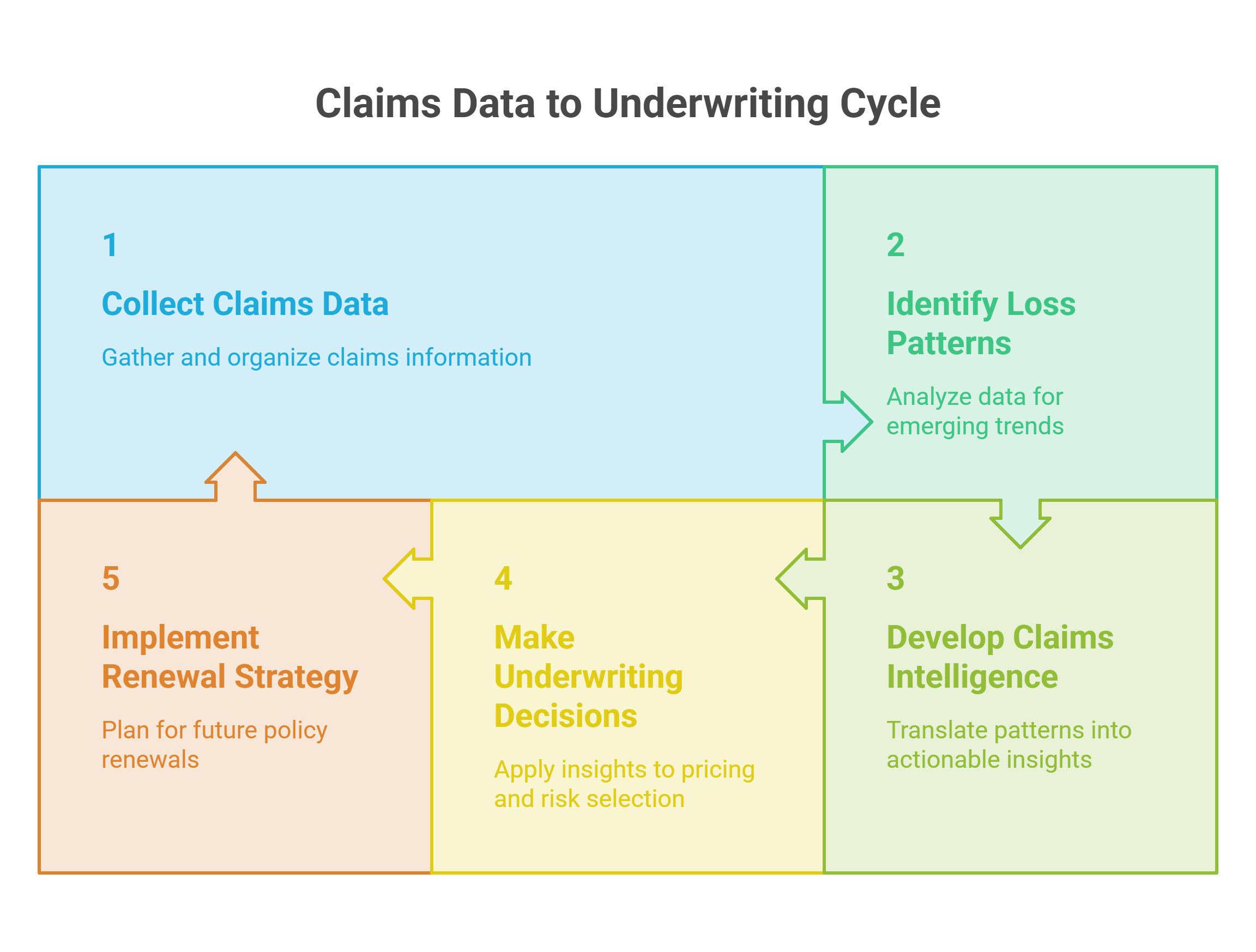
Key takeaway: Claims data becomes more valuable when it is used to identify emerging risk before the next underwriting decision.