

















Distributed ledger technology is moving into a more consequential phase for European financial markets. The question is no longer limited to whether individual institutions can issue, trade or settle tokenised assets. European policymakers and market participants are increasingly examining what infrastructure would be needed if DLT-based activity were to operate at meaningful scale. That shift matters because the architecture chosen for tokenised markets could influence how efficiently assets move, how different platforms interact and how easily European markets can remain integrated.
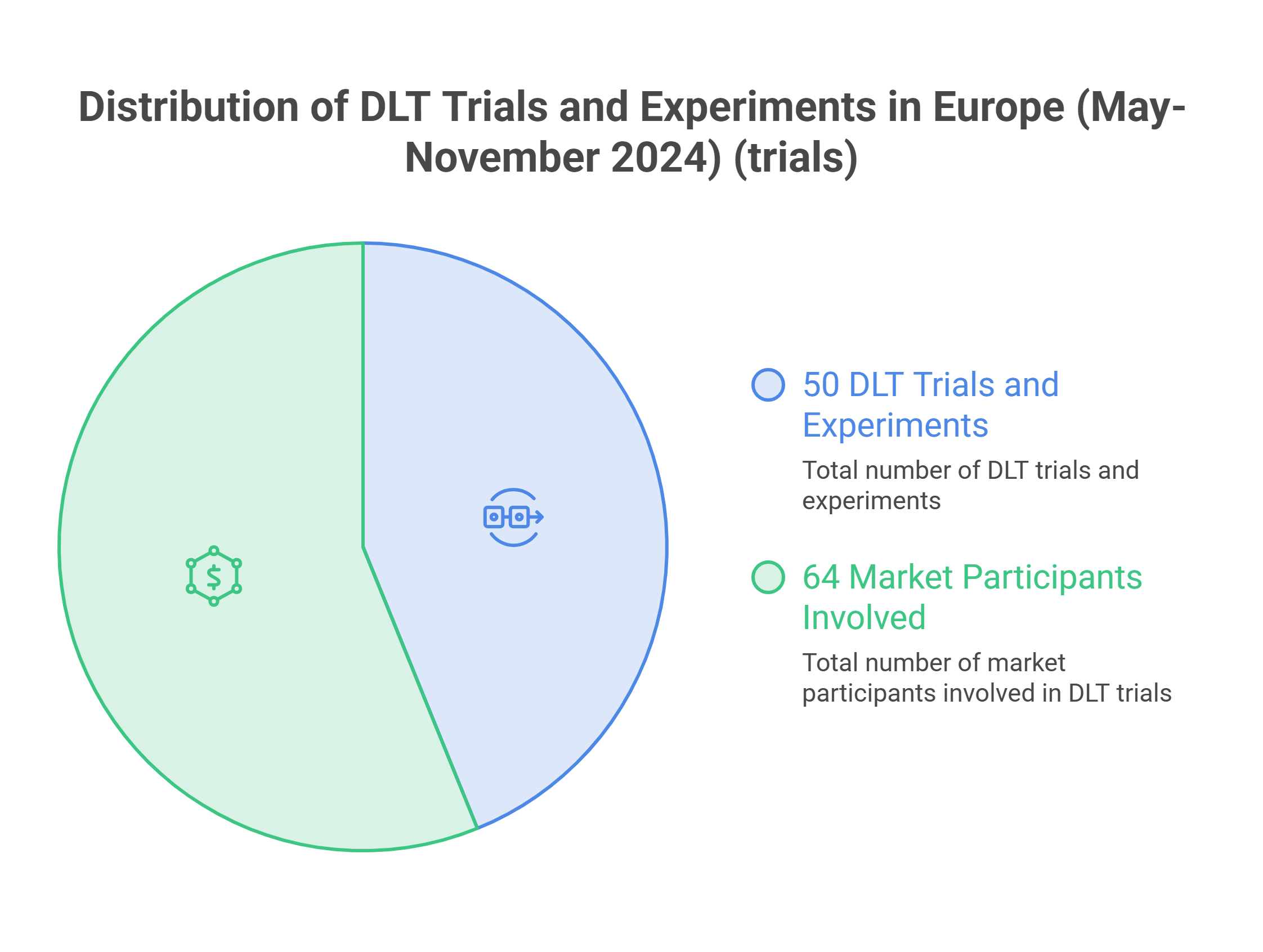
The Eurosystem’s exploratory work in 2024 brought together 64 market participants across more than 50 trials and experiments examining DLT-based wholesale transactions and their settlement in central bank money. The work demonstrated practical interest in tokenisation while also generating technical, operational and legal lessons about how DLT could interact with existing financial infrastructure.
DLT is Moving from Experimentation Toward Infrastructure
The next stage is increasingly concerned with what comes after experimentation. The Eurosystem’s strategy now has two complementary tracks. Pontes is being developed as a bridge between market DLT platforms and TARGET Services, allowing DLT-based wholesale transactions to settle in central bank money. Its initial launch is planned for the third quarter of 2026. Alongside it, Appia is examining the longer-term design of an integrated European tokenised financial ecosystem, with a blueprint planned for 2028.
This creates an important change in the policy discussion. Rather than considering DLT as a standalone technology that could eventually replace existing systems, Europe is exploring how it can fit into the financial infrastructure that already supports wholesale markets. Pontes provides a near-term connection between new DLT platforms and existing settlement infrastructure, while Appia is considering what a future market architecture could look like.
The design question becomes more significant because DLT can potentially bring several stages of an asset’s lifecycle closer together. The ECB identifies possible benefits across issuance, trading, settlement, custody and servicing, including greater automation and programmability. But these benefits depend on whether tokenised markets can connect effectively rather than developing as isolated platforms.