

















The European Union’s new anti money laundering framework is moving from legislative design toward detailed implementation, with technical standards becoming an important part of how firms will interpret and apply the new requirements. Regulation (EU) 2024/1624 establishes the core AML and counter terrorist financing obligations, while the Authority for Anti Money Laundering and Countering the Financing of Terrorism is developing regulatory and implementing technical standards that provide greater detail on how those obligations should operate.
This makes AML regulatory technical standards particularly important for compliance teams preparing for the new framework. Broad legislative requirements often need more precise rules before they can be converted into policies, procedures, technology configurations and control testing. The technical standards are increasingly providing that operational detail.
The transition is already substantial. AMLA assumed responsibility for EU level AML/CFT mandates at the beginning of 2026, while existing guidance and standards remain in place until they are replaced. Its regulatory work during 2026 includes technical standards covering customer due diligence, business relationships and linked transactions, group wide requirements, supervisory cooperation, sanctions and enforcement.
Technical Standards are Defining Operational Requirements
Customer due diligence provides a clear example of how this process works. The new AML framework establishes obligations around identifying and verifying customers, understanding relationships and applying risk based controls. AMLA’s draft technical standards add detail around the information and documentation firms should obtain and how those requirements should be applied proportionately.
Similar work is being undertaken around business relationships, occasional transactions and linked transactions. These distinctions matter because they can influence how firms classify customers, configure monitoring systems and determine when additional controls are required. AML regulatory technical standards therefore have implications beyond legal interpretation. They can directly affect compliance processes and technology.
The same applies to group wide requirements. Technical standards are being developed to establish minimum AML/CFT policies and controls for groups while addressing additional measures for subsidiaries and branches operating outside the European Union. This introduces more detailed expectations around governance, information sharing and control consistency across cross border structures.
The timetable adds another layer of importance. The new AML Regulation is scheduled to apply from 10 July 2027, while several technical standards are still moving through consultation, feedback and finalisation during 2026. Firms therefore face a period in which implementation preparation must progress while parts of the technical framework are still being refined.
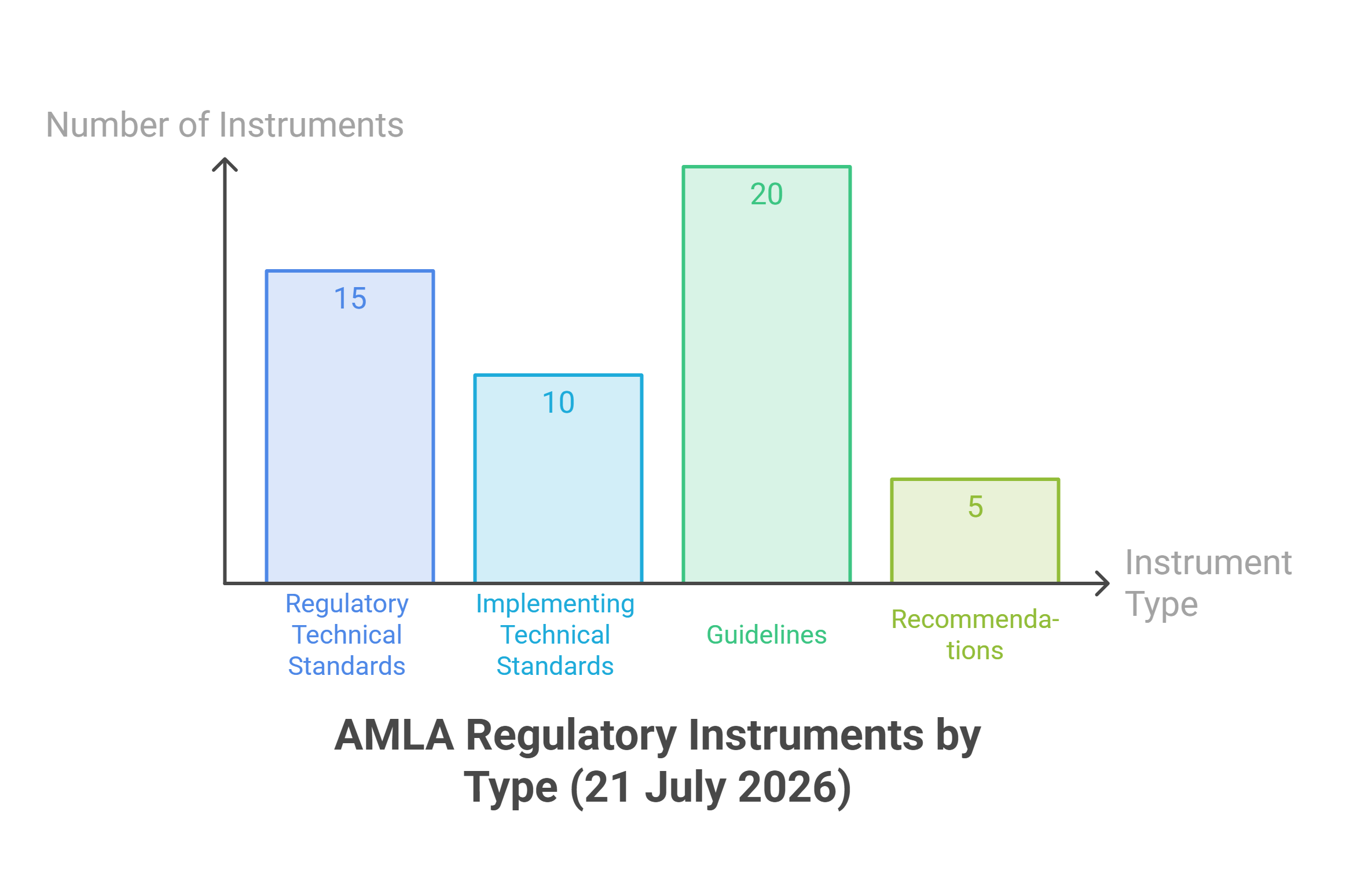
Key Takeaway: The new AML framework is being operationalised through multiple layers of technical and supervisory instruments rather than through the headline regulation alone.
The scale of this process means firms cannot treat technical standards as secondary regulatory material. They are increasingly shaping how obligations will be translated into systems, controls and evidence. AML regulatory technical standards are consequently becoming part of the implementation architecture itself, bridging the gap between legislation and day to day compliance operations.
Technical Standards are Increasingly Shaping Compliance Operations
The impact of the new AML framework is becoming more visible in the way financial institutions will need to organise compliance operations. Regulatory requirements that appear broad at the legislative level are being converted into detailed expectations covering customer due diligence, group wide controls, supervisory cooperation and sanctions. This is making AML regulatory technical standards increasingly relevant to the design of policies, procedures, data structures and control frameworks.
The technical standards on customer due diligence are particularly important because they influence how firms determine what information and documentation should be obtained from customers and how those requirements should be applied through a risk based approach. Similar standards covering business relationships and linked transactions can affect customer classification, monitoring processes and the circumstances in which additional controls are required. The effect extends into compliance technology because changes in regulatory criteria can require corresponding changes to workflows, data fields and monitoring rules.
Technical Standards are Extending Across the Compliance Framework
Group wide requirements provide another example. AMLA is developing standards covering minimum AML/CFT policies and controls at group level, including additional measures for subsidiaries and branches operating in third countries. This creates more detailed expectations around governance, information sharing, risk management and control consistency across organisational structures.
Sanctions are also becoming more structured. AMLA’s technical standards on pecuniary sanctions and administrative measures establish indicators for assessing the seriousness of breaches and criteria for determining sanctions and periodic penalty payments. The objective is to make enforcement more consistent while maintaining proportionality between the breach and the supervisory response.
This is important for compliance functions because regulatory risk is increasingly connected to how effectively controls can be evidenced. Policies alone are unlikely to be sufficient if firms cannot demonstrate that risks are identified consistently, controls are operating as intended and weaknesses are addressed.
Supervisory cooperation is also being addressed through technical standards covering home and host authorities. Common procedures can help reduce differences in how cross border groups interact with supervisors and how information is exchanged between authorities. AML regulatory technical standards are therefore influencing not only firm level controls but also the processes through which supervision itself is carried out.
Implementation is Happening Across Multiple Timelines
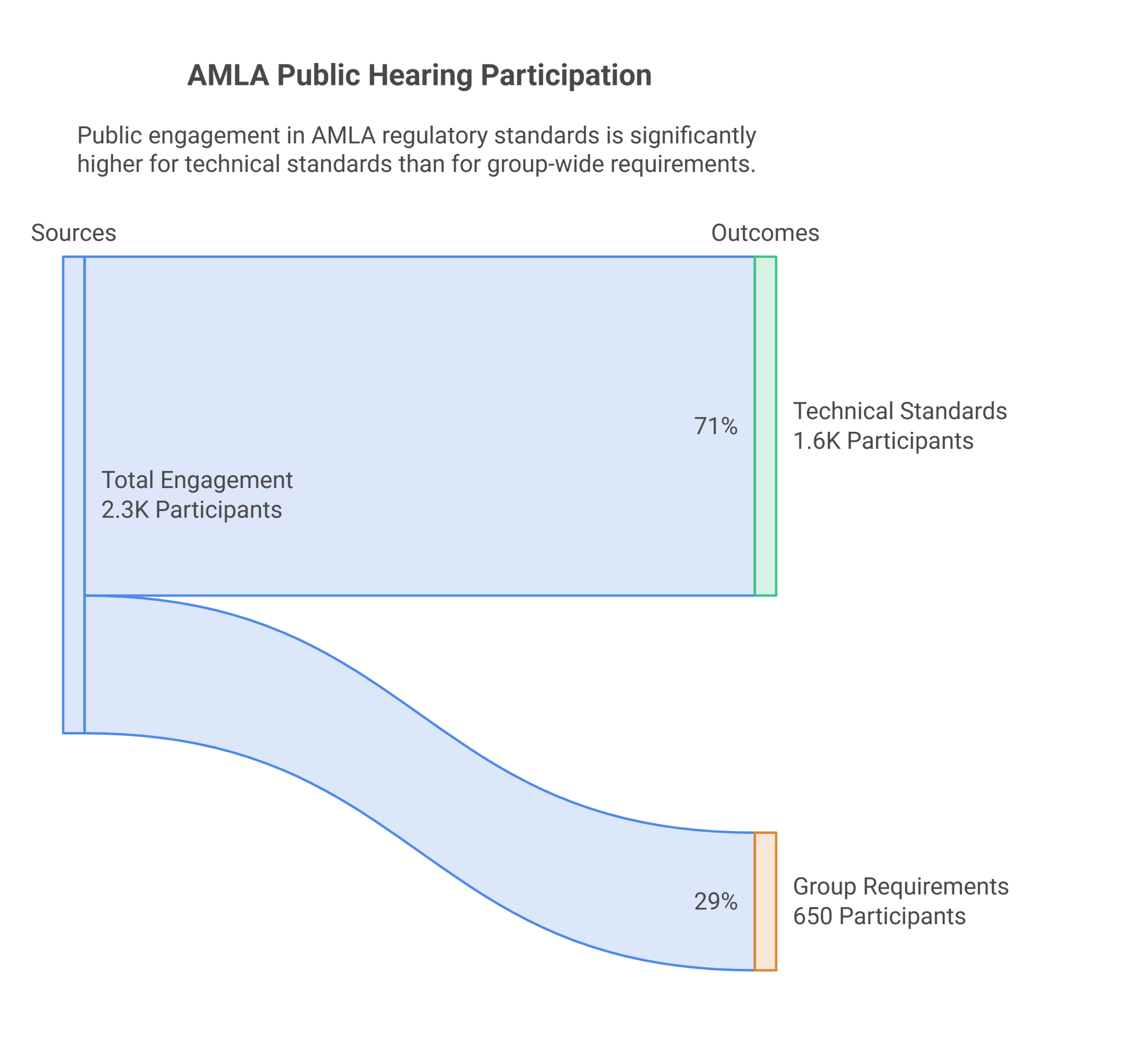
The scale of industry engagement demonstrates the importance of these technical measures. AMLA’s first public hearing on draft regulatory technical standards in March 2026 attracted more than 1,600 participants, while a later public hearing focused on group wide requirements attracted more than 650 participants. These figures do not measure regulatory burden, but they show substantial engagement with the implementation process.
The timing is also important. The new AML Regulation applies from 10 July 2027, while several technical standards are moving through consultation and finalisation during 2026. Firms therefore have to prepare systems and controls while parts of the detailed rulebook are still developing.