
















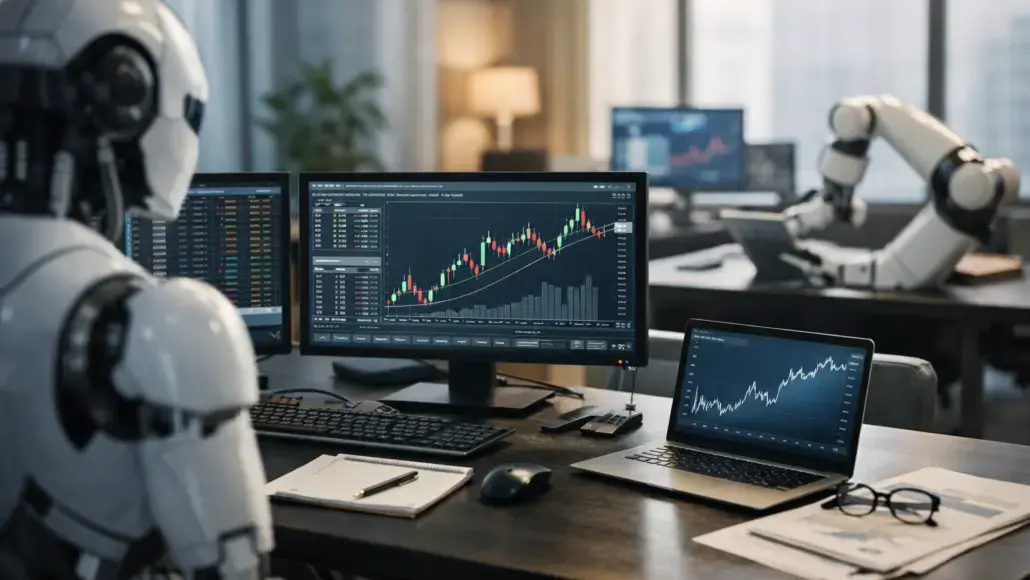

The traditional structure of institutional investment teams, which relies on a hierarchical chain of human analysts and portfolio managers, is being fundamentally reimagined through the integration of autonomous intelligence. As agentic systems move from being simple tools to active participants in the investment lifecycle, the nature of collaboration between human professionals and artificial entities is undergoing a profound transformation. This evolution is moving the industry toward a model of human-machine investment teams where the speed and data processing power of AI are combined with the intuition, empathy, and ethical judgment of humans. This symbiotic relationship is the key to managing the immense complexity of modern global markets and achieving superior risk-adjusted returns.
At the heart of this shift is the concept of “cognitive augmentation.” Instead of replacing human professionals, agentic AI is designed to enhance their capabilities by taking over the routine and data-intensive aspects of their roles. This allows human team members to focus on the high-level tasks that require creative thinking and complex problem-solving. By deploying specialized agents to handle everything from market intelligence analysis to investment research, firms can ensure that their human talent is being used in the most strategic and impactful manner possible. This new division of labor is a central theme in exploring agentic AI and the future of human-machine investment teams.
Redefining Roles and Responsibilities in Hybrid Workflows
In a hybrid investment team, the roles of human professionals are shifting from “doers” to “directors” and “governors.” An analyst, for example, no longer spends the majority of their time gathering data and building models; instead, they set the research goals for a fleet of autonomous agents and then evaluate the insights they produce. This requires a new set of skills, including the ability to design agentic workflows, interpret complex AI reasoning, and manage the ethical and operational risks associated with autonomous systems. The transition to this new way of working is a significant cultural and professional challenge for many in the industry.
Portfolio managers are also seeing their roles evolve. In a human-machine investment team, the manager is responsible for setting the high-level strategy and risk parameters, while the agents handle the granular execution and tactical adjustments. The manager’s role is to monitor the performance of the agents, ensuring that they remain aligned with the firm’s overall objectives and that they are not taking unintended risks. This “supervisory” role requires a deep understanding of both the market and the technology, as well as the ability to step in and make the final decision when the system encounters a situation it cannot handle. The human professional remains the ultimate “governor” of the investment process.
Furthermore, the integration of agentic AI allows for more effective collaboration across different departments and functions. Agents can act as a bridge between research, trading, and operations, ensuring that everyone is working with the same data and that the firm’s activities are fully coordinated. For example, a “coordination agent” might ensure that the trades executed by the desk are perfectly aligned with the insights generated by the research team and the risk limits set by the compliance department. This level of cross-functional alignment is essential for the success of modern human-machine investment teams, as it reduces friction and improves the overall efficiency of the organization.
Enhancing Decision Quality Through Collective Intelligence
The primary benefit of a hybrid investment team is the achievement of “collective intelligence” – a level of insight and performance that is greater than the sum of its parts. Agentic AI provides the team with the ability to process massive amounts of information in real time, identifying patterns and correlations that would be invisible to the human eye. Humans provide the ethical context, the intuitive reasoning, and the ability to understand “reflexive” market dynamics that AI still struggles to grasp. By combining these two different types of intelligence, human-machine investment teams can make better, more informed decisions in a wider range of market environments.
One way that this collective intelligence is realized is through “adversarial reasoning.” In this model, agents and humans are encouraged to challenge each other’s assumptions and conclusions. An agent might identify a potential risk that a human analyst had overlooked, or a human manager might identify a flaw in an agent’s reasoning based on their intuitive understanding of a geopolitical event. This healthy tension ensures that every investment decision is rigorously vetted from multiple perspectives, reducing the risk of cognitive bias and groupthink. The ability to foster this type of open and critical dialogue is a key success factor for any firm looking to leverage agentic AI and the future of human-machine investment teams.
Additionally, the use of agentic systems allows for more effective “scenario thinking.” Teams can use agents to model the potential impact of thousands of different scenarios, from a sudden spike in inflation to a major technological disruption. Humans then use their judgment to evaluate these scenarios and to decide on the most appropriate course of action. This combination of “breadth” from the machine and “depth” from the human ensures that the team is well-prepared for a wide range of future possibilities. The result is a more resilient and adaptable investment strategy that can withstand the unpredictability of the modern world.
Fostering Trust and Transparency in AI-Augmented Teams
For human-machine collaboration to be effective, there must be a high level of trust between the two parties. This trust is built on a foundation of transparency and accountability. Human professionals must understand how the agentic systems work, what data they use, and what logic they follow to reach their conclusions. This requirement for “explainable AI” is a critical component of any successful hybrid team. If a human analyst cannot understand why an agent is making a particular recommendation, they are unlikely to trust it and even less likely to act on it.
Firms are addressing this challenge by developing tools that provide human team members with a clear view into the “reasoning process” of the agents. This might include interactive dashboards that visualize the data and the weights used by the AI, or natural language summaries that explain the agent’s logic in plain English. By making the AI’s work visible and understandable, firms can build confidence among their human staff and encourage them to embrace the possibilities of agentic AI and the future of human-machine investment teams. This transparency is also vital for regulatory compliance and for maintaining the firm’s reputation for integrity.
Accountability is also a key part of the trust equation. Firms must establish clear lines of responsibility for every action taken by the hybrid team. This involves defining which decisions are made by humans, which are made by machines, and how the two are coordinated. It also involves establishing a clear process for human intervention when a machine error occurs. By ensuring that there is always a human professional who is ultimately responsible for the team’s performance, firms can provide the necessary accountability for institutional clients and regulators. A culture of shared responsibility and mutual respect is essential for the long-term success of any human-machine investment team.
Upskilling the Workforce for a New Era of Collaboration
The transition to hybrid investment teams requires a significant investment in the upskilling of the workforce. Professionals at all levels must develop a new set of “AI-collaboration” skills, including the ability to design agentic workflows, audit autonomous decisions, and work alongside artificial entities in a high-pressure environment. This upskilling involves a combination of technical training, ethical education, and practical experience. Firms that prioritize the development of their people will be the ones that are most successful in navigating the transition to agentic AI and the future of human-machine investment teams.
This training should focus on helping people understand how to use AI as a “force multiplier” for their own capabilities. For example, an analyst can be taught how to use an agent to conduct a massive literature review in a matter of minutes, freeing them up to focus on synthesizing the most important insights. A portfolio manager can be taught how to use an agent to monitor a global portfolio for risk, allowing them to focus on high-level strategy and client relationships. By focusing on the “augmentation” rather than the “replacement” of human skills, firms can create a more positive and productive environment for the adoption of autonomous intelligence.
Ethical education is also a critical part of the upskilling process. Professionals must understand the potential for bias and error in AI systems and know how to identify and correct these issues. They must also be mindful of the broader social and economic implications of the transition to autonomous finance. By fostering a culture of “responsible AI,” firms can ensure that their human-machine investment teams are operating in a way that is both effective and ethical. The goal is to create a workforce that is not only technically proficient but also ethically aware and socially responsible.
The Long-Term Vision for Symbiotic Investment Partnerships
Looking ahead, the future of institutional finance will be defined by the rise of symbiotic partnerships between humans and machines. In these partnerships, the boundaries between the two will become increasingly blurred, as they work together in a seamless and coordinated manner to achieve their shared goals. This is the ultimate realization of agentic AI and the future of human-machine investment teams, where the unique strengths of both parties are combined to create a level of performance that is currently unimaginable. The firms that embrace this vision will be the ones that lead the industry into a new era of innovation and growth.
We will see the development of more sophisticated “team-based” AI architectures, where multiple specialized agents and humans work together in a decentralized and adaptive network. These teams will be able to self-organize, resolve conflicts, and learn from their experience, creating a level of organizational agility that is essential for success in a rapidly changing world. The move toward these symbiotic partnerships will likely be the most significant shift in the history of the investment management industry, redefining what it means to be an investment professional and how institutional capital is managed.
The journey toward this future is not without its challenges, but the potential rewards are immense. For those firms that can successfully navigate the complexities of human-machine collaboration, the result will be a more resilient, efficient, and responsive investment organization that can deliver superior outcomes for its clients and stakeholders. The age of the autonomous investment team has arrived, and the future belongs to those who can harness the power of both human and artificial intelligence to transform their business and lead the industry into a new era of excellence.