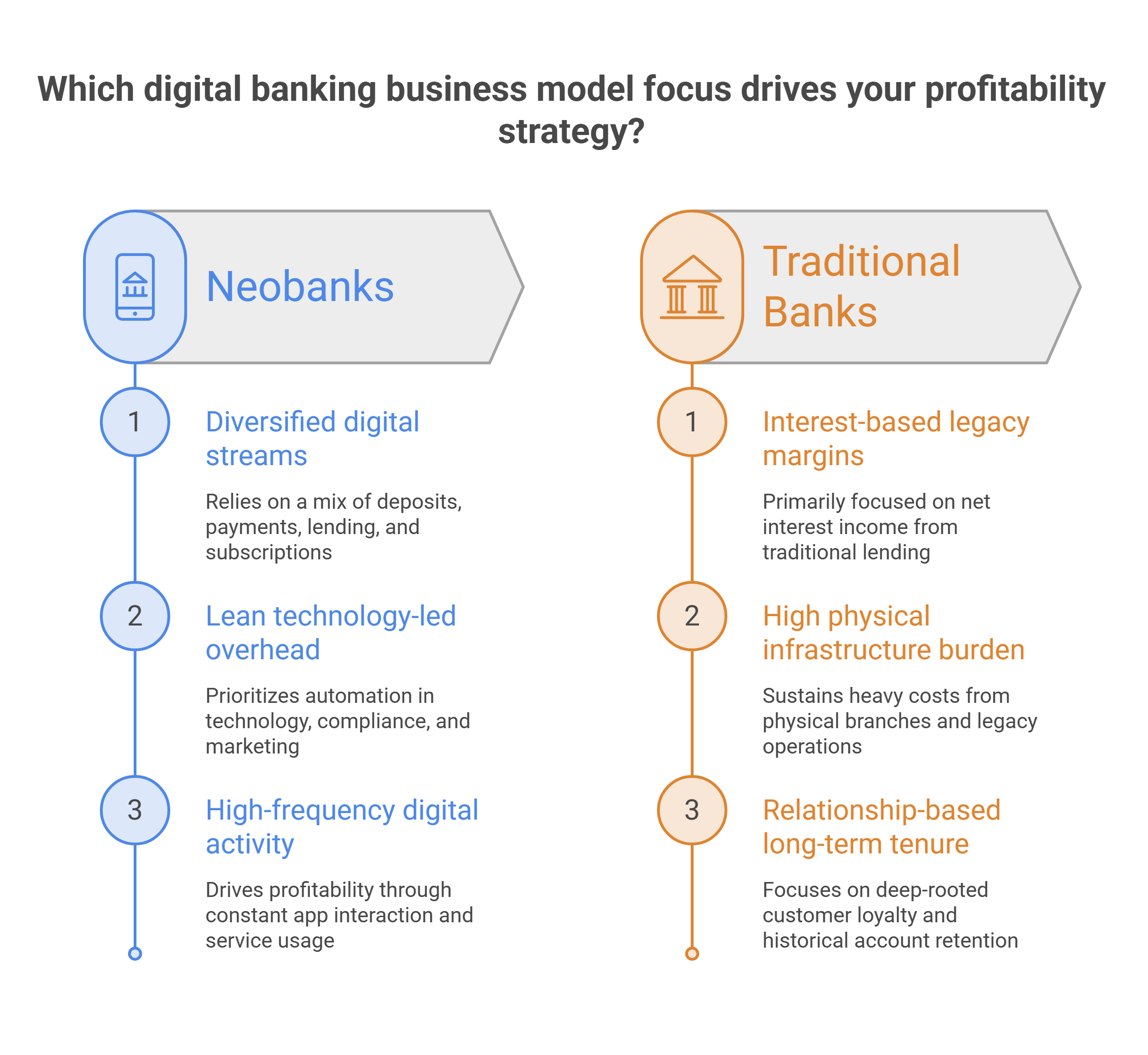


















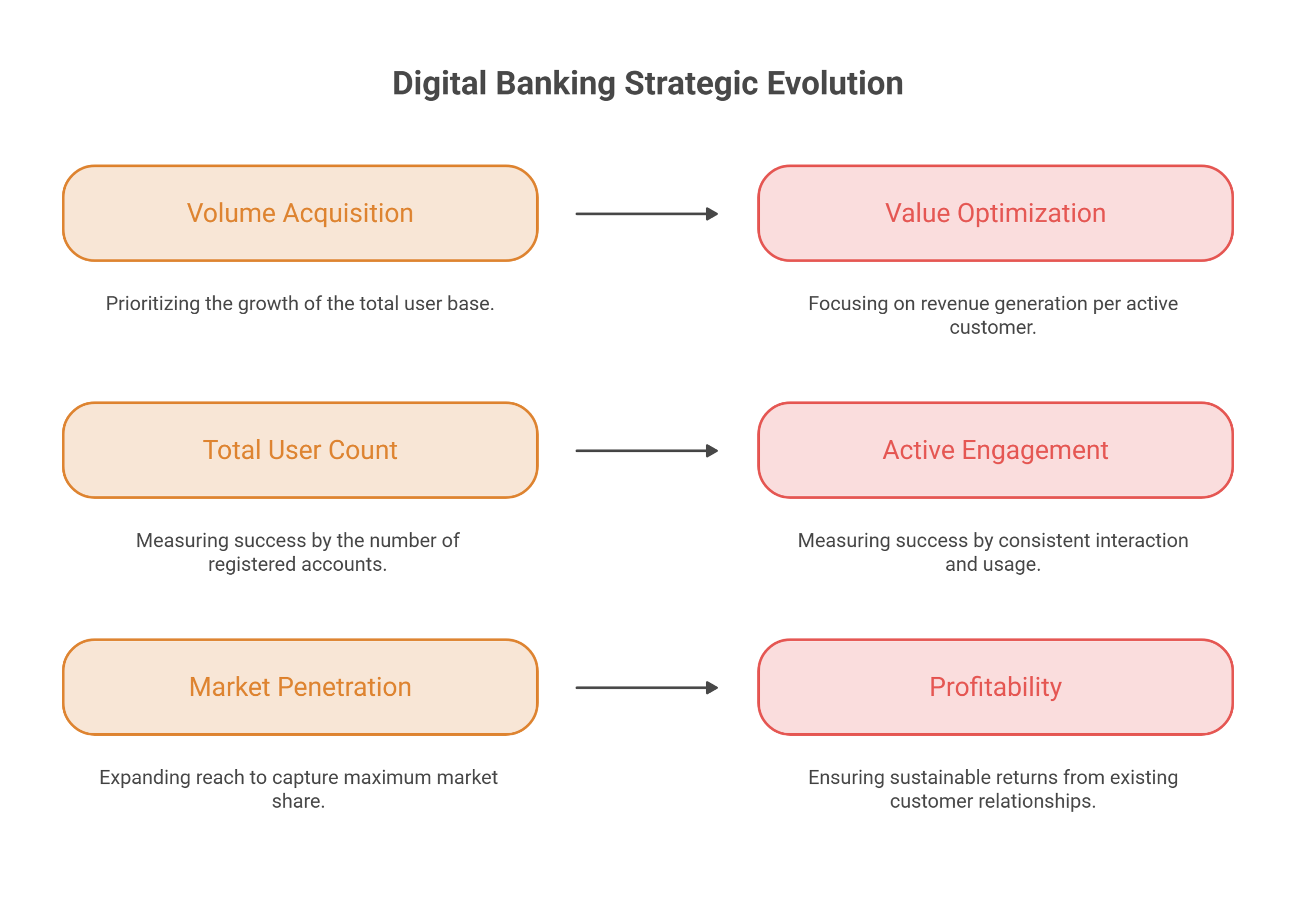
Across the global digital-banking sector, the emphasis is increasingly moving from customer acquisition toward the economics of maintaining and expanding existing banking relationships. For World Finance Informs, the shift matters because customer numbers alone provide limited insight into whether a digital bank can build a sustainable business model. Recent industry research describes a more mature phase for leading digital banks, with profitability, customer engagement and operational efficiency becoming increasingly important alongside growth.
The changing focus is bringing digital bank profitability closer to measures such as revenue per active customer, product usage, deposits and cost to serve. A larger customer base can create greater economic value when customers use more services, maintain balances and make the bank part of their primary financial relationships. Monzo’s FY2026 results, for example, reported £1.7 billion in revenue, £1.0 billion in gross profit and £183 in average revenue per active customer, alongside 15.2 million total customers. These measures illustrate how customer scale increasingly needs to be considered alongside the value generated from active relationships.
Customer Engagement Becoming Central to Digital Banking Economics
The shift toward digital bank profitability also changes how growth is evaluated. Acquiring another customer can increase revenue, but the economic contribution depends on whether that customer remains active, uses multiple products and generates sufficient recurring income to cover servicing and infrastructure costs. Payments, deposits, subscriptions, lending, foreign exchange and wealth services can each contribute to the value of a relationship, while technology, compliance, customer support and funding costs continue to shape the expense side.
This makes digital bank profitability increasingly dependent on the depth and efficiency of customer relationships rather than headline customer growth alone.
Revenue Diversification and Cost Discipline Shaping Sustainable Digital Bank Economics
The economics of digital banking are increasingly being shaped by how effectively institutions convert customer activity into multiple revenue streams. Digital bank profitability is not dependent on a single source of income, with leading institutions expanding across payments, deposits, lending, subscriptions, foreign exchange, wealth and business services. Revolut’s 2025 results illustrate this diversification, with revenue generated across subscriptions, card payments, wealth, foreign exchange and interest income, alongside continued growth in lending and customer balances.
Revenue diversification can make customer relationships more valuable, but it also introduces different cost and risk characteristics. Payments can generate recurring transaction-related income, while subscriptions provide a more predictable revenue layer. Lending can increase interest income and deepen customer relationships, but it also introduces credit losses, funding costs and capital requirements. As a result, digital bank profitability increasingly depends on the quality of the overall revenue mix rather than growth in any individual product.
Operating Leverage Becoming Central to Digital Banking Scale
Cost discipline is the other side of the equation. Digital banks generally operate with lower physical distribution requirements than branch-led institutions, but they still carry significant expenses across technology, cloud infrastructure, compliance, cybersecurity, customer support, marketing and payment operations. Chime’s 2026 results, for example, show how technology, member support, sales and marketing, and risk-related expenses remain significant even as revenue expands.
This makes digital bank profitability increasingly connected to operating leverage. A scalable digital platform can allow additional customers and transactions to be served without costs increasing at the same rate, but that advantage depends on automation, efficient infrastructure and sustained customer engagement. The emphasis is therefore shifting toward whether revenue per active customer, product usage and deposits can grow faster than the cost of maintaining those relationships.