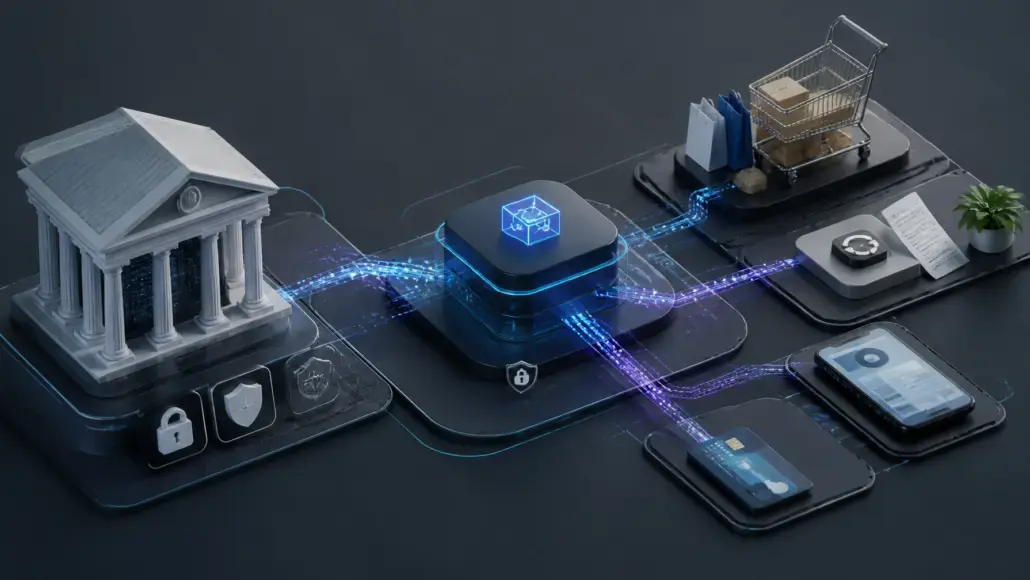
Bank accounts are increasingly becoming accessible through digital services outside the traditional banking application. Open banking has enabled customers to give authorised third parties access to account information and, increasingly, initiate payments directly from those accounts. Combined with faster payment infrastructure, this is creating a payment model in which bank accounts can become part of a wider digital commerce and financial-services ecosystem.
This is giving open banking account to account payments a broader role in digital banking. Rather than requiring customers to enter card details or move between separate banking and merchant environments, account-to-account payments can allow funds to move directly from a bank account through an authorised digital interface. The underlying bank account remains central, but the customer experience can increasingly be delivered through another financial or commercial service.
Account-to-Account Payments are Moving into Digital Experiences
Traditional digital banking generally keeps payment activity within the bank’s own channels. Open banking changes this relationship by allowing regulated third parties to connect to bank accounts through APIs, subject to customer permission and applicable controls. This creates a more open payment environment in which banks provide the underlying account and payment infrastructure while other providers can build services around it.
The distinction becomes particularly important for account-to-account payments. Instead of using a card as the intermediary between a customer and merchant, a customer can authorise a payment directly from their bank account. This can create opportunities for pay-by-bank services, digital marketplaces, bill payments and other account-based payment experiences.
The development is no longer limited to early-stage experimentation. Open Banking Limited reported that UK open-banking payments reached 351 million transactions in 2025, an increase of 57% from the previous year. By July 2026, the UK’s major high-street banks had collectively processed more than one billion open-banking payments since the launch of the framework.
These figures come from one market, but they illustrate the broader shift toward bank-account connectivity as a payment capability. Open banking account to account payments can increasingly sit within digital journeys that do not require the customer to initiate the transaction directly through their bank’s interface.
Open Banking is Connecting Banks with the Wider Digital Economy
The significance of open banking extends beyond payment initiation. APIs can allow financial information and payment capabilities to become integrated into applications operated by fintechs, merchants and other regulated service providers. The Bank for International Settlements describes open finance as a development that can break down data silos and support new financial services, while emphasising that standardised protocols and interoperability are important to achieving those benefits. (bis.org)
This creates a different competitive structure around banking. Banks continue to provide regulated accounts and payment infrastructure, while third parties can develop customer experiences on top of those capabilities. Consumers can therefore encounter banking functions within commerce, financial-management and other digital applications rather than exclusively inside a bank-owned channel.
Open banking account to account payments are particularly relevant to this model because payment initiation can become embedded directly into the service where the customer is already making a purchase or managing a financial obligation.
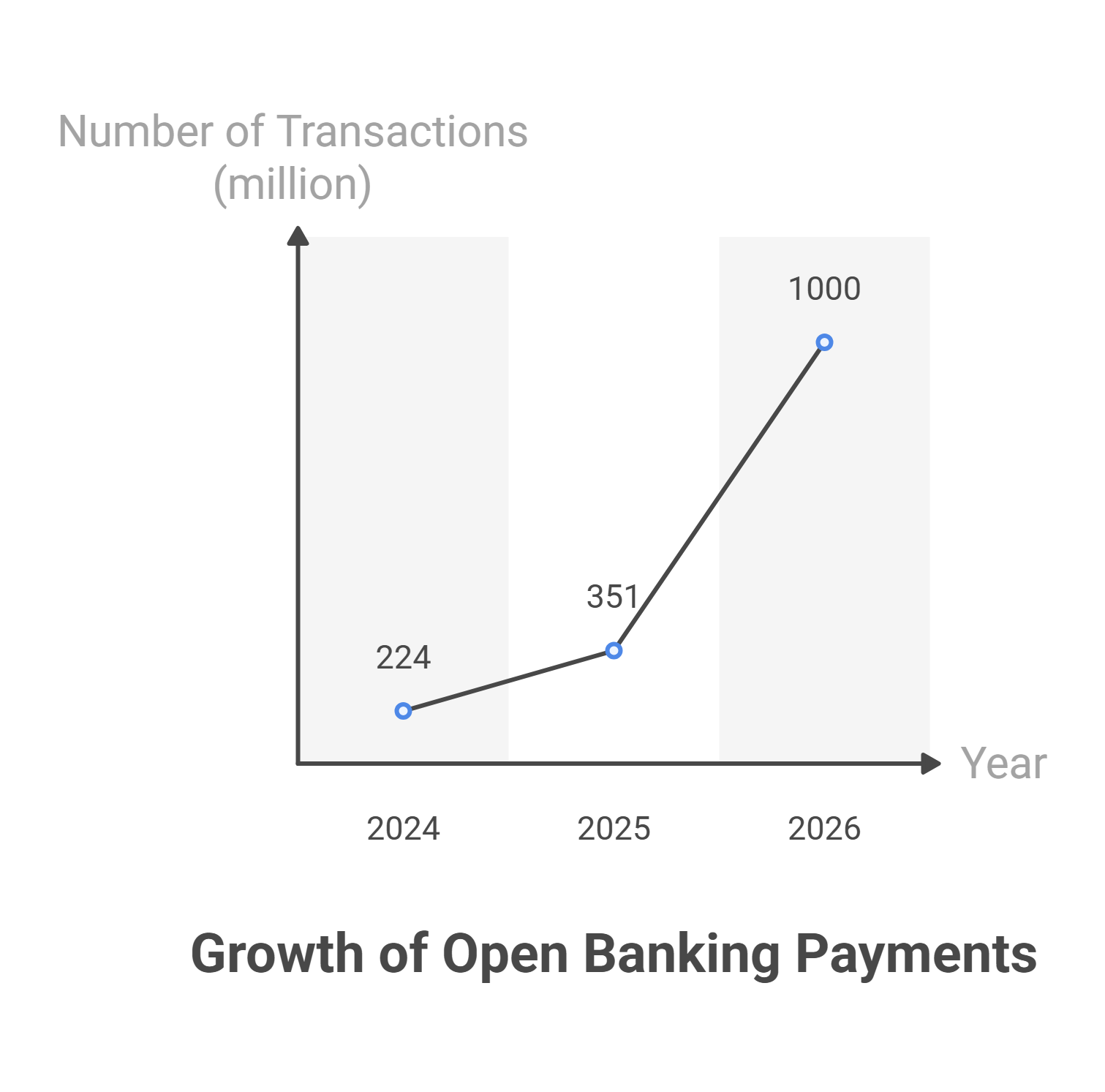
Key Takeaway: Rising payment volumes and cumulative transaction milestones show that open banking is moving from an emerging connectivity model toward established account-to-account payment infrastructure.
The wider development is changing the role of the bank account within digital finance. Open banking account to account payments can connect existing banking infrastructure with merchant, fintech and financial-service experiences, bringing direct bank-account payments closer to the centre of digital commerce.
Open Banking is Expanding Account-to-Account Payment Use Cases
The development of open banking is moving account-to-account payments beyond direct bank transfers and into a wider range of digital transactions. As payment initiation becomes accessible through APIs, merchants, fintechs and other regulated providers can build payment experiences that connect directly to customers’ bank accounts without requiring the transaction to begin inside a conventional banking application.
This is making open banking account to account payments increasingly relevant to digital commerce and financial services. The underlying payment still moves through banking infrastructure, but the customer experience can be initiated from a merchant platform, financial application or other digital service.
Pay-by-Bank is Moving Into More Commercial Use Cases
Account-to-account payments can offer an alternative to card-based checkout for selected transactions. A customer can choose to pay directly from a bank account, authenticate through their bank and return to the merchant environment after authorisation. This can reduce the number of separate steps between a purchase decision and payment completion.
The model can also support recurring and scheduled payments. Variable recurring payment frameworks, for example, are being explored as a way to allow customers to authorise future payments under defined parameters rather than approving every individual transaction separately.
This creates opportunities across ecommerce, bill payments, subscriptions, marketplaces and other digital services. Open banking account to account payments can effectively turn the bank account into a payment instrument that can be accessed within a broader digital journey.
Open Banking is Bringing More Services into Payment Infrastructure
The wider ecosystem is also developing beyond simple payment initiation. Account information can help providers understand a customer’s financial position, while payment capabilities can allow transactions to be executed within the same digital environment. This can bring data and payments closer together within financial applications.
Open Banking Limited’s UK data provides evidence of this wider adoption. It reported that active users, API calls and payment volumes all continued to expand through 2025, indicating that open banking is becoming increasingly embedded in everyday financial activity rather than remaining confined to specialist fintech services.
The global picture remains more fragmented. Different jurisdictions use different approaches to API standards, third-party access, consumer consent and payment initiation. The European Union is continuing to develop its regulatory framework through PSD3 and the Payment Services Regulation, while other markets have developed their own open-banking or open-finance models.
Despite these differences, the underlying direction is similar: financial institutions are increasingly exposing regulated account and payment capabilities through standardised digital interfaces.
Banks are Becoming Infrastructure Providers Within Digital Journeys
This shift has implications for the competitive role of banks. Open banking does not remove the bank from the payment relationship. Instead, it can change where the bank’s infrastructure appears within the customer journey.
A fintech can provide the interface, a merchant can provide the commercial experience and the bank can provide the regulated account and payment rail. The customer may therefore interact with several layers of the financial ecosystem without necessarily distinguishing which institution performs each function.
This creates both opportunities and challenges for banks. They can generate new relationships with fintechs and merchants through APIs, but they may also lose control over parts of the customer-facing payment experience. Payment providers must therefore compete on reliability, pricing, authentication, fraud prevention and developer experience as well as the underlying account relationship.
For open banking account to account payments, this makes interoperability particularly important. A fragmented API environment can limit adoption, while consistent standards and reliable connectivity can make direct bank-account payments easier to embed across digital services.
The longer-term direction is toward banking infrastructure becoming increasingly accessible through the wider digital economy. As account-to-account payments become easier to initiate and integrate, the boundary between digital banking and digital commerce is becoming less distinct.
Open Banking is Bringing Bank Accounts Closer to Digital Commerce
Open banking is changing the role of bank accounts within digital financial services by allowing regulated third parties to access account information and initiate payments through secure digital interfaces. As account-to-account payments become more widely integrated into merchant and fintech experiences, customers can increasingly make payments without relying exclusively on traditional bank-owned channels or card infrastructure.
This makes open banking account to account payments an increasingly important part of the digital payments landscape. Its growth will depend on reliable APIs, strong authentication, fraud controls, consumer trust and consistent regulatory frameworks across markets.
As open banking and faster payment infrastructure continue to develop, open banking account to account payments could become more closely integrated into ecommerce, recurring payments and embedded financial services. The longer-term shift is toward bank accounts becoming more accessible and programmable components of the wider digital economy rather than remaining primarily within the boundaries of traditional digital banking.