



















Close
Optic 2026
AFME’s European AML Conference 2026

Real-Time Fraud Detection Evolving with Instant Payment Growth

Note* - All images used are for editorial and illustrative purposes only and may not originate from the original news provider or associated company.

Related stories

Tokenised Payments Entering the Future of Financial Infrastructure

Tokenisation is moving beyond experimentation with digital assets toward...

Digital Euro Development Adding a New Layer to Digital Payments

The digital euro is moving from a central-bank research...

Open Banking Moves Account to Account Payments Closer to Digital Banking.

Bank accounts are increasingly becoming accessible through digital services...
- Advertisement -
AFME’s European AML Conference 2026

The expansion of instant payments is changing the way financial institutions approach fraud. When funds can move and become available within seconds, the window between detecting suspicious activity and taking action becomes substantially smaller. Fraud controls that depend primarily on post-transaction review therefore become less suited to payment environments where a completed transaction may be difficult to reverse.

This is increasing the importance of real time payment fraud detection as instant payment networks expand globally. The challenge is not simply identifying unusual transactions faster. Financial institutions increasingly need to assess risk before a payment is completed, using information about the transaction, the payer, the recipient and the wider behavioural context.

Payment Speed is Changing the Fraud Risk Model

Traditional fraud monitoring can operate across multiple stages of a payment lifecycle, including transaction review, investigation and recovery. Instant payments compress these stages because clearing and settlement can occur almost immediately. The result is greater pressure on banks and payment providers to make risk decisions within the payment journey itself.

The Bank for International Settlements’ 2026 report on fraud in fast payments identifies pre-transaction checks as an important area where industry practices are still developing. It highlights challenges including incomplete transaction information across payment networks, limited data visibility and the difficulty of distinguishing legitimate activity from fraudulent payments before execution.

This makes real time payment fraud detection increasingly different from conventional transaction monitoring. The objective shifts toward identifying risk early enough to prevent a fraudulent payment rather than relying on intervention after settlement.

Authorised Fraud is Creating a Different Challenge

The issue becomes more complex when customers themselves authorise the payment. In an authorised push payment scam, for example, a customer may be manipulated into sending money to a fraudster while the transaction itself appears valid from a technical authentication perspective.

This means traditional indicators such as whether the account holder successfully authenticated a transaction may not be sufficient. Fraud controls need to evaluate behavioural and contextual signals that can indicate whether a legitimate customer is being manipulated.

The UK provides one example of how this challenge is changing the responsibilities of payment providers. Its APP reimbursement framework requires participating firms to reimburse qualifying victims of authorised push payment scams, creating a stronger financial incentive to identify and prevent these transactions earlier. In the year covered by the latest available data, victims were reimbursed £249.6 million, highlighting the continuing scale of APP fraud even as prevention and reimbursement mechanisms develop.

Prevention is Moving Closer to the Payment Decision

The wider shift is toward fraud assessment becoming part of the payment decision itself. Rather than treating fraud detection as a separate monitoring function that reviews transactions after they have been submitted, banks can increasingly combine transaction information with behavioural analytics, recipient information and other risk signals before authorisation is completed.

BIS Project Hertha demonstrated how AI-based transaction analytics can identify complex and coordinated financial-crime patterns in real-time retail payment systems. Its work examined activity across multiple financial institutions, recognising that criminals can operate through networks of accounts that may be difficult to detect when institutions analyse transactions independently.

This points toward a broader change in fraud management. Real time payment fraud detection is increasingly becoming a continuous risk-assessment capability operating alongside payment processing, rather than a separate review process applied after transactions have moved.

The challenge for financial institutions will be to make these decisions quickly without creating unnecessary declines or delays for legitimate customers. As instant payments become more deeply embedded in banking, that balance between speed, security and customer experience will become a central part of payment infrastructure design.

Real-Time Fraud Detection is Moving Closer to Payment Authorisation

As instant payments become more widely used, fraud controls are increasingly being pushed closer to the point at which a payment is authorised. The objective is to assess risk while there is still an opportunity to intervene, rather than relying primarily on investigations after funds have already moved. This requires financial institutions to combine transaction information with behavioural, account and recipient signals within increasingly compressed decision windows.

This is making real time payment fraud detection a more integrated part of payment processing. Banks and payment providers can use machine learning, behavioural analytics, device intelligence and recipient information to assess whether a transaction is consistent with the customer’s normal activity or shows signs of manipulation.

Behavioural Analysis is Becoming More Important

Traditional transaction monitoring often relies on rules such as unusual amounts, unfamiliar locations or repeated transactions. These indicators remain useful, but fraudsters can adapt their behaviour and some fraudulent payments appear legitimate at the transaction level.

Behavioural analytics can add another layer by examining how an account normally operates. A sudden change in payment behaviour, a new recipient combined with unusual account activity or a sequence of transactions that differs from established patterns can increase the risk score before the payment is completed.

This is particularly important for authorised push payment scams, where a customer may authenticate a transaction themselves after being deceived. The challenge is therefore to detect the circumstances surrounding the payment rather than simply determine whether the customer’s authentication credentials were correctly used.

Real time payment fraud detection can incorporate these signals into a risk assessment that takes place during the payment journey. The decision can then range from allowing the transaction to applying additional verification, delaying a higher-risk payment or routing the case for further review.

Network-Level Intelligence is Adding Another Layer

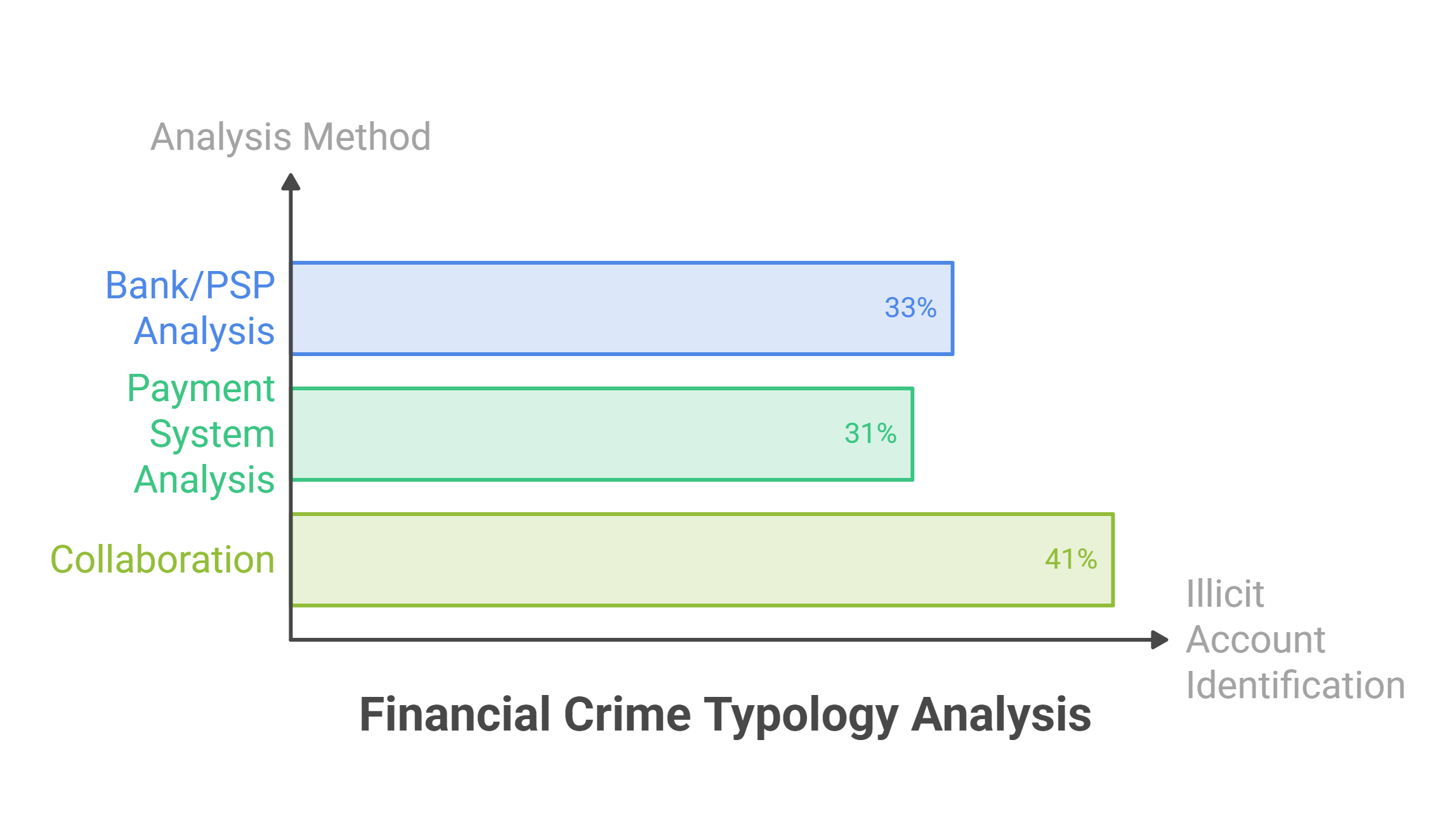
Fraud can also extend across multiple accounts and financial institutions, making it difficult for any single bank to see the full pattern. BIS Project Hertha tested AI and transaction analytics at the payment-system level to identify coordinated financial-crime patterns across a broader network. Its testing found that collaboration between banks or payment service providers and the payment system improved identification of illicit accounts, with the improvement reaching 26% for new and emerging typologies compared with bank or PSP analysis alone.

The result points toward a broader model of fraud prevention in which institutions can combine customer-level information with network-level transaction patterns. This can help identify relationships between accounts that may look ordinary when examined individually but become suspicious when viewed collectively.

Privacy remains a key constraint. BIS research has examined approaches including federated learning and multi-party computation that can support collaborative analytics without requiring institutions to expose sensitive customer data to one another.

Verification is Becoming Part of the Payment Experience

Payment verification is also moving closer to the transaction itself. Confirmation-of-payee services, for example, can check whether the account information supplied by a payer corresponds with the intended recipient before a payment is made. Such measures are particularly relevant to instant payments because prevention before settlement is generally more valuable than attempting recovery afterwards.

The regulatory response is developing alongside the technology. In the UK, APP reimbursement requirements have increased the financial consequences for payment firms when customers are victims of qualifying scams. By the 18 months ending March 2026, the Payment Systems Regulator reported that 88% of the money lost to in-scope APP scams, £316 million, had been reimbursed, while 82% of claims were closed within five business days.

AFME’s European AML Conference 2026

World Finance Informs brings together the global financial industry — from banking and investment leaders to fintech innovators and capital markets professiona ls — through trusted editorial, market intelligence, and digital engagement.

Our 2026 Media Pack offers integrated solutions to reach your audience:

  • Magazine & Digital Editions Showcase your brand within premium financial industry coverage read by execut ives and decision - makers worldwide.
  • Industry Insights & Reports Align with data - driven analysis, trend reports, and regional roundups across the global finance and banking value chain.
  • Brand Authority & Credibility Position your company as a thought leader through expert commentary, interviews, and special features.

Subscribe

- Never miss a story with notifications

- Gain full access to our premium content

- Browse free from any location or device.

Media Packs

Expand Your Reach With Our Customized Solutions Empowering Your Campaigns To Maximize Your Reach & Drive Real Results!

– Access the Media Pack Now

– Book a Conference Call

Leave Message for Us to Get Back

Latest stories

Related stories

Tokenised Payments Entering the Future of Financial Infrastructure

Tokenisation is moving beyond experimentation with digital assets toward...

Digital Euro Development Adding a New Layer to Digital Payments

The digital euro is moving from a central-bank research...

Open Banking Moves Account to Account Payments Closer to Digital Banking.

Bank accounts are increasingly becoming accessible through digital services...

Instant Payments Becoming a Standard Banking Capability

Banking is moving toward a model in which payments...

Subscribe

- Never miss a story with notifications

- Gain full access to our premium content

- Browse free from any location or device.

Media Packs

Expand Your Reach With Our Customized Solutions Empowering Your Campaigns To Maximize Your Reach & Drive Real Results!

– Access the Media Pack Now

– Book a Conference Call

Leave Message for Us to Get Back

Translate »