

















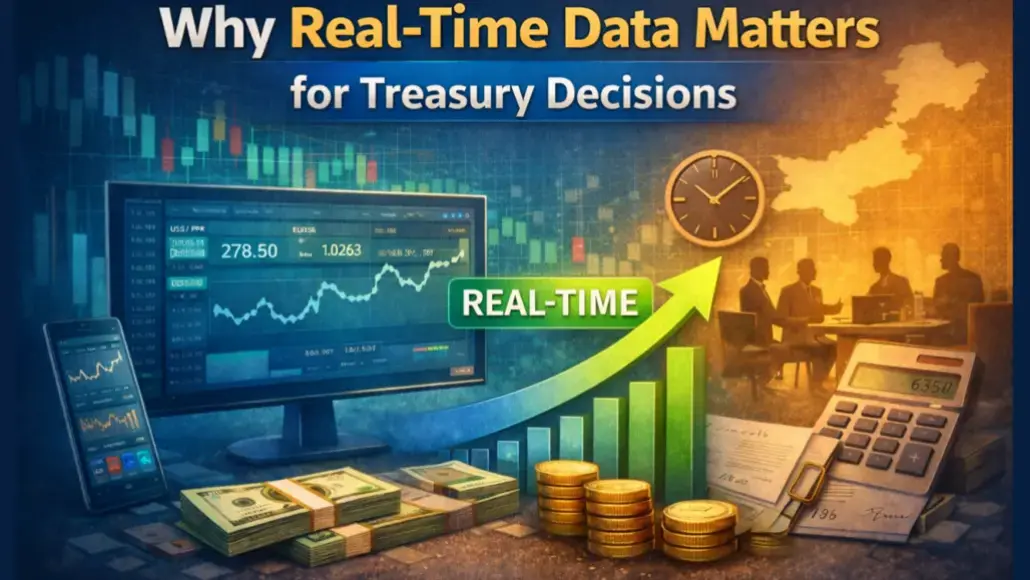


In the traditional landscape of corporate finance, the pulse of the organization was often measured in days or even weeks. Treasurers relied on batch reports, end-of-day bank statements, and manual spreadsheets to understand the company’s financial health. While this model worked in a slower-paced era, it is increasingly obsolete in today’s hyper-connected and volatile global economy. The emergence of real-time treasury data has fundamentally transformed the treasury function, moving it from a descriptive, history-tracking role to a prescriptive, strategic one. When financial leaders have access to a live stream of global cash positions and market movements, they can pivot their strategies with a level of agility that was previously impossible, turning information into a decisive competitive advantage.
The Evolution from Batch Processing to Instant Connectivity
To appreciate the impact of real-time data, one must first recognize the limitations of the “batch” mindset. For decades, the primary method for transmitting financial information between banks and corporations was through scheduled file transfers, such as SWIFT messages or MT940 files. These files were typically sent once a day, meaning that by the time a treasurer sat down to analyze the data, it was already several hours or even a full day old. In a market where currency values can swing significantly in minutes and interest rates can be adjusted unexpectedly, this “data lag” represented a significant risk. Decisions made on day-old data are, by definition, reactive rather than proactive.
The advent of Application Programming Interfaces (APIs) has broken this cycle of delay. APIs allow for instantaneous, event-driven communication between a corporation’s Treasury Management System (TMS) and its global banking partners. Instead of waiting for a file transfer, the system receives an update the very second a transaction occurs. Whether it is a large customer payment arriving in a New York account or a supplier payment clearing in London, the treasurer’s dashboard reflects the change immediately. This “on-demand” visibility allows for what is known as dynamic cash positioning. Treasurers can now manage their liquidity on an intra-day basis, ensuring that funds are always positioned exactly where they are needed to maximize yield or minimize borrowing costs.
Enhancing Strategic Planning through Advanced Analytics
While the speed of data is critical, the true power of real-time treasury data is unlocked when it is combined with advanced analytics and machine learning. Raw data is just noise unless it can be turned into actionable insight. Modern treasury platforms utilize these live data streams to power sophisticated modeling tools that can simulate a wide range of financial scenarios. For example, if a treasurer is evaluating the impact of a potential interest rate hike, they can use real-time data to model how that change would affect the company’s current debt portfolio and future interest expenses. Unlike static models that rely on historical snapshots, these “living models” provide a highly accurate and nuanced view of the organization’s actual exposure.
Furthermore, advanced analytics can identify patterns and trends that would be invisible to even the most experienced human analyst. By processing thousands of real-time transactions, these systems can spot subtle shifts in customer payment behaviors or identify early signs of a liquidity crunch in a specific subsidiary or region. This “early warning system” allows management to take corrective action long before a situation becomes a crisis. Whether it is adjusting credit limits for a specific group of customers or renegotiating payment terms with key suppliers, these decisions are backed by hard, real-time evidence. The integration of data across various departments sales, procurement, and finance ensures that the treasury team has a holistic, 360-degree view of the organization’s financial health.
Optimizing Cash Positioning and Working Capital in Real Time
One of the most immediate financial benefits of real-time visibility is the elimination of “idle cash.” In many large organizations, millions of dollars often sit in non-interest-bearing local bank accounts simply because the central treasury team doesn’t know they are there. This “trapped liquidity” is an expensive inefficiency. Real-time treasury data ensures that every dollar, euro, or yen is accounted for and can be swept into interest-bearing vehicles or used to pay down high-interest debt immediately. This active management of the cash cycle directly impacts the bottom line, increasing interest income and reducing financing costs.
In addition to cash management, real-time data integration is a game-changer for working capital optimization. By seeing the live status of accounts receivable and accounts payable, treasurers can better coordinate with the broader business to optimize the “cash conversion cycle.” For instance, if the treasury sees a large influx of customer payments on a Tuesday morning, they can immediately authorize a payment to a major supplier to take advantage of an early payment discount. This level of coordination requires a seamless flow of data between the bank, the ERP system, and the treasury platform, but the rewards in terms of financial agility are immense. It allows the company to be “liquidity-neutral” throughout the month, minimizing the peaks and valleys that typically characterize corporate cash flows.
The Role of Real-Time Insights in Risk Mitigation
In an era of increasing geopolitical and economic instability, risk management has moved to the top of the treasury agenda. Real-time treasury data is the most effective tool for mitigating these risks. Whether it is a sudden swing in foreign exchange rates or the failure of a major counterparty, the speed at which a treasury team can respond is the difference between safety and catastrophe. With live data, a treasurer can see an FX exposure developing and execute a hedge in the market within seconds, protecting the company’s margins from erosion.
Furthermore, real-time data allows for more effective monitoring of counterparty risk. Treasury systems can be configured to track the financial health of the organization’s banks and other financial partners in real time, pulling in credit ratings and market news. If a partner’s creditworthiness begins to deteriorate, the system can automatically flag the risk and suggest alternative actions, such as moving funds to a more stable institution. This proactive approach to risk management is a significant upgrade from the reactive, post-transaction analysis of the past. It provides the “financial intelligence” necessary to navigate a complex and often hostile global market with confidence.
Conclusion: The Future is Instant
The shift toward real-time treasury data is not merely a technological upgrade; it is a fundamental change in the philosophy of corporate finance. In a world where business moves at the speed of light, the traditional “wait and see” approach to data is no longer viable. Organizations that invest in the infrastructure necessary to harness real-time insights will find themselves with a significant advantage. They will be more agile in their decision-making, more resilient in their risk management, and more efficient in their capital allocation. Ultimately, the ability to see and act on financial information in real time is the key to thriving in the modern global economy, making it an essential pillar of any forward-thinking treasury strategy.