




















Natural catastrophes are no longer creating occasional spikes in insurance losses. They are becoming a more persistent part of the claims environment, with insurers dealing with frequent storms, wildfires, floods and other events alongside the possibility of much larger peak losses. In 2025, global insured natural-catastrophe losses reached US$107 billion, making it the sixth consecutive year in which losses exceeded US$100 billion.
The number is slightly lower than the US$141 billion recorded in 2024, but that does not mean the underlying risk has eased. The lower figure was partly linked to the absence of a major US hurricane landfall in 2025. Long-term industry analysis continues to place the real annual growth rate of insured catastrophe losses at around 5% to 7%, driven largely by growing exposure, higher asset values and rising reconstruction costs.
This distinction is important for catastrophe claims. Insurers cannot plan only around the result of one calendar year. They have to prepare for a claims environment where the baseline keeps moving higher and where a single severe event can still create a sudden surge in claims volume.
Secondary Perils are Driving More of the Claims Burden
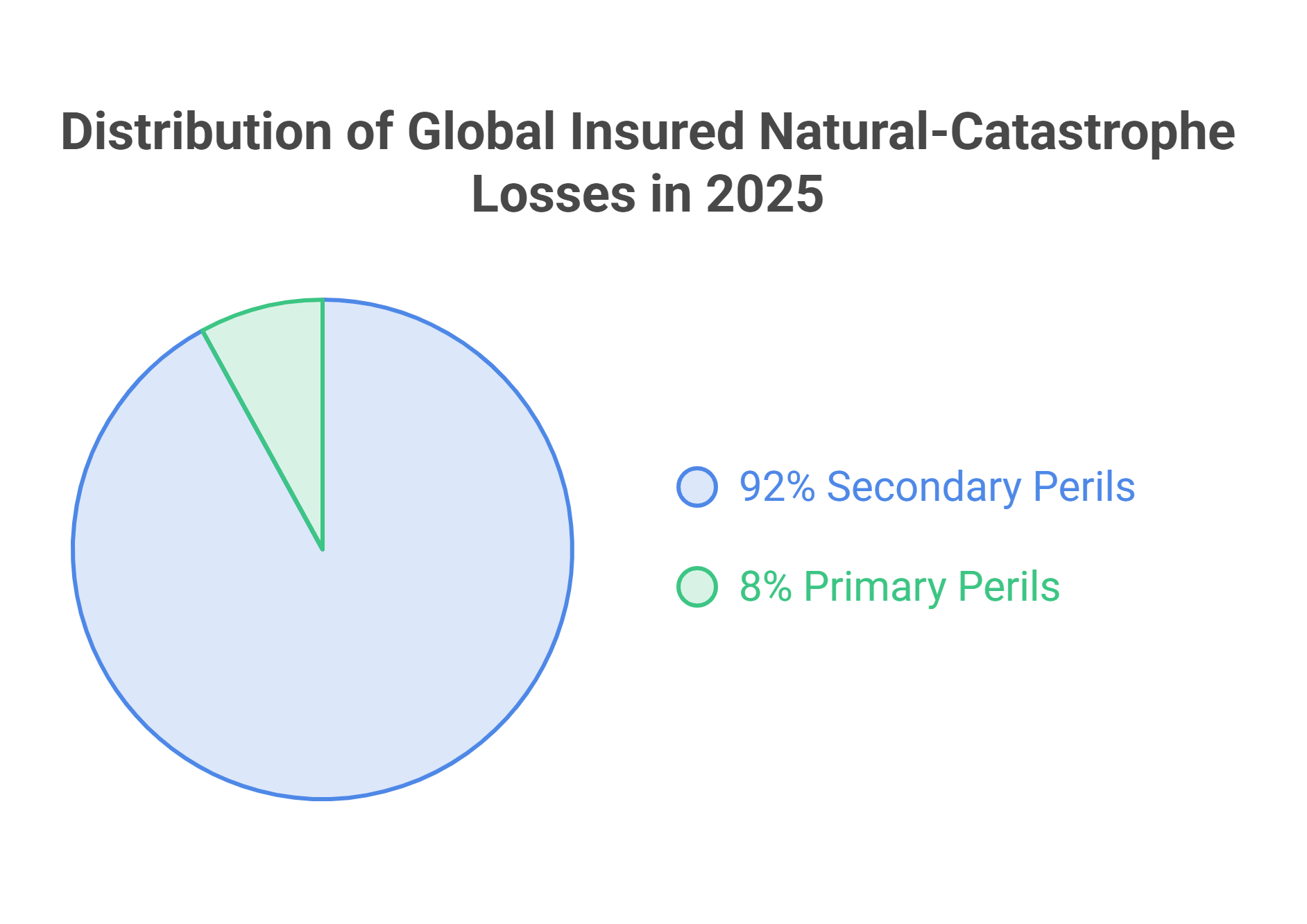
One of the biggest changes is where catastrophe losses are coming from. Secondary perils, including severe convective storms, wildfires and floods, accounted for a record 92% of global insured natural-catastrophe losses in 2025. Severe convective storms alone generated around US$51 billion in insured losses, while the Los Angeles wildfires produced around US$40 billion.
This changes the operational challenge for insurers. A major hurricane or earthquake can create a huge claims surge, but repeated secondary events can keep claims teams under pressure throughout the year. Hailstorms, damaging winds, wildfires and floods can affect thousands of policyholders across different locations, creating a steady flow of claims that still require assessment, communication, repair coordination and settlement.
The growing importance of these events also means insurers are dealing with catastrophe exposure outside traditional peak-peril scenarios. In 2025, insured natural-catastrophe losses came from 190 events, with nearly half of total economic losses covered by insurance. That still left a significant protection gap between economic damage and insured losses.
For insurers, the issue is therefore becoming as much about claims capacity as financial loss. A large catastrophe can quickly increase demand for adjusters, engineers, repair networks and customer-service teams, while systems need to process much higher volumes without sacrificing accuracy.
Key takeaway: Catastrophe claims are becoming a persistent operating challenge because frequent secondary events are keeping the global insured-loss baseline elevated.
Catastrophe Claims are Creating Persistent Pressure on Insurers
The pressure created by natural catastrophes is no longer limited to a few major events each year. Insurers are increasingly dealing with a steady flow of storms, floods, wildfires and other secondary perils while still having to prepare for the much larger losses that can come from major hurricanes or earthquakes. In 2025, global insured natural-catastrophe losses reached US$107 billion, the sixth consecutive year above US$100 billion.
The lower figure compared with 2024 does not mean the underlying risk has eased. Swiss Re estimates that insured catastrophe losses are still rising by around 5% to 7% a year in real terms, largely because more homes, businesses and infrastructure are located in exposed areas and the value of those assets continues to increase. The 2025 loss total was also below the long-term trend partly because there was no major US hurricane landfall.
For catastrophe claims, that creates a difficult operating environment. Insurers have to manage the normal flow of claims while being prepared for sudden surges that can overwhelm adjusters, repair networks and customer-service teams.
Secondary Perils are Keeping Claims Pressure High
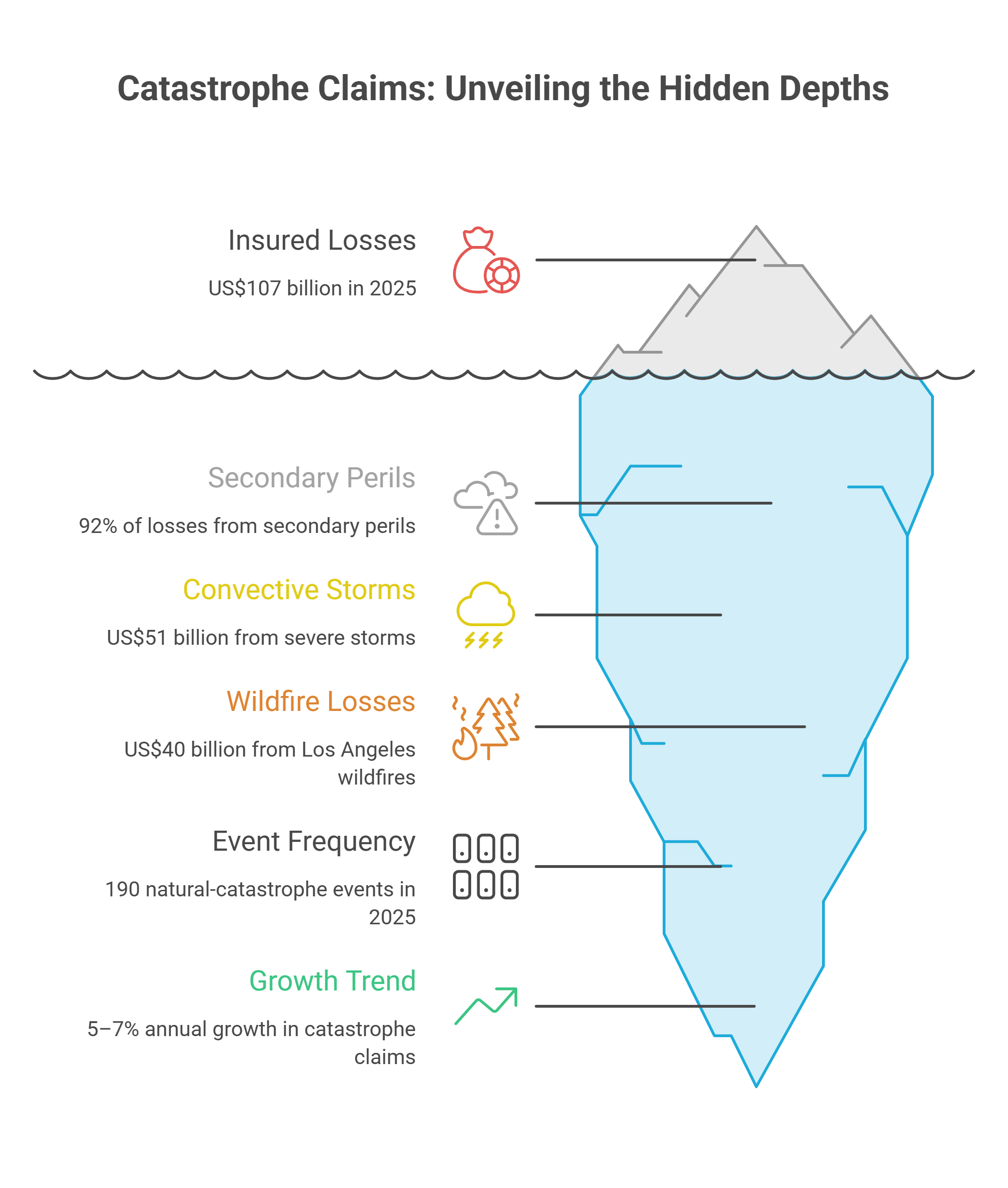
One of the biggest changes in the catastrophe market is the growing importance of secondary perils. Wildfires, severe convective storms and floods accounted for a record 92% of global insured natural-catastrophe losses in 2025. Severe convective storms generated about US$51 billion in insured losses, while the Los Angeles wildfires generated around US$40 billion.
This matters because secondary events can create a different kind of claims challenge from a single major hurricane. Instead of one large event producing a concentrated surge, insurers can face repeated claims from storms, hail, flooding and wildfires across different regions throughout the year.
The numbers also show how wide the exposure has become. Natural catastrophes generated 190 events and about US$220 billion in economic losses in 2025, of which US$107 billion was insured. That left a substantial protection gap, with households and businesses still carrying a large share of the economic damage themselves.
Key takeaway: Catastrophe claims pressure is increasingly being created by frequent secondary events, not only by major hurricanes and earthquakes.
The financial challenge becomes even more difficult when peak-loss scenarios are considered. Swiss Re estimates that insured natural-catastrophe losses could reach around US$148 billion in a trend year in 2026, but could rise to US$320 billion in a peak-loss scenario. By 2030, the modelled peak could reach about US$400 billion as exposure continues to accumulate.
That means insurers have to prepare for two different realities at the same time: a higher everyday claims burden from frequent events and the possibility of a much larger loss year that can place sudden pressure on claims capacity, reinsurance and capital.
Conclusion
Catastrophe claims are becoming a more persistent challenge for insurers as frequent secondary events keep claims volumes elevated while major catastrophes continue to carry the potential for much larger losses. The issue is not simply the total value of insured damage. It is also the industry’s ability to process large numbers of claims quickly, maintain service quality and manage the financial impact across the balance sheet.
The underlying trend makes preparation increasingly important. With insured catastrophe losses remaining above US$100 billion for a sixth consecutive year and long-term losses continuing to rise in real terms, insurers need to plan for both frequent claims activity and low-frequency, high-severity events.
For insurers, catastrophe claims are therefore becoming an issue of claims capacity, capital, reinsurance and customer trust at the same time. The strongest response will come from combining financial resilience with better claims preparation, data, technology and workforce capacity before the next major event arrives.