
















The International Finance Corporation (IFC) investment growth is increasing significantly, despite US President Donald Trump’s warnings of a global trade war making the international economy less stable.
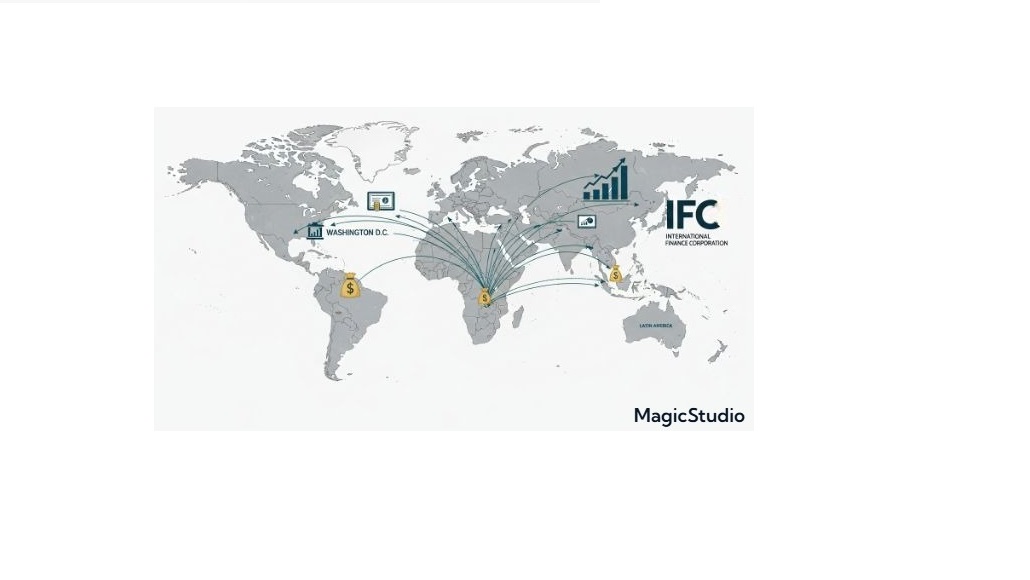
The IFC, which is located in Washington, D.C., is the World Bank’s private sector arm. It gets private money and lends it to enterprises in developing markets.
The organisation is very important for producing employment and supporting growth in less developed areas, even if most people outside development circles don’t know about it.
“The world economy has been going through a bit of a turbulent time, but what I must say is that even though there is turbulence… we are seeing a lot of interest in investing in emerging countries,” Makhtar Diop, the IFC’s managing director, told AFP.
There are real data that back up this hope. Preliminary data reveals that the IFC committed more over $71 billion in the fiscal year ending June 30. This is almost twice what it committed three years ago and a big increase from last year’s record of $56 billion.
The investment is spread out all over the world, with more than $20 billion going to Latin America, $17 billion to Asia, and $15.4 billion to Africa.
The big rise is due to a planned change in strategy.
Diop, an economist and former Senegalese finance minister, explained that the IFC investment growth has focused on becoming “simpler, more agile, and delegating decision-making to our teams that are in the field.”
This approach abandons the over-centralized structure that previously “was slowing down our ability to respond and seize new opportunities.”
The timing is important. The IFC investment growth has sped up as Western nations draw back from giving direct help to developing countries because of growing defence expenses, rising debts, and politicians that are becoming more inward-looking.
“It’s totally understandable that they have fewer resources to make available in the form of grants to developing countries,” Diop acknowledges.
However, he emphasized that World Bank funding for the world’s poorest countries remains fully replenished, calling it “the most efficient and best way to support countries.”
It’s clear that the IFC’s influence in the World Bank Group is growing. Today, its financing is almost comparable to the help the bank gives directly to governments, making it an equal partner in development initiatives.
A lot of co-financing partners now come from places that don’t usually invest outside of their own districts. For example, the IFC’s biggest investment in renewable energy in Africa was made with a business located in Dubai.
A big part of the IFC’s job is to work on sustainability projects. Diop says that there are too many false choices between economic growth and the environment, particularly when it comes to energy projects, which are a big part of the agency’s portfolio.
“It happens that today, you don’t have to make that trade-off because the sustainable solutions are often the cheaper ones, and that’s the beauty of what we are seeing,” he said.
Beyond infrastructure development that stimulates broader economic activity, Diop identifies tourism, pharmaceuticals, and agriculture as the most promising sectors for job creation.
These fields have the size and development potential to handle the large number of young people who will be joining the global economy in the near future.

