



















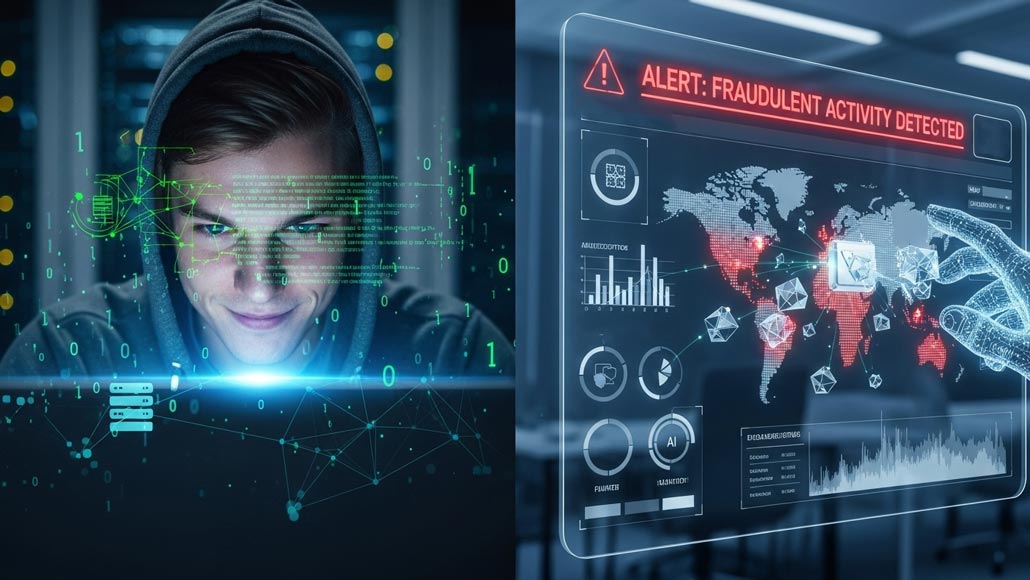

Insurance Fraud in the Digital Age: Technology’s Role in Prevention and Detection
Insurance fraud has always been one of the industry’s most persistent challenges. It is a costly problem, draining billions of dollars from insurers every year and ultimately driving up premiums for honest policyholders. What makes fraud especially damaging is that it exploits the very promise of insurance: protection when disaster strikes.
Traditionally, fraud detection relied heavily on manual checks, red flags, and lengthy investigations. But with the explosion of digital data, advanced analytics, and artificial intelligence (AI), insurers today are armed with a much stronger arsenal. The digital age has not only enabled fraudsters to devise more complex schemes but also empowered insurers to respond with greater sophistication.
The evolution of technology is changing insurance fraud prevention from a reactive process into a proactive, predictive discipline — one that reshapes how insurers safeguard their customers and financial stability.
The Rising Complexity of Fraud in a Digital Era
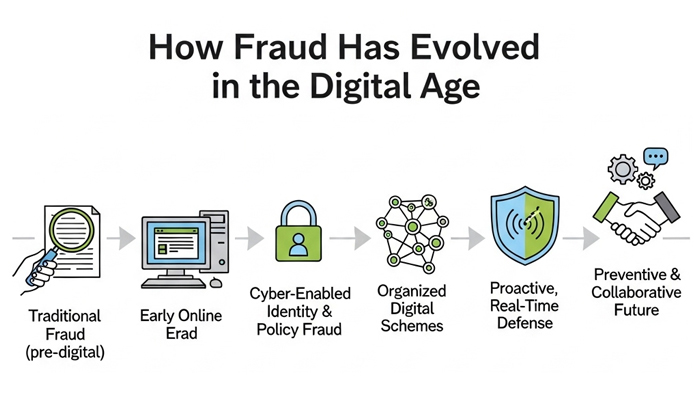
Insurance fraud is no longer confined to staged car accidents or exaggerated health claims. The digital economy has opened new doors for fraudsters. Cyber-enabled fraud schemes are growing rapidly, ranging from falsified digital documents and identity theft to organized rings that exploit gaps in online claims systems.
For example, “ghost broking” — the sale of fake policies through digital channels — has become a serious issue in auto insurance markets. In health and property lines, manipulated digital invoices and fabricated documents circulate faster than ever before.
As fraud becomes more digital, insurers cannot rely solely on traditional investigation units. They must deploy tools that can analyze vast amounts of structured and unstructured data in real time to detect anomalies before fraudulent claims are paid.
The Role of AI and Machine Learning in Fraud Detection
Artificial intelligence is at the heart of modern fraud detection. By training algorithms on historical claims data, insurers can identify patterns that distinguish genuine claims from suspicious ones.
Machine learning systems analyze multiple dimensions simultaneously — claimant behavior, claim history, geolocation, repair estimates, medical records, even social media activity. Unlike human investigators, these systems scale effortlessly, processing millions of claims with high accuracy.
For example, an AI system may flag a claim if the reported accident time does not align with telematics data from a connected vehicle. In health insurance, inconsistencies between claimed treatments and electronic health records can trigger alerts instantly.
The beauty of machine learning is that it improves over time. Every false claim it successfully identifies strengthens its ability to detect the next one, creating a continuously evolving defense against fraud.
Data Integration: The Backbone of Fraud Prevention
The effectiveness of fraud detection technology depends heavily on connected data ecosystems. Fragmented datasets across claims, underwriting, and customer service hinder visibility. By integrating them into unified platforms, insurers gain a holistic view of each claimant and claim.
Take the case of property insurance. When IoT sensors in a building detect a fire, data from the sensor, local weather reports, and emergency services can be cross-referenced against the claim submission. Any inconsistencies quickly raise red flags.
This integration allows insurers to not only detect fraud but also differentiate between fraudulent and legitimate claims faster — reducing delays for genuine customers.
The Human-Machine Balance in Fraud Detection
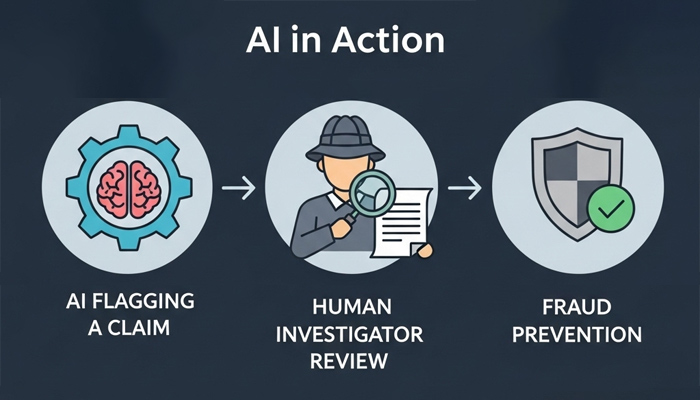
While technology provides the tools, human expertise remains indispensable. Algorithms can surface anomalies, but human investigators must contextualize them. A flagged pattern may indicate fraud, or it may simply reflect unusual but legitimate circumstances.
For instance, AI might flag a sudden spike in claims from a particular neighborhood as suspicious. A human investigator, however, could identify that the spike is due to a recent natural disaster.
The future lies in a hybrid approach — AI for scale and speed, humans for judgment and empathy. This balance ensures that technology strengthens rather than replaces the role of claims professionals.
Challenges in Digital Fraud Prevention
Despite its promise, technology-driven fraud detection is not without challenges.
-
False Positives: Overly aggressive systems risk flagging too many legitimate claims, frustrating customers.
-
Privacy Concerns: Using data from sources like social media raises ethical and regulatory issues.
-
Cost of Implementation: Building advanced fraud detection platforms requires significant investment.
-
Adaptability: Fraudsters constantly evolve; detection systems must adapt at the same pace.
Addressing these challenges requires insurers to pair strong governance frameworks with advanced tools, ensuring fraud prevention does not compromise trust.
Case Studies of Technology in Action
-
Auto Insurance: In the U.S., several carriers now use AI-powered photo analysis to detect vehicle damage fraud. Algorithms compare submitted images with databases of stock photos to identify manipulated claims.
-
Health Insurance: European health insurers are piloting blockchain for medical claims, ensuring invoices are authenticated and tamper-proof.
-
Property Insurance: A leading Asian insurer uses satellite imagery and drones to verify disaster claims, cross-checking policyholder reports with independent data sources.
These real-world deployments highlight how technology is not only preventing fraud but also streamlining claims processing.
The Future of Fraud Detection in Insurance
Looking ahead, the next wave of fraud prevention will be powered by predictive analytics and collaborative intelligence.
-
Predictive Analytics: Insurers will use AI not just to detect fraud after a claim is filed but to predict potential fraud before policies are even written.
-
Industry Collaboration: Shared databases across insurers could expose fraud rings that target multiple companies.
-
Biometric Verification: Advances in facial recognition and voice authentication will strengthen identity verification at claim submission.
-
Blockchain: Immutable records of claims and policy data could eliminate certain fraud types entirely.
The ultimate goal is a fraud detection framework that is proactive, integrated, and invisible to genuine customers while making fraud nearly impossible for criminals.
Conclusion
Fraud remains one of the most significant risks to the insurance industry, but the digital age is rewriting the rulebook. With AI, data integration, IoT, and blockchain, insurers are better equipped than ever to prevent and detect fraudulent claims.
The challenge is to balance technology with human insight, ensuring that while fraudsters are stopped in their tracks, honest policyholders experience faster, smoother, and more transparent claims journeys.
In the battle against fraud, the insurers who succeed will be those who embrace technology as both a shield and a scalpel — precise, powerful, and always evolving.