




















Human Touch in a Digital Claims Era: Redefining the Role of People
The insurance industry is in the midst of an extraordinary transformation. Artificial intelligence, machine learning, chatbots, and automation tools are reshaping claims management from a paper-heavy, labor-intensive process into a streamlined digital workflow. Yet amid this digital acceleration, one truth has not changed: claims are about people. Behind every policy number is a customer experiencing loss, uncertainty, or disruption.
While digital tools improve efficiency, it is the human touch in a digital claims era that ultimately preserves empathy, builds trust, and strengthens long-term customer relationships. The evolving role of people in this digital-first environment is not disappearing; rather, it is being redefined.
Why Human Touch Still Matters in a Digital World
Insurance claims are moments of vulnerability for customers. Whether it is a car accident, property damage, or health crisis, policyholders seek reassurance as much as resolution. Technology may provide instant updates and faster settlements, but only humans can convey empathy, compassion, and understanding.
In surveys, policyholders consistently highlight that their satisfaction hinges not just on the speed of claim resolution but on how they were treated during the process. A claims experience that feels cold or mechanical risks alienating customers, even if it is efficient. Conversely, a human-centered experience creates loyalty that no algorithm can replicate.
The New Role of People in Claims
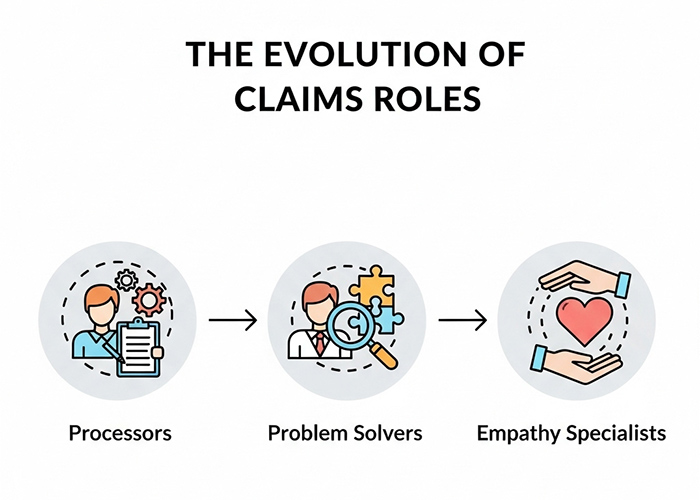
From Processors to Problem Solvers
Automation handles repetitive administrative tasks — uploading documents, verifying data, scheduling inspections. This allows claims professionals to shift their role from data entry clerks to problem solvers, focusing on complex, sensitive, or disputed claims where judgment and experience matter most.
From Gatekeepers to Advisors
Rather than simply enforcing policy terms, claims staff increasingly act as advisors, guiding customers through their options, explaining processes, and ensuring fairness. The role evolves from transactional to relational.
From Adjusters to Empathy Specialists
When customers are distressed, they want to feel heard. Claims teams who demonstrate emotional intelligence, active listening, and compassion transform a potentially negative experience into one that strengthens trust.
Technology and Human Collaboration
AI as an Enabler, Not a Replacement
Artificial intelligence enhances human decision-making. AI tools analyze claims patterns, flag potential fraud, and recommend next steps, but humans apply judgment, context, and ethical reasoning. The collaboration ensures efficiency without sacrificing fairness.
Chatbots and Customer Service Staff
Chatbots can answer routine questions 24/7, providing customers with instant responses. However, when queries become complex or emotional, the ability to seamlessly transition from digital to human interaction ensures continuity and care.
Augmented Decision-Making
Predictive analytics forecast claim costs or outcomes, but final decisions — particularly on high-value or sensitive claims — require human oversight. This combination of data-driven insights and human intuition defines the future model.
Training the Workforce for the Digital Era
As the role of people shifts, so too must their skills. Technical training is no longer sufficient; insurers must invest in holistic development.
Digital Fluency
Claims professionals must understand the digital tools they use daily — from claims platforms to AI-driven dashboards. Digital fluency allows them to confidently manage processes and explain outcomes to customers.
Emotional Intelligence
Soft skills like empathy, communication, and active listening are increasingly vital. These skills differentiate a human claims experience from one that feels impersonal.
Hybrid Skills Development
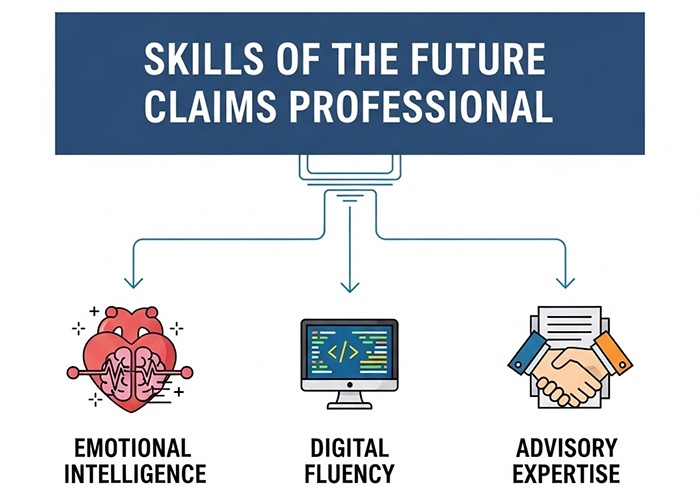
Insurers must create training programs that blend technical, analytical, and interpersonal skills. Employees who are both tech-savvy and empathetic become the backbone of future claims departments.
Measuring the Human Touch
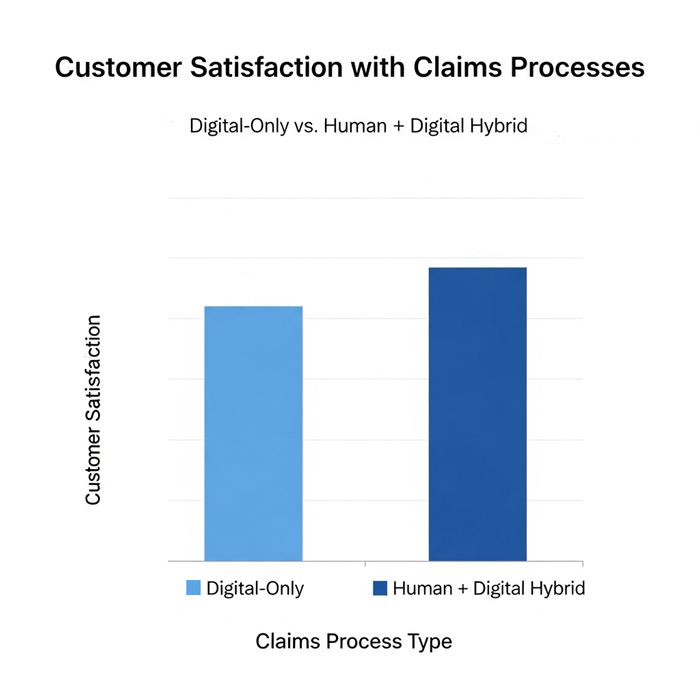
As insurers digitize, they must ensure human engagement remains measurable. Metrics such as Net Promoter Score (NPS), Customer Satisfaction (CSAT), and First Contact Resolution provide insights into how customers perceive the human aspects of their claims journey.
Insurers are also beginning to use advanced sentiment analysis to evaluate the emotional tone of interactions. This helps identify when customers feel reassured and when they feel frustrated, guiding improvements in staff training and process design.
Human Touch as a Brand Differentiator
In an industry where products are often commoditized, the claims experience becomes the defining brand moment. Two insurers may offer identical policies, but the one that delivers a compassionate, personalized claims journey will retain more customers and generate stronger advocacy.
The human touch in a digital claims era is not just a customer service priority; it is a strategic differentiator that drives business growth. Forward-looking insurers recognize this and actively market their human-centered approach as a brand promise.
The Future of People in Claims
The future will see even greater automation, but humans will remain central. Several trends illustrate how roles will evolve:
-
Specialization: Claims professionals will handle fewer routine tasks but more specialized, high-stakes claims.
-
Advisory Services: The advisory role will grow, with claims staff guiding customers through complex financial, legal, and health-related decisions.
-
Integrated Customer Journeys: Seamless movement between digital and human touchpoints will become the norm, ensuring no customer feels abandoned to technology.
-
Emotional Value Creation: Beyond financial settlements, insurers will focus on delivering emotional value — reassurance, care, and confidence.
Conclusion
Technology is transforming claims at an unprecedented pace, but the heart of insurance remains human. Efficiency, speed, and accuracy matter — yet without empathy and trust, these gains are hollow.
The human touch in a digital claims era redefines the role of people not as outdated or expendable but as essential partners to technology. In this balance, insurers can deliver both digital excellence and human compassion, ensuring that customers not only receive settlements but also feel supported in moments that matter most.