



















Why Your Trading Account Is More Important Than You Realize? Suppose 2 traders with equal capital, the same methodology, and the same entries—yet one has vastly different outcomes. What’s the variable? Most likely, it’s which type of trading account they’re employing. In Forex, milliseconds matter and margins fluctuate like the seas, your trading account is not a nicety, it’s the operations room of your money plan.
From leverage and spreads to lot and speed-of-execution, the account you trade in stealthily affects every move you make. Yet most traders neglect it completely. If you’re serious about long- term success—not just survival, but thriving in the market—this is where we start. We will expose why your account type could be your biggest strength (or biggest weakness), how to match it up with your goals, and what features really make a difference. Stick with us, you’re about to find out the least publicized secret to Forex success.
Standard vs. Pro Account Comparison
With the Forex market growing increasingly complex, brokers have developed various account types for users from basic accounts with minimal limits on entry, to professional-level setups for experienced users.
If you want to compare different companies in terms of—i.e., zero spread accounts and prime access, you can observe that each of them has its own set of speed, cost, and flexibility in trading.
For a better look, visit the Types of Trading Accounts at STP Trading where all different models of accounts are offered to support anything from learning curves for newbies to algorithmic execution needs.
Most crucial is being aware of which account features suit your trading strategy and not the common error of choosing based on leverage or minimum deposit conditions.
| Feature | Standard account | STP Zero | Zero Prime | Islamic account |
| Minimum deposit | USD 10 | USD 1000 | USD 3000 | USD 10 |
| Spreads | ~ 0.4 Pips | ~ 0.2 Pips | 0 Pips | ~ 1.3 Pips |
| Commission | USD 6 per lot | USD 5 | From USD 3.5 | None |
| Execution type | Market execution | Market execution | Market execution | Market execution |
| Leverage | Up to 1:300 | 1:300 | 1:300 | Up to 1:300 |
| Min lot size | 0.01 | 0.01 | 0.01 | 0.01 |
| Swap | Charged | Charged | Charged | Swap free |
| Account currency | USD | USD | USD | USD |
| Trading instruments | Forex, metals, indices, crypto | Forex, metals, indices, crypto | Forex, metals, indices, crypto | All available instrument |
| Best for | Beginners and casual traders | Cost conscious and advanced traders | Cost conscious and advanced traders | Traders needing Sharia- compliance |
What Makes a Trading Account “Right” for You?
Selecting the right trading account starts with aligning the traits of the account to your goals, experience, and trading style. Some key things to keep in mind are: explained in the following parts.
The Double-edged Sword of Leverage and Margin
Although high leverage will enhance gains, it also maximizes possible losses. It’s a two-edged sword. Zero and Standard accounts support up to 1:300—ideal for those who prefer smaller deposits and greater risk exposure.
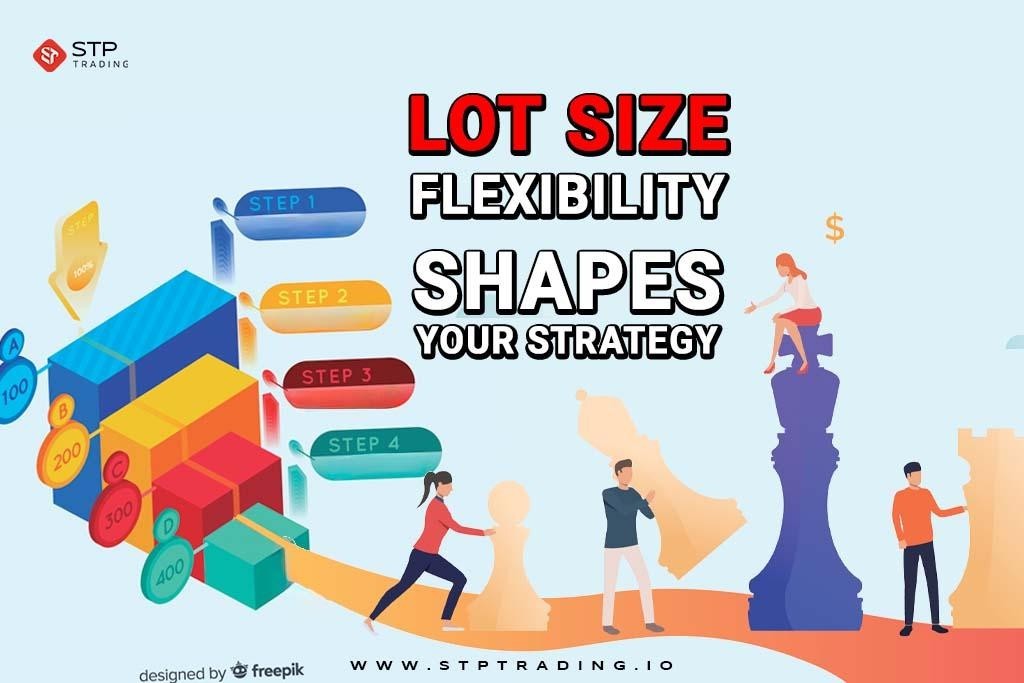
Lot Size Flexibility Shapes Your Strategy
Lot size is the amount of a unit of currency that you’re trading. Having the ability to choose between micro (0.01), mini (0.1), and standard (1.0) lots gives you control over how much capital you’re putting up per trade.
All options confirm a minimum lot size of 0.01 that allows beginner and expert traders to adapt exposure. This is necessary for strategy testing or hedging against volatile markets.
Spreads and Commissions, the True Cost of Every Trade
Spread means the difference between the bid price (broker’s “bid”) and the ask price (broker’s “offer”). Commission also is a fixed per-trade charge (charged round-turn or per side).
Traders with reduced spreads and commissions reduce the entry and exit costs. The Standard Account features commission-free trades but with wider spreads (of 1.2 pips). Zero and Zero
Prime accounts offer raw or ultra-tight spreads (of 0.0 or 0.2 pips) but at the expense of commission, which reduces as the level of the account increases.
This model accommodates a wide range of styles of trading. Scalpers and high-frequency traders like tight spreads with a set charge (Zero). Occasional traders prefer no charge and less complicated rates (Standard).
Speed of Execution Can Make or Break Your Trade
Speed of execution is the rate at which your trade is executed and filled when you click “buy” or “sell.” In volatile markets, milliseconds can create slippage or failed trades.
Most trading accounts employ market execution, which ensures that orders are filled on the best available market price, with no requotes. This is important particularly for:
- Scalpers, for whom livelihood depends on speed-fire
- News traders, who need fast response
- Pro-level traders, who trade big size and depend on liquidity and execution
Beginner Friendliness vs. Professional Features
The Standard Account is great for beginners—it has low capital, no commission complexity, and leverage to a range of instruments. Zero Account balances affordability with pro-grade spreads for budding traders.
Zero Prime is for professional traders who need institutional-cost structure and execution terms.
Your Forex Career Deserves the Right Start
Success in Forex isn’t built on luck—it’s built on choices. And one of the smartest choices you’ll ever make isn’t your first trade, but the trading account you choose to build with.
The right account is your planner in strategy, your guardian in risk, and your catalyst for profits. Whether you’re testing the waters or trading heavy volume, your account should be doing work for you—not against you.
Choose wisely. If you’re ready to elevate your trading with an account that fits your goals like a tailored suit, now’s the perfect time to make a move. Browse Trading Accounts at STP Trading. Since your trading strategy is unique, your account should be too. Ready to Match Your Account to Your Goals? The choice of trading account should never be rushed.