




















Institutional investment strategies in 2025 are evolving rapidly, shaped by technological breakthroughs, shifting economic policies, and new asset classes that collectively redefine how institutions manage and grow their portfolios. The year 2025 marks a continuation and acceleration of trends already underway, as institutional investors seek to capture opportunities, enhance diversification, and future-proof their frameworks amid a transforming global landscape.
Digital Assets Integration
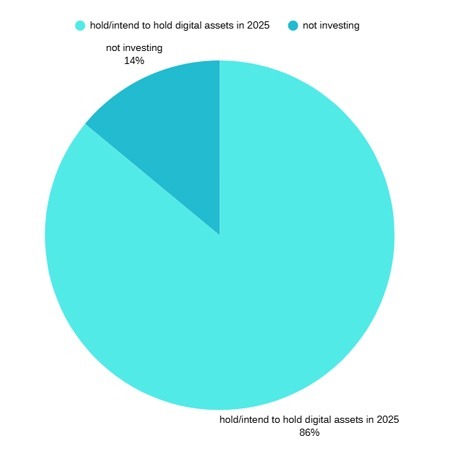 One of the most significant shifts in institutional investment strategies in 2025 is the mainstream integration of digital assets, particularly cryptocurrencies. Data from the Coinbase and EY-Parthenon “2025 Institutional Investor Digital Assets Survey” reveals that 86% of institutional investors now hold digital assets or intend to allocate assets to this category in 2025, with 59% planning to commit over 5% of their assets under management (AUM) to cryptocurrencies. This widespread acceptance marks a fundamental change from the cautious stance institutions had toward cryptocurrencies only a few years ago.
The expansion extends beyond traditional tokens like Bitcoin and Ethereum. Approximately 73% of institutions report holding alternative cryptocurrencies, including Ripple, Solana, and Dogecoin, signaling broader diversification within the digital asset space. Decentralized finance (DeFi) protocols are also gaining traction, with institutional engagement expected to triple from 24% to 75% over two years. These innovative financial platforms offer exposure to derivatives, staking, lending, and altcoins, opening new yield-generation and transactional opportunities.
Regulatory clarity emerges as both a risk and an opportunity, with 57% of institutions citing clearer frameworks as crucial for growth. Institutions prefer regulated investment vehicles, with 60% opting for crypto exposure through regulated funds rather than direct holdings, reflecting a preference for risk-managed access. This institutional embrace of digital assets demands sophisticated analytical frameworks that integrate blockchain technologies and tokenized asset classes, a hallmark of contemporary institutional investment strategies.
Growth of Private Markets and Venture Capital
The accelerating shift toward private markets is another dominant trend in institutional investment strategies for 2025. Private equity, venture capital, and other private market investments offer institutions opportunities for higher returns and portfolio diversification beyond traditional public equities. Russell Investments highlights increasing institutional allocations to private markets, driven by anticipated regulatory easing, stabilizing interest rates, and a robust deal-making environment.
Venture capital investments now account for 27% of deals and 41% of capital raised, indicating significant capital flows into early-stage innovation. The rise of “unicorns” , privately held companies valued at over $1 billion, further fuels venture capital activity, attracting institutional investors eager to participate in transformative technology and sector breakthroughs.
Multi-manager approaches that span specialized managers in real assets and private markets are emerging as best practices. By blending exposure to private and public markets, institutions can optimize risk-adjusted returns while accessing unique growth opportunities in sectors such as technology, healthcare, and green energy. This strategic diversification underpins institutional investment strategies focused on balancing growth, income, and risk.
Emphasis on Technology and AI-Driven Innovation
The technological revolution, particularly developments in artificial intelligence (AI), robotics, and automation, is reshaping investment themes within institutional portfolios. Investment banking research and capital market insights underline the importance of growth equity and venture capital backing emerging technologies, which are expected to drive unprecedented efficiency and new capabilities across industries.
Enterprise spending on AI is projected to compound at an annual growth rate of 84% over the next five years, with significant capital directed toward automation in industrial sectors. Institutional strategies increasingly target companies and funds specializing in AI-driven solutions, reflecting a belief in sustained technological disruption as a key growth driver.
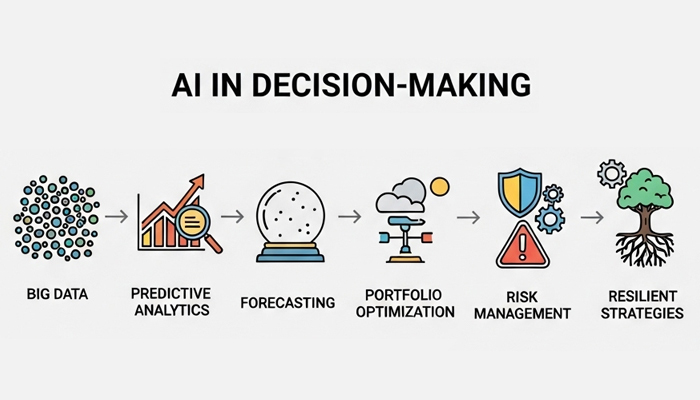
In addition, AI-enabled predictive analytics are transforming how institutional investors develop and execute their strategies. By leveraging big data and machine learning, institutions improve demand forecasting, optimize portfolio rebalancing, and enhance risk management. This analytical edge supports decision-making in complex environments, contributing to more resilient and adaptive institutional investment strategies.
Global Economic and Policy Dynamics
Institutional investment strategies in 2025 also reflect the evolving global economic landscape and geopolitical factors. The world economy is becoming more polycentric, with power and trade relations shifting among major regions. This realignment influences trade policies, supply chains, and investment flows, leading institutions to reassess geographic exposures and sector allocations.
U.S. economic policies and expected pro-growth regulatory environments bolster interest in small cap equities, especially in finance and software sectors. Russell Investments notes that institutional investors are considering increased allocations to U.S. small caps due to attractive valuations and earnings outlooks.
Moreover, institutional strategies increasingly incorporate sustainability considerations and responsible investing frameworks, aligning with broader enterprise goals and stakeholder expectations. From integrating environmental, social, and governance (ESG) criteria to supporting green energy initiatives, institutions adopt investment approaches that contribute positively to global challenges while delivering long-term value.
Diversification and Multi-Manager Approaches
Diversification remains a cornerstone of institutional investment strategies in 2025, underscored by a growing preference for multi-manager structures. Such approaches enable institutions to spread risk across asset classes, geographies, and investment styles. Employing specialist managers focused on niche sectors or alternative strategies enhances portfolio resilience and capture of alpha.
Defined contribution (DC) and defined benefit (DB) plans alike benefit from multi-manager solutions that optimize risk-return profiles across market cycles. For example, DB plan sponsors are encouraged to increase contribution rates while adopting diversified investment mixes that include private assets and growth equities. Non-profits and endowments align investments with enterprise missions by blending financial objectives with social impact goals.
Institutional investment strategies increasingly leverage transition management partners and outsourced CIOs (OCIOs) to navigate complex portfolio shifts and maintain strategic agility. These partnerships support implementation of advanced investment frameworks and adherence to evolving regulatory standards.
Conclusion
The landscape of institutional investment strategies in 2025 is dynamic and multifaceted, characterized by integration of digital assets, deeper forays into private markets, and adaptation to technological and geopolitical shifts. Institutional investors are harnessing innovation in asset allocation, analytics, and governance to position portfolios for long-term growth and stability.
By embracing cryptocurrencies and DeFi with regulatory prudence, expanding private market exposures, capitalizing on AI-driven innovation, and employing diversified, multi-manager frameworks, institutions reflect a forward-looking approach to investment management. These trends not only broaden opportunity sets but also enhance portfolio resilience amid changing market conditions.
For businesses engaging with institutional investors or managing institutional portfolios, understanding these trends is essential to developing relevant products, services, and advisory capabilities that align with evolving institutional investment strategies in 2025.

