

















The World’s Leading Claims Event

Amid Heavy Sanctions, Russia Turns to the Chinese Yuan for Cross-Border Payments

Note* - All images used are for editorial and illustrative purposes only and may not originate from the original news provider or associated company.

Subscribe

- Never miss a story with notifications

- Gain full access to our premium content

- Browse free from any location or device.

Media Packs

Expand Your Reach With Our Customized Solutions Empowering Your Campaigns To Maximize Your Reach & Drive Real Results!

– Access the Media Pack Now

– Book a Conference Call

Leave Message for Us to Get Back

Related stories

Deutsche Börse Bids $5.5bn for an Investment Funds Platform

Deutsche Börse, the German stock exchange operator, has bid $5.5bn...

HSBC Signs Multi-Year Deal to Integrate Generative AI Tools

HSBC on December 01, 2025, said that it had...

U.S. Bank Adding Bankers for More Growth in SBA Lending

U.S. Bank, after adding bankers to serve the businesses...

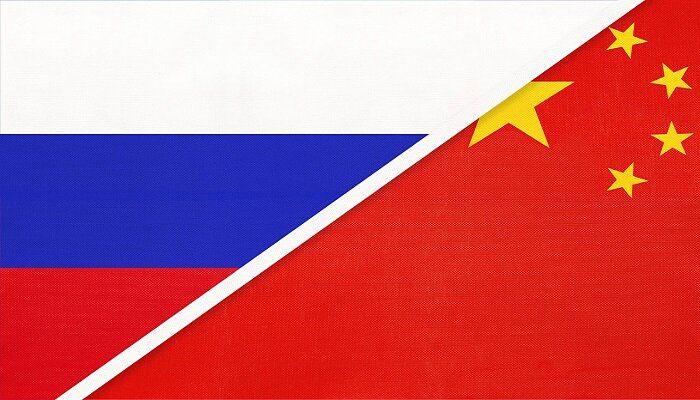
The Russian Central Bank (RCB) said that roughly 50% of Russian cross-border payments are being made using currencies other than the euro and the dollar. In an article by Euronews, Russia seems to be gradually parting ways with currencies hailing from “unfriendly nations.”

“Toxic currencies,” as Russia refers to them, are those from countries that have imposed sanctions on the country. The use of alternative currencies was up from 21% at the beginning of the year, and Russia has been increasingly turning towards the Chinese yuan for cross-border payments.

According to RCB, Russia has invested in 139.6 billion rubles (or $2.28 billion in Chinese yuan) this year alone. As it makes its transition to the yuan, RCB is also ensuring that it can include imports, exports, as well as payments for capital transactions.

Current sanctions prevent major Russian banks from using the SWIFT international payment system, banning them from making certain transactions.

IFT here. Of course, it remains to be seen whether such actions will deter Russia’s aggression or weaken its economy. Russia does have it’s own alternative to SWIFT called the System for Transfer of Financial Messages (SPFS). According to the Russian Central Bank, there are more than 400 Russian member banks that participate in this network.

“This was to be expected, as we have pointed out in several postings in PaymentsJournal,” said Steve Murphy, Director of Commercial Payments at Mercator Advisory Group. “This runs the gamut from alternative payment systems to alternative currencies.”

“I don’t think anyone convinced themselves that Russia would simply accept the sanctions without taking countervailing actions,” he added. “The question remains how effective these alternatives will be and what is the longer term impact.”

 

Latest stories

Related stories

Deutsche Börse Bids $5.5bn for an Investment Funds Platform

Deutsche Börse, the German stock exchange operator, has bid $5.5bn...

HSBC Signs Multi-Year Deal to Integrate Generative AI Tools

HSBC on December 01, 2025, said that it had...

U.S. Bank Adding Bankers for More Growth in SBA Lending

U.S. Bank, after adding bankers to serve the businesses...

FIS Deposits-as-a-Service to Modernise BMW Bank Operations

Key takeaways:  FIS’ deposits-as-a-service rollout positions BMW Bank to...

Subscribe

- Never miss a story with notifications

- Gain full access to our premium content

- Browse free from any location or device.

Media Packs

Expand Your Reach With Our Customized Solutions Empowering Your Campaigns To Maximize Your Reach & Drive Real Results!

– Access the Media Pack Now

– Book a Conference Call

Leave Message for Us to Get Back

Translate »